



When Swedish furniture major IKEA decided to open its first outpost in India in 2018, it chose Hyderabad over other traditional MNC hubs such as Delhi, Mumbai and Bengaluru. The move, say experts, was based on a mix of market, logistical, regulatory and strategic reasons that made the city an optimal pilot location for a large-format, single-brand retail experiment in India.
The massive 400,000-sq-ft showroom houses some 7,500 products of the brand. IKEA had reportedly invested over Rs 10 billion for its India foray.
Eight years on, the capital city of Telangana continues to attract and host major facilities for global firms such as Microsoft, Google, Amazon, and recent expansions by companies like JLL India — on August 6, the US-based company opened its 1.2 lakh-sq-ft advanced global capability centre (GCC), called JLL Business Services (JBS), in Hyderabad. This is JLL’s second India hub after Gurugram, and sixth globally.
Another marquee investment this year was by French beauty major L’Oreal, which announced that it will establish its first global tech hub in Hyderabad. The Beauty Tech Hub will support the development and deployment of digital platforms and AI-led solutions across L’Oreal’s international businesses, as per reports.
Hyderabad has rapidly evolved into a premier economic powerhouse. Driven by world-class infrastructure, talent pool, lower operational costs, and government support, the city continues to attract top global as well as domestic brands.
GCC hub
Hyderabad has now emerged as one of the fastest-growing GCC hubs in the country, attracting 197 GCCs in the past two-and-a-half years, according to official data. More than 70 GCCs chose Hyderabad in 2024, while 84 commenced operations in 2025. The number is expected to cross 100 by the end of 2026, generating employment for nearly 100,000 people, as per reports.
Unlike conventional IT firms that provide outsourced software services to clients, GCCs are wholly owned technology and innovation centres established by MNCs to support their global operations, R&D and business functions.
Hyderabad’s share of India’s GCC leasing rose from 15% to 21% YoY in the April-June quarter, says Anshuman Magazine, chairman and CEO, India, South-East Asia, Middle East & Africa, CBRE, “meaning the city captured a disproportionate share of the country’s GCC growth rather than simply keeping pace with it”.
According to Magazine, three things may explain that. “First, a talent base deep enough to support technology, research and regulated-sector operations simultaneously, which is unusual in a single city. Second, a planned corridor structure that allows large-format campuses to be delivered at scale. Third, sustained policy continuity, which matters enormously to occupiers making 10- to 15-year location decisions,” he adds.
Pharma power
On August 12, US-based biopharma giant Amgen announced plans to open a new Science and Innovation Centre at Genome Valley in Hyderabad. The centre will join Amgen’s global R&D network, which consists of seven research laboratories, further expanding the company’s research and scientific capabilities.
“Hyderabad has built one of the world’s strongest life sciences ecosystems, with deep capabilities in pharmaceuticals and vaccines. The next chapter is about taking that strength into discovery and innovation,” Telangana IT, Electronics & Communications, and Industries & Commerce minister D Sridhar Babu said.
Last year, US pharma giant Eli Lilly and Company announced that it will be setting up a new manufacturing and quality hub in Hyderabad as part of a $1-billion investment in setting up new contract manufacturing facilities in India.
Life sciences is where Hyderabad’s position is genuinely global, says Magazine of CBRE. Genome Valley is India’s first and largest life sciences manufacturing and R&D cluster — home to more than 200 biotech and pharmaceutical companies from over 18 countries, including facilities of several of the world’s leading R&D firms. Telangana accounts for roughly a third of India’s pharmaceutical production, about a fifth of its pharmaceutical exports and close to a third of global vaccine output.
“What makes that difficult to replicate is the integration. Very few locations anywhere offer discovery, clinical research, regulatory capability and large-scale manufacturing within a single ecosystem. Hyderabad does all four in proximity,” adds Magazine of CBRE.
Tech-tonic shift
In December last year, Google and the Government of Telangana announced the launch of the Google for Startups Hub at T-Hub in Hyderabad. Now live, the hub nurtures growth-stage startups — equipping them with the exact resources they need to build locally, scale rapidly and go global.
Telangana is already home to a vibrant ecosystem with flagship platforms like T-Hub, AI City, T-Works, and over 400 global innovation centres supporting sectors like deep-tech digital and enterprise tech.
This growing momentum is leading to a funding surge for Hyderabad’s startup ecosystem. In 2024, the city’s startups saw a 160% jump in funding, hitting $571 million as compared to a mere $220 million in 2023. The funding was raised through 81 rounds, which included 24 Series-A rounds and 20 first-time funded companies, with six startups joining the soonicorn club in 2024, as per the Tracxn Geo Annual Report 2024.
Even though the Telangana ecosystem witnessed a sharp recalibration in investor sentiment in 2025, with total funding declining to $236 million, as per the Tracxn Geo Annual Report 2025, Hyderabad continued to dominate the state’s startup ecosystem. The city accounted for 100% of all funding raised by Telangana-based tech firms in 2025, reinforcing its position as the state’s primary technology hub.
In a latest development, Tata Consultancy Services (TCS) announced that its subsidiary HyperVault AI Data Center has secured 264 acres of land in Hyderabad to develop a large-scale artificial intelligence (AI) data centre campus with capacity of up to 1 gigawatt, as demand for high-density computing infrastructure grows. HyperVault and its partners are expected to invest up to Rs 70,000 crore to build and manage the infrastructure.
Telangana chief minister A Revanth Reddy described the project as historic for both Telangana and India. “This establishes that Hyderabad is now at the forefront of the global AI revolution with a strong focus on infrastructure,” he said after the announcement.
Microsoft, too, has positioned Hyderabad as a strategic hub for its next generation of artificial intelligence (AI) services. On September 21, the Big Tech company formally launched its India South Central cloud region, taking its hyperscale cloud footprint in the country to four regions.
The Hyderabad region, which is part of Microsoft’s $20.5-billion investment commitment in India, has three availability zones and is designed to support AI workloads. Puneet Chandok, president, Microsoft India and South Asia, said the company would bring its frontier AI technology and services being built for the next phase of AI adoption to the new region.
Meanwhile, the success of Vikram-1 as India’s first private orbital launch has led to a buzz in Hyderabad’s broader space-tech ecosystem, with startups developing technologies across categories such as satellite systems, propulsion, orbital robotics and reusable launch vehicles.
At T-Hub alone, 105 space-tech startups are now active, with its ORBIT accelerator supporting 36 across three cohorts, as per reports.
Retail magnet
The city’s consumption story is increasingly shaping retailers’ expansion strategies, with brands treating Hyderabad as one of their priority markets for store launches. “Like most of India’s top cities, Hyderabad’s retail momentum is driven by rising consumption, a growing professional base, strong residential development and growing demand for organised, experience-led retail,” says Anuj Kejriwal, CEO, retail, and CEO, Europe, Middle East & Africa, ANAROCK Group, an independent real estate services company in India.
According to ANAROCK data, Hyderabad and Delhi-NCR combined are expected to account for around 65% of the 16.6 million sq ft of Grade-A mall supply planned across India’s top seven cities up to 2026. “We expect more than 12.6 million sq ft to be leased up by retailers across these cities in this period. These data indicates suggest strong organised-retail growth in Hyderabad,” adds Kejriwal.
“Hyderabad has reached an interesting inflection point. It has the economic strength of a mature metropolitan market, but the growth trajectory of an emerging one. The expansion of technology, life sciences and global businesses has brought capital, talent and a young, affluent consumer base into the city,” says Rajneesh Mahajan, CEO of Inorbit Malls.
At the same time, consumer aspirations have evolved from simply shopping for products to seeking brands, dining, entertainment and experiences, explains Mahajan, adding: “This combination of economic momentum and evolving consumption is what makes Hyderabad such a compelling retail market today.”
Inorbit Malls, a K Raheja Corp company, is developing a landmark luxury retail destination in Hyderabad, spanning nearly 1 million sq ft. The project is slated to open to the public in early 2029.
Inorbit’s project is among the over 20-odd destination and neighbourhood malls that are being developed across the city. While the Prestige Group is developing a 1.29 million-sq-ft Forum Mall at Rajendranagar, GMR is building a 600,000-sq-ft retail project near the airport.
Hyderabad was the country’s second-largest market for take-up for retail in the April-June quarter and is the leading city nationally for fashion and apparel demand, as per CBRE data. “Direct-to-consumer brands accounted for over a quarter of the city’s retail leasing in the first half of 2026, up from a small number a year earlier — one of the sharpest shifts in any Indian city,” adds Magazine.
Among the latest to tap the retail boom in the city is Hyderabad Airport that launched an exclusive luxury shopping destination earlier this year, bringing together iconic fashion and lifestyle brands such as BOSS, Michael Kors, Brooks Brothers, and CHANEL.
Around the same time, Italian makeup brand KIKO Milano launched its newest store at Lake Shore Y Junction in Hyderabad. Following its acquisition by Reliance Retail Ventures, the brand has been steadily expanding its footprint in the country.
More Recently, American luxury fashion brand Michael Kors, too, expanded its retail footprint in India with the opening of a new store at GVK One Mall in Hyderabad. The latest outlet is positioned alongside leading international brands such as Tira and Armani Exchange.
Hospitality boom
Hyderabad is also experiencing a hospitality boom, emerging as a primary destination for brands, both global as well as domestic. In March, Indian Hotels Company Limited (IHCL) announced the signing of a new Gateway Hotels & Resorts property in Somajiguda, taking the leading hospitality brand’s portfolio in Telangana to eight, primarily centred in or slated for Hyderabad. A month later, in April, IHCL announced the debut of its lean luxe brand Ginger in Hyderabad with the unveiling of the 118-key hotel at Airport Road. Around the same time, the ground-breaking ceremony for Taj Vivanta took place at GMR Aerocity Hyderabad, marking the second hotel project at the mixed-use development hub after Novotel. In the business and mid-scale space, while Orchid Hotels debuted in Cyberabad with the 74-room Regenta Place Hi-Tech City in May, Celebrity Prime Hospitality opened Casa Hotel by Trunk & Trolley in HITEC City.
The massive pipeline probably explains why Yangdup Lama and Minakshi Singh, the award-winning bartender-owner duo, chose Hyderabad over other traditional hubs such as Bengaluru for their first outpost in south India. “We’ve both been coming to Hyderabad quite a lot individually over the past three years, and we’ve really seen the way the city is evolving. There is a discerning crowd here and a genuine appetite for new experiences, which made the opportunity very interesting for us,” says Lama, co-founder of Bar Stormy, a bar that he recently opened in Hyderabad’s Financial District along with Singh and Kishore Pallamreddy, a tech entrepreneur and founder of Red Rhino Brewing Co.
“Hyderabad has grown into one of India’s most exciting cities, with a young and diverse community. We wanted Bar Stormy to reflect that energy while staying true to what we have always believed a bar should be: welcoming, inclusive, and built around connection,” adds Singh.
Lama, however, clarifies that they didn’t look at it as choosing Hyderabad over Bengaluru. “For us, it was about whether Hyderabad was ready for the kind of bar we wanted to build and whether we felt we could add something meaningful to the city. We felt the answer to both was yes,” adds Lama, who is behind acclaimed bars Sidecar, Cocktails & Dreams Speakeasy, The Brook, and The Old House.
The big picture
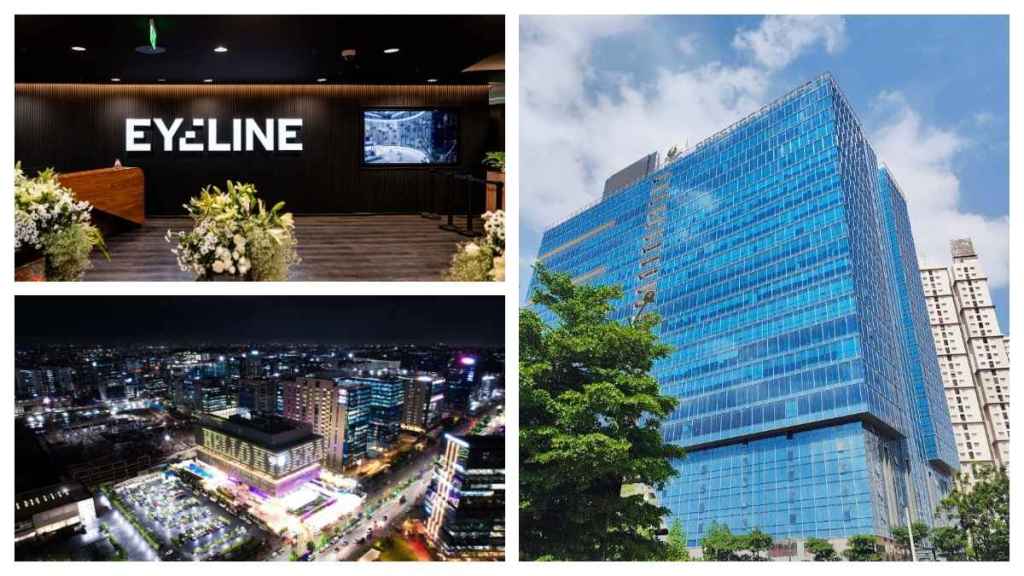
In March, global OTT giant Netflix opened its new Eyeline Studios office in Hyderabad. The facility, spread across nearly 30,000 sq ft, is its second office in the country after Mumbai. Experts believe the development will further strengthen the city’s rapidly growing animation, visual effects, gaming and comics ecosystem. Hyderabad has already emerged as a key hub for digital entertainment technology, attracting several global studios and creative companies.
Meanwhile, the state government is giving top priority to the Telugu film industry. “We’re also preparing a detailed blueprint to make Hyderabad the national hub of the film industry and a global centre for the film market,” deputy CM Bhatti Vikramarka said earlier this year.
“Cities such as Mumbai, Kolkata and Chennai have limited scope for further expansion, while Hyderabad offers favourable factors for film industries of all languages across the country to grow,” he added.
Marching on
Amid the boom, say experts, the central challenge is that supply hasn’t kept pace with demand, and the pattern repeats across every asset class.
“In office, the city accounted for roughly 14% of India’s absorption last quarter but only about 4% of new supply. The consequence showed up immediately in pricing, with rents rising across all three IT corridors within a single quarter. In retail, new supply was effectively nil through the first half of 2026 — and our own assessment attributes softer take-up primarily to limited availability of suitable space, not weaker retailer appetite,” says Magazine of CBRE. The way forward follows from the diagnosis, says Magazine — accelerate the Grade A and green-certified pipeline, use infrastructure investment to open new catchments and broaden the micro-market map, and keep building the talent pipeline that made the city attractive in the first place. “Hyderabad has the demand. The task now is matching it with supply,” he adds.
Capital gain
Earlier this year, Andhra Pradesh CM N Chandrababu Naidu said that Amaravati is being developed as a world-class city and would even surpass Hyderabad in terms of future economic growth. He was referring to the city that was officially declared as the sole and permanent capital of Andhra Pradesh in April this year, 12 years after the division of the state into two in 2014. Though Hyderabad became the capital of Telangana, it was jointly shared with Andhra Pradesh for 10 years.
After years of uncertainty, development of Amaravati is now back on track. While Naidu aims to transform the capital city into a $2.4-trillion economy by 2047, the real test would be how Amaravati executes it in terms of speed, scale, and discipline to become a global economic powerhouse — much like its ‘big brother’ in Telangana.