


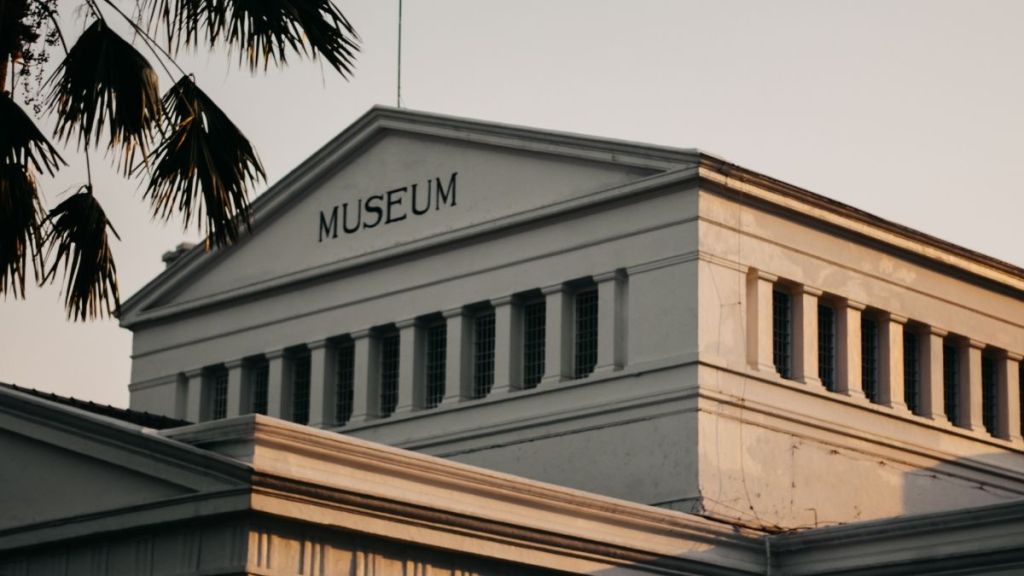

For years, the cultural world has faced a difficult question: Can great art be separated from the person who created it? The cancellation of the Metropolitan Museum of Art’s planned exhibition on fashion designer John Galliano shows that the answer is becoming even more complicated when antisemitism is involved.
The Met and Galliano recently cancelled John Galliano: Horizons, a major retrospective that was due to take place in spring 2027. The decision followed criticism of Galliano’s antisemitic and racist remarks. In 2011, Galliano was convicted in France over the remarks and was fired by Dior. He later rebuilt his career at Maison Margiela, where his creative talent helped restore his reputation in the fashion industry.
But an exhibition at the Met would have meant more than another career comeback. The museum is one of the world’s most powerful cultural institutions. Giving Galliano a major retrospective could have been seen as moving his story from rehabilitation to full recognition.
The backlash came from Jewish leaders, politicians and others. The timing also attracted criticism because the exhibition was planned around Yom HaShoah, Holocaust Remembrance Day.
Galliano eventually withdrew from the exhibition, saying he did not want it to cause hurt or distract from the museum’s work. He acknowledged the pain caused by his past remarks, particularly to Jewish and Asian communities, and said that true atonement could not come from a single public gesture. In a statement, Galliano said, “I remain fully accountable for the pain caused by my words in the past, particularly the hurt I caused to the Jewish and Asian communities, and I remain deeply sorry for it. I understand that meaningful atonement is not achieved through an exhibition, institutional recognition or a single public gesture. It is a continuing responsibility, demonstrated through listening, learning and one’s conduct over time.”
High-Profile Fallout
Galliano is not the only major creative figure whose antisemitic behaviour has raised questions about rehabilitation. American rapper and songwriter Kanye West, legally known as Ye, is one of the most prominent examples. In 2022, Ye made a series of antisemitic statements on social media and in interviews. He promoted conspiracy theories about Jewish people and later praised Adolf Hitler and the Nazis.
The response from major companies was swift. Adidas ended its highly profitable Yeezy partnership with him. Gap and Balenciaga also cut ties, while Vogue and other major fashion players distanced themselves from the artiste.
The fallout showed that antisemitism can become a serious business risk. This year, the United Kingdom blocked the rapper from entering the country, citing his anti-semitic comments. Not just the UK but two sold-out stadium concerts scheduled for St Petersburg were cancelled, while his successful performance in Istanbul in May, drew 120,000 fans. However, the event sparked political controversy when Turkish presidential advisers condemned his lyrics as offensive to the nation’s cultural values.
Hollywood has faced similar controversies. In 2006, actor and director Mel Gibson was arrested for driving under the influence in Malibu. During the arrest, he made antisemitic comments, including blaming Jews for wars around the world. The remarks caused international outrage and severely damaged his career. Hollywood studios, agencies and executives largely distanced themselves from him for years.
Unlike today, Gibson’s remarks came before social media became a dominant force. Yet the incident still showed how quickly antisemitic comments by a celebrity can overshadow years of professional success.
The music industry has faced its own reckoning. In 2020, British grime artiste Wiley, whose real name is Richard Kylea Cowie Jr, posted a series of antisemitic messages on Twitter and Instagram. His management dropped him, while music platforms and retailers removed his work from prominent playlists. The incident also led to a celebrity boycott of X (then Twitter) under the hashtag #NoSpaceForJewHatred, protesting the platform’s handling of the posts.
Context versus Celebration
Meanwhile, critics argue that controversial artistes should be studied and their work judged on its artistic value. Museums can provide context and acknowledge an artiste’s wrongdoing rather than simply hiding it.
For years, institutions argued that recognising artistic achievement did not mean endorsing every action of an artiste. But when the controversy involves antisemitism, that distinction is becoming harder to defend. The cultural world is now being asked to consider not just whether an artiste deserves a second chance, but what kind of recognition that second chance should bring.