


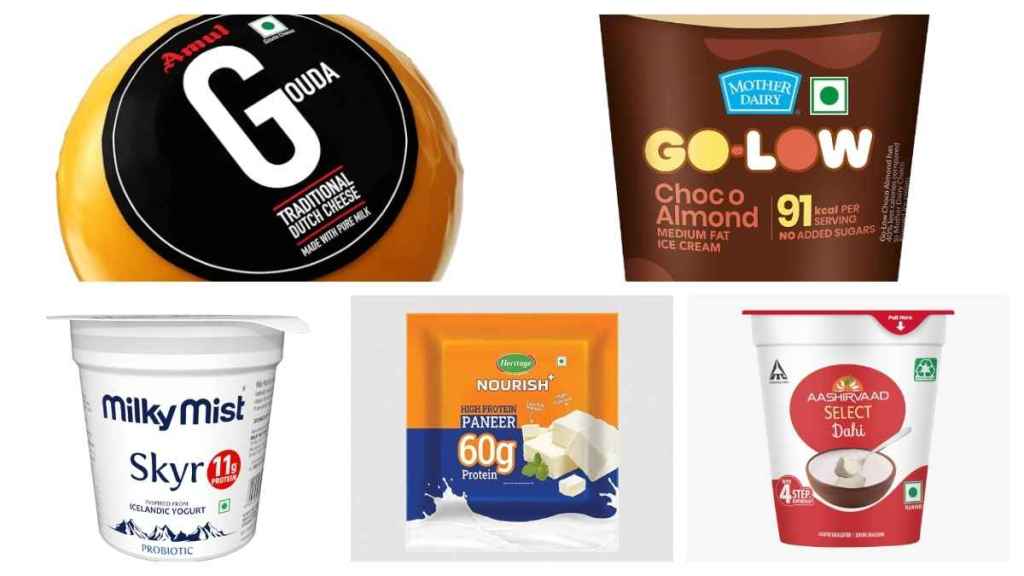

There is a larger transformation underway in Indian dairy. The market is now being built not around how much milk a company can collect or sell, but around how much value it can extract from that milk, and how successfully it can build a consumer brand around it.
Health-conscious consumers, rising disposable incomes, growing appetite for protein-rich foods and the convenience of quick commerce are accelerating this shift. High-protein paneer now shares shelf space with artisanal yoghurt; ready-to-drink protein coffee competes with flavoured milk. Greek yoghurt, probiotic beverages, A2 milk, low-calorie ice creams and gourmet cheeses are moving beyond niche consumption, creating a rapidly expanding market where nutrition, convenience and premiumisation are reshaping consumer choices.
Globally, milk remains one of the world’s most widely consumed foods. According to the Food and Agriculture Organization (FAO), more than 6 billion people consume milk and dairy products, with demand now shifting from liquid milk to processed and value-added products such as cheese, yoghurt, butter, whey protein and functional dairy foods.
India is at the centre of this transformation. It is the world’s largest milk producer and among its largest consumers, accounting for nearly one-fourth (24–25%) of global milk production. Milk production has risen from 146.3 million tonne in 2014–15 to 239.3 million tonne in 2023–24, and is estimated to touch 248 million tonnes in 2024–25.
The country also consumes more milk than the global average. Per capita milk availability stood at 471 gm per day in 2023-24, compared with the global average of 322-329 gm. As per the latest Household Consumption Expenditure Survey, monthly milk consumption in 2024-25 averaged 5.085 litres per person in rural India and 5.686 litres in urban India.
Structural shift
Milk and traditional dairy products have long been an integral part of Indian food culture and everyday diets. “As lifestyles evolve, consumers are looking for value-added offerings that combine the goodness of milk with convenience, indulgence and value without compromising on quality,” says Jayatheertha Chary, MD, Mother Dairy.
According to Chary, categories such as curd, paneer, dairy beverages, cheese and ice creams recorded more than 30% volume growth during April-June 2026 compared with the corresponding period last year, driven by strong demand for value-added dairy products and greater availability through quick commerce.
Similarly, Gujarat Cooperative Milk Marketing Federation (GCMMF)-owned Amul, which handles over 30 million litres of milk every day, has widened its portfolio across protein beverages, whey protein, speciality cheeses and premium ice creams, signalling that the future of dairy lies well beyond the milk pouch. The brand has now become the face of India’s ‘white revolution’ and the benchmark against which the country’s fast-growing value-added dairy market is now evolving. In FY26, Amul became India’s first FMCG brand to cross Rs 1 lakh crore in turnover.
To support future growth, Amul has almost completed an Rs 11,000 crore capital expenditure programme aimed at expanding milk processing, cheese production and value-added dairy manufacturing. Managing Director Jayen Mehta had earlier said nearly 80% of this investment had already been deployed, with strong growth seen across milk, cheese, ice cream and other value-added products.
Parag Milk Foods, known for brands such as Gowardhan, Go Cheese, Pride of Cows and Avvatar, is also repositioning itself from a traditional dairy company into a nutrition-focused business. During FY26, the Pune-based private dairy company, reported consolidated revenue of Rs 3,818 crore, while its new age business comprising Pride of Cows and Avvatar contributed around 10% of total revenues, making it one of the company’s fastest-growing segments. In Q1FY27, Parag delivered a revenue of Rs 945 crore, registering an 11% YoY growth, while volumes grew by 3%. The modest growth is mainly due to lower volumes in flagship categories, while the new-age portfolio has demonstrated double-digit growth of 59%.
The organised dairy segment is growing faster than the category overall, as consumers move away from loose, unbranded products towards packaged dairy they can trust. The shift is not about hygiene or convenience; it reflects a broader change in what consumers expect from everyday food — consistency, traceability, quality and innovation.
The evolution of brands such as Nandini, owned by the Karnataka Milk Federation, shows how wide that opportunity has become. From fresh pasteurised and long-life UHT milk, the brand has expanded into more than 175 value-added dairy products, including curd, ghee with QR-based traceability, butter, paneer and functional offerings such as high-protein and probiotic products.
Dhanraj Balasubramaniam, executive director at Tamil Nadu-based GRB Dairy Foods, sees this as a structural change rather than a seasonal phenomenon. “India’s dairy consumption is undergoing a structural shift that is moving the conversation beyond just seasons,” he says. For GRB, ghee remains an anchor category, while traditional sweets, instant mixes and festive gifting formats are seeing strong demand. But, he argues, consumers are buying something more intangible along with the product: “a guarantee of quality”.
The more interesting shift, however, may be what happens after the festive lights go out. As Balasubramaniam puts it, the festive season may test a company’s preparation, but performance outside that window is where category leadership is ultimately decided. That is a useful lens for understanding organised dairy: the opportunity is no longer just to capture seasonal demand, but to turn trust into a year-round consumption habit.
Changing preferences
With consumer preferences in dairy evolving rapidly, driven by awareness around nutrition, wellness and changing lifestyles, brands are seeing strong demand for products that deliver specific benefits.
“Probiotics for gut health, high-protein nutrition, reduced sugar or premium indulgence are seeing strong traction,” says Srideep Kesavan, CEO of dairy enterprise Heritage Foods. The company has expanded into differentiated offerings including A-One Probiotic Buttermilk, Nourish+ High Protein Paneer, Livo High Protein Fruit Yogurt, Truly Good High Aroma Ghee and Getaway High Protein Zero Sugar Ice Creams.
Heritage Foods reported that its value-added portfolio grew 39.7% year-on-year in the first quarter of FY27 to Rs 5,636 million, contributing a record 44% of total revenues, compared to 36% a year ago. Its strongest performers included lassi (98% growth), buttermilk (60%), paneer (33%) and curd (26%). The ice cream business, including GETAWAY, crossed Rs 550 million in revenue, up 65% YoY, while core brand Alpenvie grew 44% YoY on stronger distribution. Strategically, Heritage made Novandie Foods a wholly-owned subsidiary and raised its stake in GETAWAY’s parent to 71%, deepening its play in premium, nutrition-led categories.
Curd, which is the second largest dairy category in the industry segment, is also seeing strong growth, driven by the shift in consumption habits from unbranded to branded offerings led by convenience and a focus on portfolio segmentation. “Mango lassi continues to excite beverage lovers; mishti doi, an indulgent dairy dessert, is witnessing rapid growth. For fresh dairy categories, we are focusing on east markets and consistently increasing its distribution footprints in the states of Bihar, Jharkhand and West Bengal,” says Vivek Kookkal, vice president & business head, dairy and beverages, foods division, ITC.
In Greek yoghurt, several local brands like Epigamia, Milky Mist, Amul and Nestle+ are offering thick, protein-rich textures in both plain and flavoured varieties. Then there is Yogabar Shake that provides 26 gm of protein in flavours like double chocolate and cold coffee with no added sugar. Amul Protein Shakes offer 20 gm of whey protein per bottle in options like blueberry and vanilla. Epigamia Turbo delivers 25 gm to 30 gm of protein per 250-ml bottle in tastes like cookies and cream and malai kulfi. Barebells Milkshake packs 24 gm of protein per 330-ml bottle with no added sugar.
The biggest driver of the industry’s transformation, however, is India’s growing protein consciousness. Once confined largely to gyms and sports nutrition stores, dairy companies now offer protein-enriched milk, paneer, yoghurt, beverages, snack bars and desserts, targeting everyone from school children to working professionals and senior citizens.
ITC recently launched a range of smoothies under the Sunfeast brand. The flagship offering is Sunfeast Breakfast Smoothie, a health-focused drink made from banana, milk, almond, oats and four super seeds (watermelon, chia, flax, basil) with no added sugar and 6 gm protein. It is available across leading modern trade and ecommerce retail stores.
Similarly, Parag Milk Foods introduced protein wafer bars and ready-to-drink protein cold coffee through its sports nutrition and whey protein brand, Avvatar. Under Pride of Cows, its premium farm-to-home single-origin dairy brand, the company offers high-protein, low-fat paneer and a range of artisanal yoghurts. “Our value-added and nutrition-led portfolio continues to grow at a faster pace than traditional dairy categories. Our strategy is therefore no longer limited to traditional dairy products but extends across premium, value-added and performance nutrition categories,” says Akshali Shah, executive director, Parag Milk Foods.
Cheese is also providing new avenues of growth. Parag Milk Foods, whose Go Cheese brand commands 35% market share, has expanded its cheese production capacity from 60 MT/day to 120 MT/day.
Artisanal labels such as Milky Mist, D’lecta, and Kodai Cheese, too, are in the fray, offering natural cheddar blocks, feta, mozzarella, and cream cheese popular in cooking. Similarly, speciality cheese and dairy brands Mooz and Dairy Craft are offering artisanal Italian, soft, and processed cheeses.
Milky Mist’s recent market debut offers a window into how India’s dairy business is changing, and the kind of dairy companies investors are willing to back. Its Rs 1,553-crore IPO, which was fully subscribed in August, drew strong demand from non-institutional and retail investors. The issue comprised a fresh issue of Rs 1,428 crore and an offer for sale of Rs 125 crore by existing shareholders.
Founded in 1985 as a milk-trading business, Milky Mist moved into paneer production and, in 1997, launched its eponymous brand. Paneer remains its star product, with a strong market position in Tamil Nadu and Karnataka, supported by healthy brand recall and a diversified portfolio spanning cheese, curd, ghee, ice cream, yoghurt, sweets and condensed milk, among others.
Scale to innovation
Competition is now shifting from scale to innovation. Mother Dairy plans to introduce more than 30 new products this year across ice creams, fresh dairy and high-protein categories. Recent launches include Procurd and Propaneer — high-protein variants of curd and paneer — along with premium ice cream offerings such as the crafted range, cream cheese pistachio cone, two-in-one matka, dubblez tub, go-low low-calorie ice creams, and region-specific products including jamun yoghurt, bhuna jeera raita, shrikhand and meethi dahi.
Mother Dairy also introduced India’s first naturally degradable milk pouch, initially launched in Delhi-NCR, reflecting the industry’s growing focus on sustainability alongside nutrition.
Similarly, to deepen its presence in premium dairy, Britannia is expanding its portfolio through its joint venture with France’s Bel Group. Its offerings now include The Laughing Cow cheese, Greek yoghurt, paneer, curd, dairy whitener and Winkin’ Cow dairy beverages.
The expansion is supported by investments across the value chain. Britannia’s backward-integrated dairy facility at Ranjangaon, Maharashtra, enables direct milk procurement from farmers while strengthening quality control. The company is also leveraging its nationwide distribution network, expanding cold-chain infrastructure and visicoolers to improve access to value-added dairy products.
“Consumers today are looking for products that combine great taste, convenience and quality, and this is driving strong momentum for value-added dairy categories,” says Subhashis Basu, chief business officer, dairy and CEO, Britannia Bel Foods.
While biscuits remain Britannia’s core business, dairy has emerged as one of its fastest-growing segments. The company reported double-digit growth in its dairy business during the fourth quarter of FY26, led by strong demand for Sattvam Cow Ghee. Although Britannia does not disclose dairy revenues separately, the segment is estimated to contribute around 8-10% of its overall business.
Next phase of growth
The next phase of India’s dairy revolution is being shaped as much by new business models as by new products. Quick commerce has emerged as one of the biggest growth catalysts for premium dairy, making products such as artisanal yoghurt, flavoured milk, cheese and ready-to-drink protein beverages available within minutes. Companies say instant delivery platforms are encouraging trial, impulse purchases and greater adoption of value-added dairy. Mother Dairy credits quick commerce with improving access to premium categories, while Parag Milk Foods says e-commerce has expanded the reach of specialised nutrition products across urban India.
At the same time, startups are reimagining the dairy value chain, from farm to fridge. Companies such as Country Delight and Doodhvale Farms are building direct-to-consumer businesses around traceability and premium milk, while Epigamia has expanded the market for Greek yoghurt and protein-rich dairy products. Dairy-tech startup Stellapps is using artificial intelligence and IoT to digitise milk procurement and farm operations. Akshayakalpa Organic has built a niche around certified organic dairy; Sid’s Farm is expanding premium fresh milk and value-added dairy in southern India; Milk Mantra has focused on ethically sourced milk and premium dairy products under the Milky Moo brand.
Doodhvale Farms, for instance, has built its portfolio around nutritional needs rather than flavours, offering A2, high-protein and low-fat milk variants. Nearly 90% of its revenue now comes from its direct-to-consumer business, while value-added products contribute 35% of sales. “We have built the range around what urban families are actually asking for, which is milk they can trust in the format that suits their household,” says founder and CEO Aman Jain. Backed by a fresh $1-million investment, the company plans to expand into new markets.
Behind the scenes, investment priorities are also changing. Companies are expanding cheese and nutrition manufacturing, strengthening cold-chain infrastructure, investing in AI and digital distribution, and deepening direct sourcing from farmers. Industry executives believe the next wave of launches will be led by high-protein products, probiotics, gut-health beverages, premium cheeses, low-sugar dairy and sustainable packaging — underscoring a shift from selling milk as a commodity to building nutrition and wellness brands.