


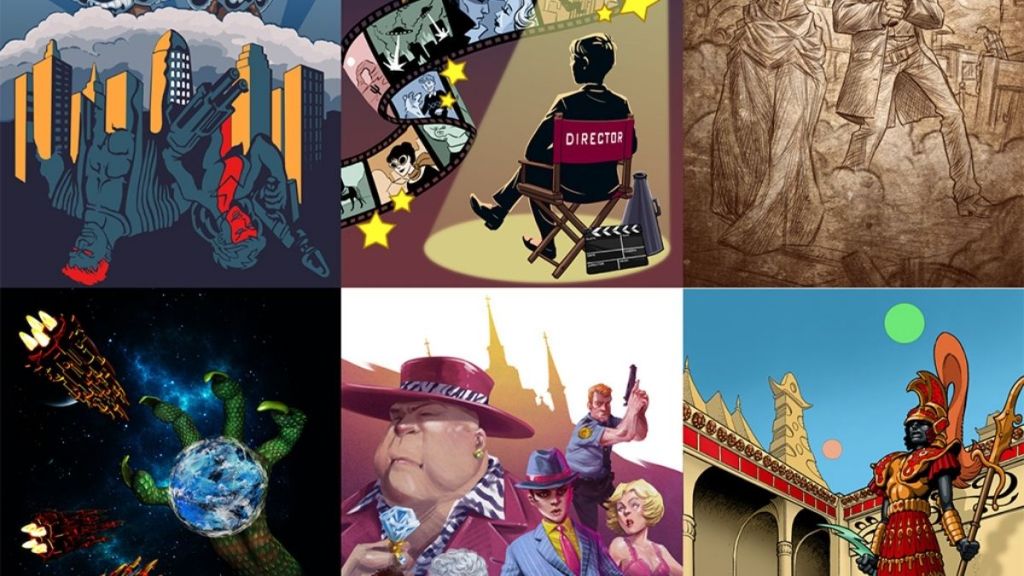

If you spent your childhood in the 1980s and 1990s, you’d surely recall Choose Your Own Adventure (CYOA), a series of books that turned reading into a game, allowing readers to assume the protagonist’s role and make choices determining the plot. The stories (an example being The Cave of Time by Edward Packard) are formatted so that, after a few pages of reading, the protagonist faces two or three options, each of which leads to further pages and further options, and so on until they arrive at one of the many story endings. Fast forward to the present times, the same concept is witnessing a resurgence, albeit in an online format. These interactive storytelling platforms are not only letting readers become characters, but also shape relationships and sometimes completely change the ending of a story.
The stories work through branching passages. A reader reaches a decision, clicks an option and is taken to another part of the story. Some websites also offer further customisation of the story’s trajectory, allowing the reader/writer to pick an outcome outside of the options provided.
For writers, CYOA offers something traditional fanfiction cannot: a chance to give readers partial ownership of the narrative. Instead of simply imagining what a character might do, the reader gets to make the decision themselves. This helps to create an intimate and personalised relationship between writer and audience. Fandoms popular in the CYOA world are The Marvel and DC universes, Harry Potter, Worm, and Jujutsu Kaisen, among several others.
One of the biggest spaces for this kind of storytelling is itch.io, an independent platform where writers can upload interactive fiction made with tools such as Twine (an open source online tool for interactive, non-linear storytelling). Twine is important because it is free and designed for creating nonlinear stories without requiring advanced programming knowledge. CYOA is well suited to fandom culture. Popular subjects include fantasy, supernatural fiction, romance, dating stories and established fictional universes where readers have strong emotional connections to characters. On itch.io, highly rated interactive fiction includes fantasy romance and stories inspired by existing fan communities.
Choice of Games, a video game company which publishes interactive novels for digital platforms, takes a structured approach. Its stories are written using the programming language ChoiceScript and are presented as interactive novels in which readers make decisions that influence characters, relationships and outcomes. The company’s Hosted Games programme has allowed writers to publish their own choice-based stories, helping some titles develop dedicated fandoms of their own. Another option is the CYOA Archive, which is organised around community-created adventures. Readers can browse static, image-based CYOAs or play interactive versions directly in their browsers. CYOA has also entered established fandoms. Archive of Our Own, popularly known as AO3, is primarily a fanfiction archive rather than a dedicated interactive-fiction platform, but writers have found ways to create branching stories using hyperlinks between chapters or sections. Readers can effectively choose which version of events they want to follow.
Glimmer is a similar platform, allowing at least 100 free pages, or ‘turns’, with paid options for daily extensions on the limit, if the reader wants. Leaving a comment or a review on the story ‘earns’ the readers further turns in the story.
The tropes are familiar too: enemies to lovers, found family, reincarnation, self-insert protagonists, magical powers, love triangles and “what if?” alternate universes all work naturally with a format built around personal choice. A reader can decide what their character pursues — romance, friendship, revenge or adventure — and then replay the story to discover another possibility. Fan communities already thrive on discussing characters, relationships, theories and alternate endings.
Interactive stories turn those conversations into participation. Readers compare routes, debate choices, share favourite characters and return to discover outcomes they missed.