


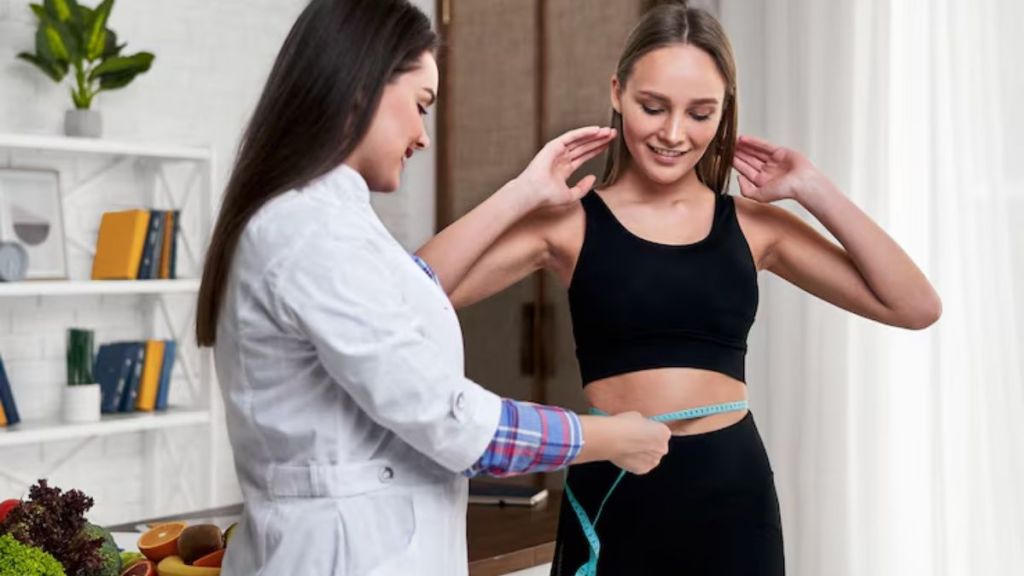

GLP-1 drugs are not just shrinking waistlines, they are also changing the way fashion brands sell. As consumers in the West move between clothing sizes after using weight-loss drugs such as Ozempic and Wegovy, some retailers are reassessing their plus-size and extended-size offerings.
In the US, fashion brand H&M has reduced its extended-size offering, while Mango has cut back on new dresses in sizes 16-20. Anthropologie has also seen a decline in plus-size availability. Earlier, Loft shut its plus-size range, Old Navy scaled back extended sizing, and Torrid closed nearly a third of its stores.
As of May 2026, roughly one in five US households (21%) includes a current GLP-1 user, up from 9% in January 2025, based on PwC analysis of data from Numerator. The United Kingdom’s current adoption sits around 9% but is projected to grow rapidly.
“H&M continuously works to develop fit and sizing through a dedicated team that draws on research, body measurement data and customer feedback. This remains a central part of how we develop our customer offering,” an H&M spokesperson told FE, adding, “We offer a broad size range across multiple markets and continuously adapt our assortment based on actual customer demand. As part of this effort, we have chosen to discontinue sizes 3XL and 4XL as we have seen lower demand for these sizes. However, we do not speculate on the reasons behind this development.”
For India, however, it is less about shrinking the size chart and more about how quickly brands can adapt to changing bodies.
Rather than simply cutting larger sizes, brands in India are watching consumer behaviour more closely before adjusting their size mix.
Umashan Naidoo, chief creative officer and beauty, Trent, the retail arm of Tata Group managing brands like Westside and Zudio, said, “Post-weight-loss styling isn’t just about fit; it has become an opportunity to flaunt. Customers are far more eager to experiment, stepping into bolder silhouettes and expressive looks. We monitor and manage our sizing matrix to align with evolving body shapes. Rather than static inventory planning, we adapt in real time to match our customers’ changing dimensions and demands. This dynamic positioning in the modern, contemporary, and youth segments allows us to nudge customers toward trying new fits.”
There is no India-specific comment from brands such as H&M or Shoppers Stop, while Uniqlo declined to comment.
However, Uniqlo continues to offer XL sizes, even if purely online, while a plethora of plus size brands like Pluss offer clothing up to 10XL for both men and women. Apella, a designer wardrobe brand offers sizes from XS up to 10XL with free custom tailoring; Amydus, a homegrown women’s brand has size 3XL upwards; The Pink Moon has trendy western wear, activewear, dresses, and functional apparel with pockets up to 6XL. Brands like BlissClub has sizes up to 4XL.
Menswear brand Snitch, with more than 130 stores across India, has a range of sizes from XS to plus size, spanning across shirts, T-shirts, trousers, jeans, shorts, cargo pants, joggers and track pants. As per the brand’s CMO Chetan Siyal, consumers are becoming conscious of proportion and how garments sit on the body, but this has not reduced demand for larger sizes. Instead, the brand is investing in multiple fits and silhouettes, while relaxed and oversized styles continue to perform strongly.
Overall, Siyal estimated that demand for sizes 3XL to 6XL is growing in the range of 15-20% on-year, while smaller sizes remain broadly steady. “We see the plus-size segment as an important and mainstream part of the fashion market, rather than a space being left to niche brands,” he says. The brand’s plus range – 3XL-6XL — accounts for roughly 35-40% of apparel sales, while small and medium sizes together garner 25-30%.
The weight-loss fashion trend is not a sign that plus-size fashion is going away. The key shift is that more customers are looking for a variety of fits in larger sizes as well,” he added.
Premium Indian western-wear and workwear brand for women, FableStreet has seen heavy demand across sizes M-XXL range, which accounts for 75-80% of the brand’s sales. In fact, sales percentage of XXL is almost the same as XS and S combined. This is also broadly in line with the size distribution we see among Indian women, particularly those aged 30+, where around 80% are size M and above,” said Adarsh Sharma, co-founder, Fablestreet.
The Indian market also differs from the West in terms of fashion adoption, body types and retail structures. Height, torso length, shoulder breadth, hip-to-waist ratio and overall body shape differ markedly between regions, and across age groups.
As per Dr Richa Chaturvedi, senior consultant, endocrinology, Indraprastha Apollo Hospital, Delhi, “There are some differences in body composition rather than simply body size. Indians, on average, tend to have more abdominal fat and a higher body fat percentage at a given BMI compared with western populations.”
She added that there is currently no reliable data on the exact percentage of Indians using GLP-1 medicines for weight management, but adoption is still relatively limited compared with the overall population.
For fashion brands, the challenge is to balance changing demand with inclusivity, whichever way the size meter swings.