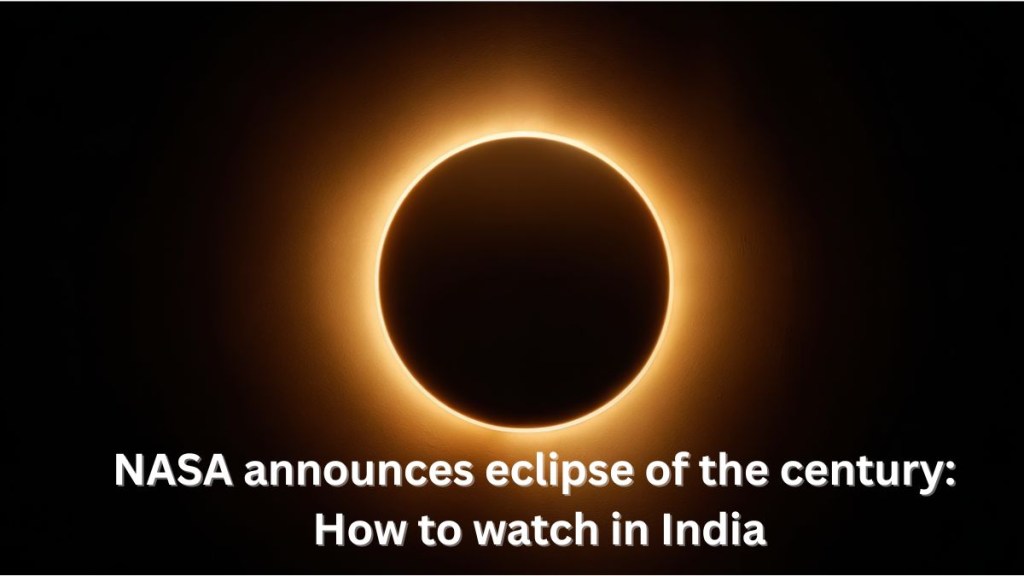
Skygazers are in for a unique experience, as the longest solar eclipse for 100 years, dubbed ‘eclipse of the century’ will plunge several cities into complete mid-day darkness. Lasting for several minutes, what makes it even more exciting for celestial enthusiasts is its huge accessibility. The rare eclipse will be observed in major population centres, which means hundreds of thousands of people would be able to witness this rare astronomical phenomenon. In some places, partial eclipse will be seen, and that includes several Indian cities. Here are all the details you need to know about the rare eclipse.
When will this happen?
To witness this once-in-a-century phenomenon, you will have to wait for a little more than 1.5 years. NASA has announced that the most awaited solar eclipse of the century will be seen on August 2, 2027. The length of the eclipse, the larger accessibility, and certain picturesque locations, could also turn this event into a massive tourism trend.
Where to watch?
The solar eclipse will be seen in several cities of Europe, North Africa and the Middle East, dramatically drowning them into midday darkness. However, in many places, partial solar eclipse will be observed.
For how long will it last?
NASA has announced that the celestial event will last for a total of 6 minutes and 23 seconds, making it the longest totalities theoretically possible on Earth. It is to be noted that theoretically the totality can last for 7 minutes and 32 seconds, as per the laws of physics. But this one is clearly not that far from the maximum limit, making it quite rare and fascinating.
You would surely not be able to catch such a phenomenon, looking at its length, at least not until 2114.
Longest total solar eclipse in recent history
The upcoming eclipse would be the second longest. Wonder when the longest in the recent history was? According to NASA, the 1991 eclipse lasted 6 minutes and 53 seconds, slightly longer than the ‘eclipse of the century”. It was observed on July 11, 1991 and enveloped Hawaii, Mexico, Central America, and South America in its magnificent darkness.
In 2017, around 8 years back, the totality of the ‘Great American Eclipse’ covered much of US and lasted for about 2 minutes and 40 seconds.
Will it be visible from India?
Only partially. In India, the event will translate into a partial solar eclipse. The state of totality will not be visible from the country. The partial eclipse will start from 15:34 IST and last till 17:53 IST on August 2, 2027. The best view will be from Pipar, Gujarat, and the total duration will be 1 hour 46 minutes.
In US, totality will not be visible, and partial eclipse will be observed in parts of Maine.
Which Indian states will witness the event
The partial eclipse of August 2, 2027, will be visible from many Indian states like Andaman and Nicobar Islands, Andhra Pradesh, Arunachal Pradesh, Assam, Bihar, Chandigarh, Chhattisgarh, Delhi, Goa, Gujarat, Haryana, Himachal Pradesh, Jammu and Kashmir, Jharkhand, Karnataka, Kerala, Lakshadweep, Madhya Pradesh, Maharashtra, Manipur, Meghalaya, Mizoram, Nagaland, Odisha, Pondicherry, Punjab, Rajasthan, Sikkim, Tamil Nadu, Telangana, Tripura, Uttar Pradesh, Uttarakhand, and West Bengal.
Check out the full list
| State / UT | Start of Partial (IST) | End of Partial (IST) |
|---|---|---|
| Andaman and Nicobar Islands | 16:16 | 17:40 |
| Andhra Pradesh | 15:56 | 17:43 |
| Arunachal Pradesh | 16:30 | 16:46 |
| Assam | 16:19 | 17:01 |
| Bihar | 16:06 | 17:10 |
| Chandigarh | 15:52 | 16:56 |
| Chhattisgarh | 16:00 | 17:30 |
| Delhi | 15:52 | 17:03 |
| Goa | 15:50 | 17:40 |
| Gujarat | 15:34 | 17:29 |
| Haryana | 15:47 | 17:06 |
| Himachal Pradesh | 15:50 | 16:56 |
| Jammu and Kashmir | 15:46 | 16:52 |
| Jharkhand | 16:05 | 17:16 |
| Karnataka | 15:51 | 17:46 |
| Kerala | 15:54 | 17:52 |
| Lakshadweep | 15:52 | 17:53 |
| Madhya Pradesh | 15:47 | 17:25 |
| Maharashtra | 15:46 | 17:38 |
| Manipur | 16:24 | 17:00 |
| Meghalaya | 16:19 | 17:00 |
| Mizoram | 16:21 | 17:09 |
| Nagaland | 16:28 | 16:53 |
| Odisha | 16:02 | 17:30 |
| Pondicherry | 15:55 | 17:46 |
| Punjab | 15:45 | 17:01 |
| Rajasthan | 15:36 | 17:21 |
| Sikkim | 16:18 | 16:55 |
| Tamil Nadu | 15:57 | 17:52 |
| Telangana | 15:56 | 17:36 |
| Tripura | 16:20 | 17:07 |
| Uttar Pradesh | 15:53 | 17:15 |
| Uttarakhand | 15:54 | 17:00 |
| West Bengal | 16:10 | 17:16 |
Other destinations skywatchers can catch the eclipse from
The totality can be observed from Spain, Gibraltar, Morocco, Algeria, Tunisia, Libya, Egypt, Sudan, Somalia, Saudi Arabia, and Yemen.
The ancient Egyptian city of Luxor has emerged as the hot favourite among tourists, promising nearly six and a half minutes of totality.
What makes it so long?
The eclipse will happen about 2.5 hours before the moon reaches perigee, when it is closest to Earth, making the moon’s apparent diameter larger. This larger apparent size means the moon can block the Sun for an extended period as it moves across the solar disk.
(Source for data: timeanddate.com)