


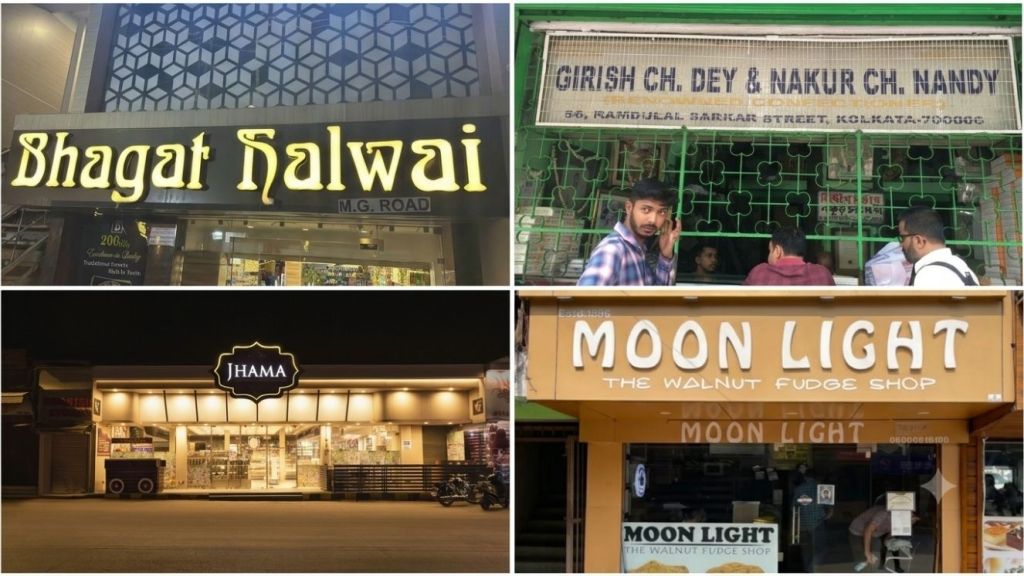

One thing that truly binds Diwali celebrations across India is the humble mithai box. It could either be kaju barfi from Chaina Ram in Delhi, rasagola from Bikalananda Kar in Odisha, or halwa from Sankaran Bakery in Kerala. The sweet may change with the geography, but the attachment to it remains remarkably constant. From Bengali sandesh to Rajasthani delicacies, every region has its own repertoire where recipes are handed down through generations, techniques closely guarded and flavours that locals, and Indians living abroad, return to with an almost ritualistic loyalty. For some, no amount of Swiss chocolates or English biscuits can quite replace the taste they grew up with.
There is Varanasi’s launglata from Shree Rajbandhu, dating to 1887, Kolkata’s Chittaranjan Mistanna Bhandar, established in 1907 and known for its rosogolla, and Bhim Chandra Nag in Bowbazar, credited with creating the ledikeni in 1858 for Lady Canning. Andhra has its paper-thin Atreyapuram putharekulu, Delhi’s Jama Masjid area has its old-world phirni shops, Kanpur has its iconic Thaggu Ke Laddoo, Jabalpur has the khoya jalebi of Badkul Pratisthan, Agra is famous for the khaand ke laddoo from Bhagat Halwai, and Bendgaluru has Anand Sweets that carries the tradition of special Dharwad peda beyond its original home.
Each is distinctive in its own right. Yet what makes these shops endure is the accumulated memory around them – families returning to the same counter where the waft of sweet milk made their eyes pop, travellers carrying boxes home, and generations associating a particular taste with a particular place. In a country where food traditions are often deeply local, these sweet shops are no less than national archives with preserved recipes, adapting to newer tastebuds and, carrying their cities’ histories into the future, one paperboard box at a time.
Girish Chandra Dey & Nakur Chandra Nandy, Kolkata, West Bengal
Famous for: Sandesh
At 56 Ramdulal Sarkar Street, surrounded by Kolkata landmarks such as Bethune College, Hedua and the birthplace of Swami Vivekananda, Girish Chandra Dey & Nakur Chandra Nandy has become a permanent address for aficionados of sandesh, a classic Bengali milk sweet made with fresh chhana (homemade cottage cheese or paneer) and sugar or jaggery.
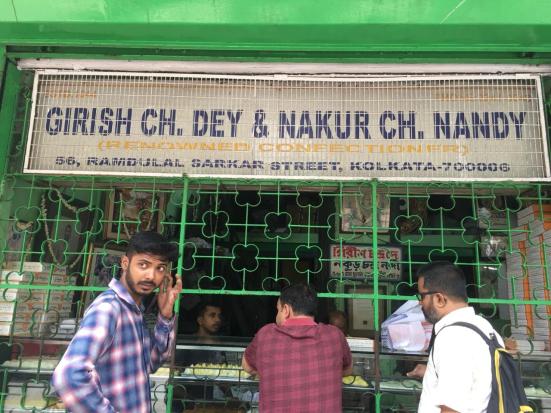
The shop traces its lineage to Mahesh Dev, whose daughter married into the Nandy family. Partha Nandy, 43, represents the fifth generation of the family in the sweet business.
The shop began as a modest tin shed before Nandy’s great-grandfather moved it to its present location. Much of the production process, he says, remains unchanged. “About 90% is still the same and made manually,” says Nandy.
That matters particularly for sandesh, where texture can be as important as flavour. Chhana has to be kneaded differently for different varieties, and Nandy argues that machines cannot easily reproduce those distinctions. “One kneading can’t fit all or give an authentic taste,” he says. The sandesh industry is relatively small and has no machinery designed specifically for its requirements. Instead, Nandy says that “equipment adapted from other food processing, such as a noodle maker, can produce uniformity but not necessarily the distinct textures each variety demands”.
The shop offers around 60 kinds of sandesh, including talsash, jalbhara, parijat, dilkhush, monohara and black forest. Jalbhara remains its biggest seller, with a jaggery version appearing during the gur season.
Tradition, however, does not mean keeping every recipe frozen. “Golapi dana, a rosewater-flavoured sandesh, has retained its recipe across generations. Other products have evolved with customers’ preferences. Karapak sandesh, once considerably sweeter, has been toned down as consumers have become more conscious of sugar,” says Nandy. Chocolate sandesh, meanwhile, has moved towards darker chocolate as customers increasingly seek the taste of both chhana and chocolate.
“We understand that it can be monotonous, so we strive to bring variety and changes that evolve with the times,” Nandy says.
The shop processes its ingredients from scratch rather than buying finished components, and says no product is carried over to the next day. Naram-pak sandesh generally lasts one to three days, while karapak varieties can last up to a week.
Over the decades, the shop’s reputation has travelled far beyond Kolkata. Nandy recalls that politicians and film personalities once regularly stopped at the counter themselves. One family story involves Sadhan Pande, the former West Bengal minister, who Nandy says would buy golapi peda for Rajiv Gandhi because the former prime minister was particularly fond of it. “There was a time when celebrities would stand in front of the counter and have our sandesh, but because of security and privacy reasons, that has changed,” says Nandy. The shop has since supplied sweets for other high-profile occasions. Its sandesh was sent to Ayodhya during the Ram Mandir inauguration, while its chocolate, parijat and mousumi sandesh featured at the wedding reception of Abhishek Bachchan and Aishwarya Rai.
The demand now travels by chartered flight as readily as by courier. During the conversation, Nandy received another call, an order being packed for the Ambani family, to be sent to Mumbai by chartered aircraft. For such customers, shelf life becomes a logistical calculation. “We have to pack accordingly, we always ask beforehand how long they will consume the sweets and tell them the sweets accordingly,” Nandy says.
The shop could, by Nandy’s own admission, make the business more efficient through greater mechanisation. But that would come at a cost to the very quality that has built its reputation. “We could be flourishing if we had upgraded to machines, as there would be much less manual labour,” he says. “But we want people to have authentic sweets that their grandfather had with us,” adds Nandy.
Lakshmi Mishthaan Bhandar, Jaipur, Rajasthan
Famous for: Paneer ghewar
Lakshmi Mishthaan Bhandar (LMB) is approaching a milestone that neatly overlaps with the history of the city around it. The family says it will mark 300 years in November, around the time Jaipur approaches its own 300th anniversary.
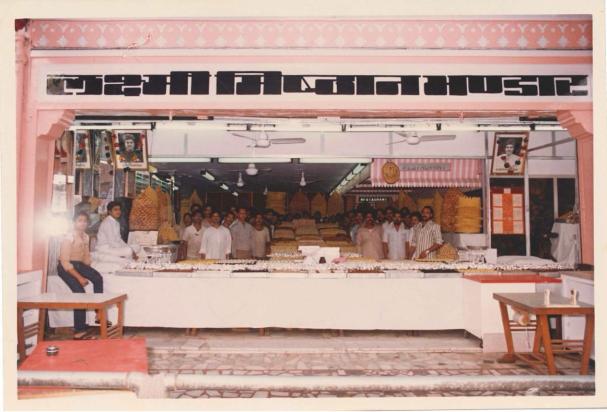
The business is now in its 13th generation, with the 14th already entering the trade. But for much of its history, there was no formal brand. The family were simply halwais. “People would just say, ‘Gorawat ki dukaan se lao, and people would know it’s us,” says Ajay Agarwal, owner of LMB.
For generations, the sweet shop would be in line with other sweet shops. In 1940, his grandfather opened a shop on Jaipur’s main road, and in 1942, LMB was formally established. “My grandfather was a sincere craftsman who made sweets by hand, and we still regard his approach to ingredients and preparation as the foundation of the business,” says Agarwal.
“Our recipes are still preserved exactly, ingredients are built in-house,” he says. “Our reputation is not built just like that. Kisike kehne se nahi aata, barqarar rakhna padta hai.”
The principle extends to the family’s understanding of food. Agarwal says sweets are viewed as bhog, an offering to God, making quality a matter of faith as much as commerce. The business uses what it describes as its best available flour, pure ghee, spices and dry fruits.
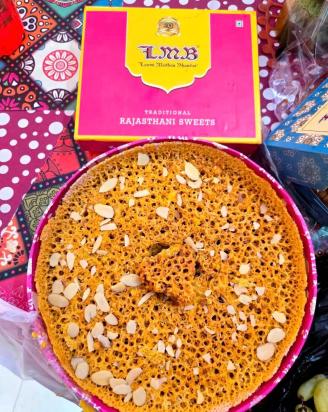
One of LMB’s defining products emerged from an experiment in the 1960s. Agarwal’s grandfather was inspired by Kolkata’s chhena-based sweets and began experimenting with ghewar. After three to four years of trials, the family introduced paneer ghewar, which became one of its signature offerings.
The shop now sells more than 200 varieties of sweets, including paneer ghewar, doodh phirni, mishri mawa and sohan halwa. Jaipur’s tourism economy has become an important part of the business, although Agarwal says locals remain equally significant.
The bigger challenge, he says, has been managing change without making the transition too obvious. “There have been so many changes in the past 15 years that didn’t happen in 50 years,” he says.
Sugar and ghee levels have been adjusted in some products as tastes have shifted. LMB has also expanded beyond sweets and began serving vegetarian food with onion and garlic in 2001 and operates a hotel alongside its sweet shops. The hotel dates to the 1960s, when Agarwal’s grandfather, inspired by hotels in Delhi, wanted to offer travellers an affordable place to stay.
The family has also accumulated a long list of famous customers. Former Pakistan prime minister Benazir Bhutto is among those Agarwal remembers having eaten at LMB, while the Ambani family remains a regular customer. Bollywood personalities, politicians, influencers and spiritual figures have also passed through.
But celebrity status does not, he says, mean special treatment. “We never block seats or inconvenience our regular customers to make way for celebrities,” Agarwal says. The shop has resisted some opportunities to expand more aggressively. In 1990, the Sultan of Oman reportedly asked the family to open an outlet there. They declined, preferring to retain a degree of exclusivity.
Today, LMB has its flagship in Johari Bazaar and another outlet in Vaishali Nagar. Its sweets travel internationally, with longer-lasting products such as besan laddoo, peda, gulab shakri and sohan halwa, particularly suited to long-distance gifting. “It’s a favourite among locals and NRIs. LMB is close to people’s hearts. Also, when people continue to like something, it gives us a fillip. So when we pack 1-kg sweet, we put one extra piece, thinking we’re giving it to god,” adds Agarwal.
Dhodha House, Ludhiana, Punjab
Famous for: Dhodha Barfi
The story of Dhodha begins with an experiment rather than a confectionery shop. “In 1912, my great grandfather Lala Hans Raj Vig had returned from his morning exercise and was trying to create an energy food for sportsmen. The preparation became so popular among friends and villagers that he started producing the sweet commercially. He called it ‘Dhodha’,” says Rajan Vig, 47, who represents the fourth generation of Dhodha House.
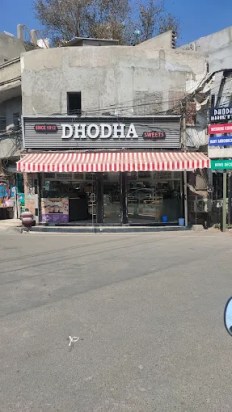
The confection went on to become a rich, fudge-like Punjabi sweet made with sprouted wheat, milk and desi ghee. More than a century later, its recipe remains a closely guarded family secret.
Vig says his son has now entered as the fifth generation. “After the division of Indian and Pakistan, it changed the geography of the enterprise. After 1947, our family moved to Kotkapura and later established operations in Ludhiana,” he says.
The business has since grown well beyond the small traditional sweet-making operation from which it emerged. Dhodha is now manufactured in Kotkapura, Ludhiana and Ghaziabad and distributed across Punjab and other states, with the family having developed formal distribution and payment-collection systems around the product.
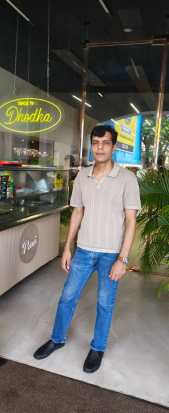
The transformation reflects a broader shift in India’s traditional sweet industry, from the neighbourhood halwai to a more organised food-processing business.
Yet the family’s proposition remains rooted in the original recipe. “Quality is our obsession,” he says, describing consistency and taste as the principles that have allowed the business to survive generations of competition.
There is also a geographical story to its expansion. “What began as a local Punjabi sweet has travelled with us through Partition,” says Vig, adding that it is now reaching consumers in Western markets.
For the fourth and fifth generations, the challenge is, therefore, different from the one faced by Lala Hans Raj Vig. “Earlier, the original question was whether an experimental recipe could become a business. Today it is whether the business can scale keeping its integrity,” he adds.
Moonlight – The Walnut Fudge Shop, Srinagar, Jammu & Kashmir
Famous for: Walnut Fudge
In 1896, Ghulam Mohammed developed a confection using three ingredients strongly associated with Kashmir, which are walnuts, honey and dates. The product, now known as Moonlight’s walnut fudge, became the foundation of a family business that has survived more than a century of upheaval.
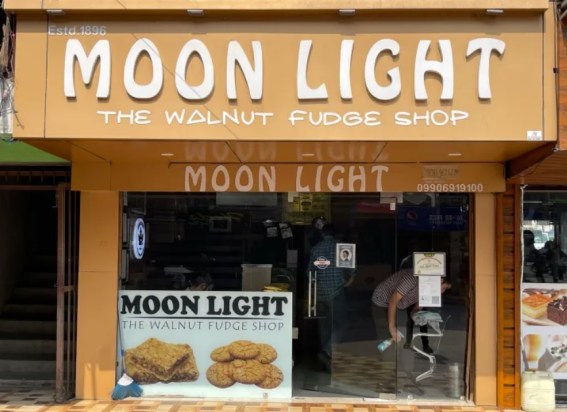
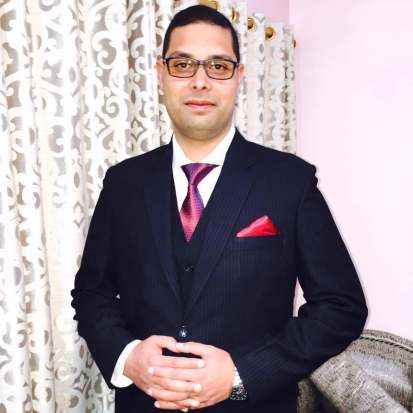
Moonis Mehraj, 39, represents the fourth generation. “The original shop was established around Dalgate, beside Dal Lake. During the turmoil of the 1990s, the Dalgate outlet was closed and our family shifted its operations to Hazratbal, where it has remained for close to four decades now,” says Mehraj. The business later expanded to Parray Pora and other parts of the valley, and has since expanded it to 11 stores across Kashmir.
The walnut fudge remains the shop’s defining product, along with traditional ginger biscuits. Unlike conventional chocolate fudge, it contains no dairy, chocolate or added sugar. Its dense, chewy texture comes from local walnuts, honey and date pulp, layered over a wafer-thin pastry base. And the recipe remains firmly within the family.
“We have not revealed the making of this product outside the family,” says Mehraj. He adds that they strive to maintain the exact recipe, quality and cleanliness that was built by his great grandfather. “We make it every day and then send it to our outlets. It makes me feel proud when people remember our sweets even after decades of having them. We get so many requests on Instagram asking us whether we can courier it to them, when can we restock, when do we open and close our stores so that they plan their trip accordingly,” says Mehraj.
“Tourists form an important customer base, turning the walnut fudge into something of a take-home souvenir from Srinagar. But the customer base extends beyond tourism,” he says, adding that the shop receives orders for weddings, engagements and festivals such as Diwali, with customers in Chandigarh and Delhi among those placing orders. “Even if they can’t come physically, we courier it to them. Our sweets have travelled as far as Kerala and Kanyakumari,” says Mehraj.
Prem Sweets, Kud, J&K
Famous for: Patisa
On the Jammu-Srinagar highway, in the quiet hill village of Kud near Patnitop, Prem Sweets has been making sweets since 1925. Founded by Pandit Lok Nath Khajuria, the business is now in its fourth generation, with five outlets across Jammu. What was once a small shop in a hill village now sits beside a national highway, serving generations of travellers making their way towards Srinagar and Patnitop.
For Amit Khajuria, 32, the family business remains anchored in the sweet that made its name: patisa. “My great grandfather started with patisa, peda, kalakand and other sweets, but it’s the Kud patisa that people keep coming back for,” says Khajuria.
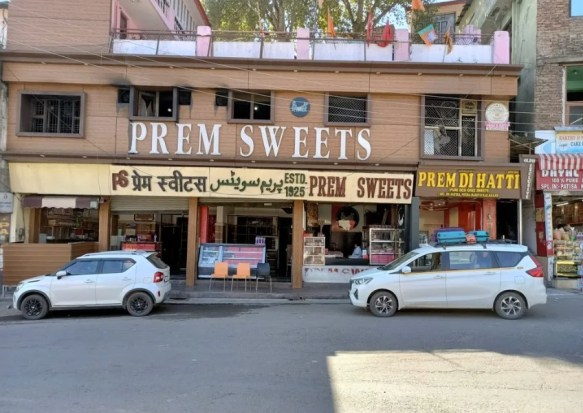
The crisp, flaky sweet, soaked in ghee and made fresh, is still prepared in a kadai, using a technique passed down through generations. Kalakand and barfi are other favourites, but patisa has become synonymous with the shop.
“Patnitop being a hill station attracted a lot of people, and our shop became very famous over time as more people came and went back home talking about our patisa,” Khajuria says. “Whoever was visiting, especially people travelling towards Srinagar, would take our sweets with them.”
The shop’s location has played a major role in that reputation. What was once a small village now has a national highway running in front of the shop, bringing a steady stream of travellers. During the pilgrimage season and periods of heavy highway traffic, the crowds increase further.
That customer base now extends well beyond Jammu. People who grew up eating the shop’s sweets and later moved abroad often return to India and carry kilos of patisa back with them. Khajuria says the family now receives enquiries from overseas and is trying to develop international courier options.
“We courier to Delhi, Mumbai and even Bengaluru. We’re trying to courier to Western countries as well, because we get enquiries from there. That’s what we want to do, and we’re working towards it,” he says.
There has been no rush, however, to modernise the product itself. As cafes and contemporary desserts proliferate, Prem Sweets remains focused on what it has always made. “We only focus on our traditional sweets, made manually using pure desi ghee,” Khajuria says.
The family’s faith in that approach goes back to its founder. “Our great-grandfather’s undying belief in the use of locally produced pure desi ghee and other ingredients, tempered and cooked with utmost care, continues to guide us to this day,” adds Khajuria.
That old-fashioned approach has not prevented the shop from becoming a destination. Khajuria says celebrities and ministers visiting the area have routinely stopped by for its sweets. “I can’t keep count now. Everyone has come to our shop,” he says.
For Khajuria, the challenge now is not to reinvent Prem Sweets, but to preserve what made it famous in the first place. “We are very proud. It is an established institution here, and there is always a demand,” he says. “Moving forward, our focus is on maintaining quality and keeping our customers happy. That’s the challenge we have, especially aaj ke zamane mein.”
Jhama Sweets, Chembur, Mumbai
Famous for: Gulab jamun
Jhama Sweets began in a 4ft-by-4ft shop in Chembur with just two products, gulab jamun and sev barfi. Nearly eight decades later, it has 11 company-owned outlets, a pan-India online delivery operation and customers overseas. Yet those original two sweets remain among its most sought-after.
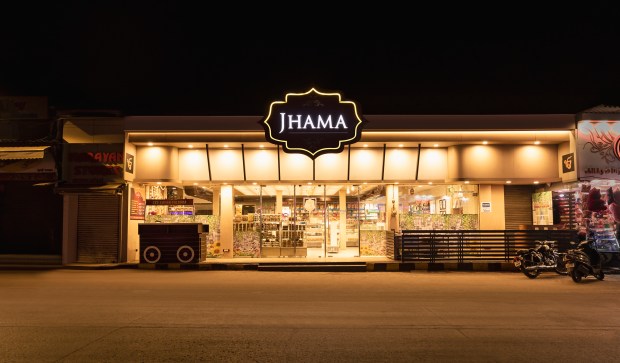
The story begins with Partition. Jhamamal Lulla, a young married Sindhi refugee from Larkana, migrated to India and started the tiny shop in Chembur. “In 1948, my father began with a small shop in Chembur serving only two sweets. Those two sweets are still among the most sought-after at Jhama Sweets,” says his son, Vinod ‘Vicky’ Lulla, 57.
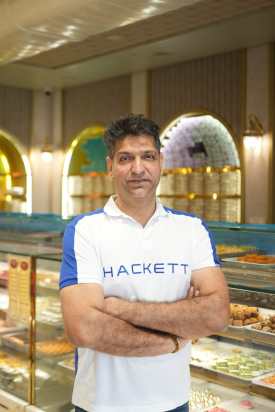
“My father would wake up early in the morning and prepare everything from scratch. By 7am, he would open his stall and sell until the stock lasted. Those sweets earned him his reputation,” Lulla says.
A few years later, when the government began allotting small plots for shops, Jhamamal was able to acquire an adjoining plot. By the end of the 1960s, he had expanded the shop to around 2,000 sq ft.
By 1984-85, the family had expanded the menu to include more sweets and snacks. When Jhamamal died in 1985, his sons took over the business. Lulla now runs it with his brother Govind, 77, while the third generation has also joined the family business. His sons, aged 26 and 28, entered in 2022.
The expansion has been deliberate. The family now has 11 shops, from Chembur and Vashi to Ghatkopar and Thane, but none are franchises. It also operates an online delivery business serving customers across India and overseas. Customers can order directly through the website. Since most traditional mithai is milk-based, its natural shelf life is around two days. Lulla says specialised packaging and controlled atmospheric conditions can extend that by about a week, without preservatives.
The central principle, according to Lulla, remains what his father established. “My father firmly believed in providing customers with nothing but the best in quality and taste, and the brand has lived by that principle ever since,” he says. That means resisting the use of preservatives and stabilisers. “We don’t use any preservatives at all,” Lulla says. “We focus on sweets that have a natural shelf life, without any life-extending ingredients. We sell the products on the same day.”
The taste, he insists, has remained constant. “Our sweets taste exactly the same as they did 70-80 years ago,” he says. It is a philosophy that has created a loyal customer base. Lulla says some families have been visiting Jhama for 40-50 years. The shop has also attracted celebrities, including Salman Khan and Abhishek Bachchan, but celebrity clientele is not something the family actively uses in its marketing. “Of course, there are celebrities, but we don’t prefer to advertise like that. It’s our regular customers we believe in,” he says.
The shop also preserves elements of its Sindhi culinary heritage through seasonal preparations. “During Holi, we prepare a particular kind of ghewar made according to a traditional Sindhi recipe. It is different from the Rajasthani ghewar and is made only once a year,” Lulla says.
Diwali is another important period, when demand for kaju katli rises sharply. Ganesh Chaturthi has also emerged as a bigger occasion for mithai gifting. “Earlier, there wasn’t much exchange of mithai during Ganesh Chaturthi, but now people are buying several kilos,” he says.
Today, Jhama Sweets offers around 200 varieties of sweets. Its scale is a long way from the 4ft-by-4ft shop where the business began and now sells more than 5,000 gulab jamuns and around 100 kg of barfi a day. The numbers have changed significantly but the two original sweets and its taste built by Jhamalal have not.
Guru Sweet Mart, Mysuru, Karnataka
Famous for: Mysore pak
The city of Mysuru would always remind a person of the cherry-top royal palaces; so it is obvious that even the story of the city’s most famous sweet begins with its royal kitchen. Guru Sweet Mart, the small shop at Devaraja Market Building, traces its lineage to Kakasura Madappa, the royal cook credited with inventing Mysore pak. More than a century later, his descendants still make the sweet using the traditional method.
“This is the place where Mysore pak began. We are the founders of world-famous Mysore pak made in pure ghee,” says Shivananda, in his 60s, one of three brothers who represent the fourth generation of the family in the confectionery business.
The shop has no branches. Its Mysore pak is still prepared in traditional ovens fired by coal, and the sweets are made at the family’s ancestral 10-room home near the shop.
The origin story is almost mythological to be true. “In 1935, Maharaja of Mysore Nalvadi Krishnaraja Wodeyar was expecting guests and asked our ancestors to create something new. He combined gram flour, sugar and ghee in a large cauldron and Mysore pak came into being. The king liked it so much that a sweet stall outside the palace was put up so the public could taste it,” says Shivananda.
The shop was firstly opened on Ashoka Road, and later moved to Sayyaji Rao Road in 1957 with the name Guru Sweet Mart. The family has resisted the logic of expansion. “There are no branches, everything is sold here,” says Shivananda, even though the shop sells more than 40 varieties of sweets.
“Mysore pak is very popular abroad and we send lots of it all over the world,” he says. The shop makes two varieties, one using vanaspati and another using ghee. “The ghee one is more popular,” he says.
Mysore pak is now made and sold across Karnataka and far beyond, but Guru Sweet Mart sees its version as the original, with a recipe maintained through generations. “It is our pride,” Shivananda adds.
Bhagat Halwai, Agra, Uttar Pradesh
Famous for: Besan laddoo
For generations of Agra residents, the taste of a besan laddoo has been inseparable from Bhagat Halwai. Founded in 1795 by Lekh Raj Bhagat in the city’s Belanganj area, the 230-year-old sweet shop has outlived changing tastes, generations of customers and the transformation of Agra itself. What began as a small establishment selling besan laddoos has grown into a family-run business with eight outlets across Agra and another in Firozabad. The ninth generation is now carrying the legacy forward.
“We are originally Khandelwal, but we use the surname Bhagat, which was given to us by a customer,” says Shivam Bhagat, 35, who represents the younger generation of the family.
Much of the shop’s history survives in the memories of its customers. Some recall a time when they could buy its sweets for just four annas. “When we hear stories from our customers that they used to buy our sweets for ‘char-ana’, it gives us a nostalgic feeling. We feel proud that the same people still remember us,” Bhagat says. The family has its own recollections of the early years. His grandfather, Bhagat says, was particular about hygiene and would not accept money directly from customers. Instead, he collected payments in a leaf bowl, or dona, which he washed with water from the Yamuna before using again.
Besan laddoo remains central to the shop’s identity, alongside traditional offerings such as khand ke laddoo, boondi laddoo and barfi. Over the years, the business has expanded into bakery products and chaat, and Bhagat Halwai claims to have been the first in Agra to introduce pav bhaji, responding to customers looking for something different. Yet the family believes its longevity rests on preserving the familiar. The sweets continue to be made by hand, without machines, following methods passed down through generations. One employee has been with the business for 40 years, providing another link between its past and present.
“Consumers want the same taste they remember from childhood. We still make our sweets traditionally, following the same processes our great-grandfathers used,” Bhagat says.
For him, traditional mithai has a place that contemporary desserts cannot displace. “A boondi laddoo or a ghewar cannot be replaced by a Western sweet. They are completely different,” he says. Bhagat Halwai has adapted to changing preferences, introducing Biscoff barfi, Oreo-based sweets, chocolate preparations and tiramisu modak for younger customers. It has also developed lower-sugar options in response to growing health awareness. The business now delivers across India and internationally. It has also begun offering railway deliveries through food-delivery platforms, allowing passengers to order sweets for delivery to their train coaches using their PNR details.
From a small shop selling besan laddoos to a business spanning multiple outlets and digital platforms, Bhagat Halwai has expanded without abandoning the sweet that made its name.