


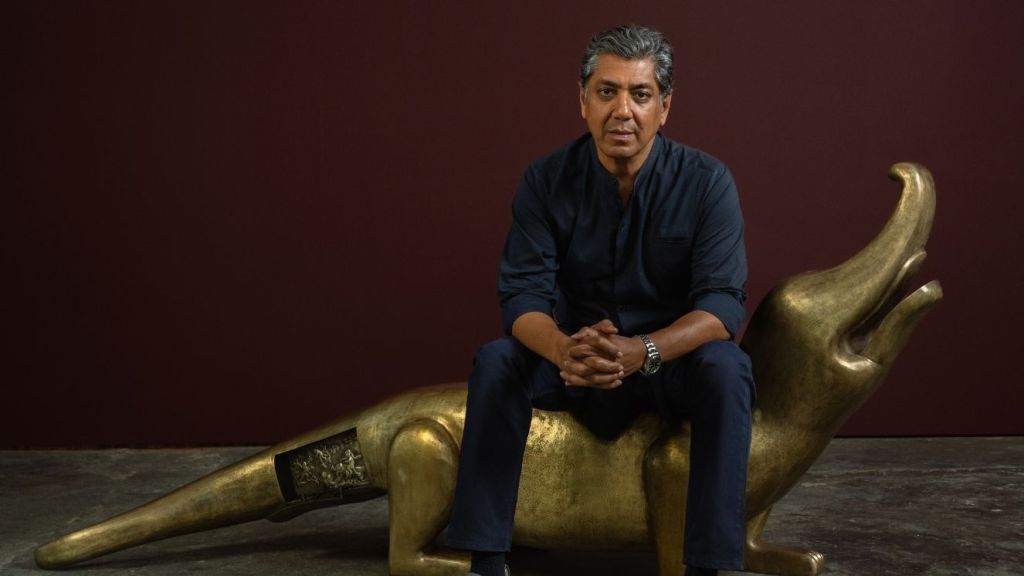

From Fendi’s mirror-work handbags to Prada’s Kolhapuri-inspired sandals, Indian craft is increasingly finding a place in global luxury. But as traditional techniques and cultural symbols enter international fashion, questions of ownership, acknowledgement and fair compensation become harder to ignore. For Delhi-based artist-designer Vikram Goyal, the answer lies in looking beyond the aesthetic appeal of craft to the generations of knowledge embedded within it.
“I think the responsibility is a real one. Artisans have carried these skills across generations, often with very little recognition. Brands drawing on these traditions must credit their makers, work directly with them, pay them fairly and invest in the continuation of their skills,” says Goyal, who recently concluded his exhibition in London titled Wings and Tales.
Maximalism and craftsmanship are central to Goyal’s versatile practice of making handmade luxury furniture, lighting, textiles and decor collections over the past two decades. For him, it’s not about reproducing the past for contemporary consumption, but allowing inherited knowledge to evolve. “Craft traditions are not simply techniques or patterns, they carry generations of knowledge, and that deserves to be acknowledged and respected,” he says.
Through Wings and Tales, Goyal brings different crafts together in a contemporary visual language while retaining their historical richness. Furniture, objects and brocades inspired by nature and mythical creatures from the Ramayana transform the interior into an immersive landscape.
The exhibition builds on Soul Garden, presented at Design Miami/Paris in 2025, where Goyal explored the relationship between nature, craft and spirituality through the animal fables of the Panchatantra. But this time, he turned to the epic’s forests, creatures and themes of friendship, loyalty and compassion, translating them through his signature brass repoussé technique, metalwork, embroidery and richly worked textiles.
“You can take a tradition into new territory without losing what makes it meaningful. The challenge is not to make Indian craft more palatable to an international audience, but to create work that invites curiosity about the worlds from which it emerges,” he says.
This philosophy even extends into Viya, Goyal’s luxury lifestyle, home decor, and furniture brand that launched a womenswear line this year. The line extends the brand’s material-led aesthetic into silhouettes like kaftans, tunics and overlap sets with fabrics like chanderi, ramie and silk.
At a time of environmental upheaval and global conflict, Goyal sees design as an opportunity to create space for reflection rather than simply produce objects for display.
“In design, we have an opportunity to think beyond immediate trends and consider how an object will age, how it will be used and whether it will remain meaningful to someone over time,” he says. “Much of the craft I work with is slow by nature. Fewer things, made well, by people who are properly valued, and meant to stay,” he adds. It is a principle that connects his commitment to artisans with his concern for the environment.