


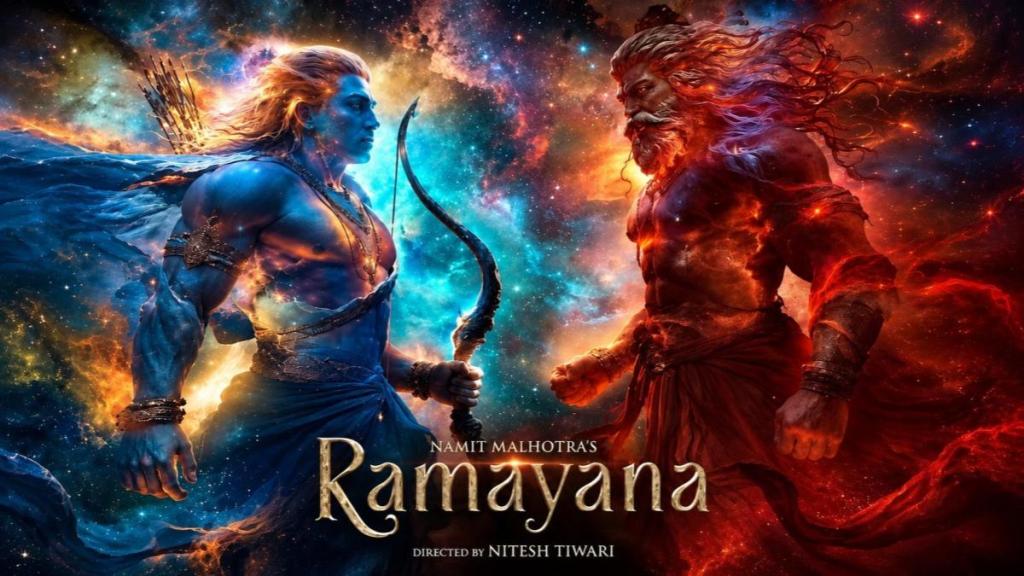

Nitesh Tiwari’s Ramayana: Part One is attempting something Indian cinema has rarely tried: turning an estimated Rs 2,000-crore production into a commercially viable global film. With Ranbir Kapoor as Ram and Yash as Ravana, the film brings together a story every Indian knows, a pan-Indian cast and international ambitions. The question is whether its box-office economics can match its scale.
Trade experts, exhibitors and distributors say the makers are counting on a mix of theatrical collections, digital and satellite rights, music licensing and an unprecedented overseas rollout to recover their investment. The film opens on Thursday on 59,000 screens worldwide: 9,000 in India and 50,000 abroad.
JioStar has acquired the digital and satellite rights to the first instalment for an estimated Rs 450 crore, according to industry sources. After an exclusive theatrical window, the film is expected to stream on JioHotstar on a pay-per-view basis, with viewers paying for it separately rather than receiving it as part of their subscription. That could open a further revenue stream, though the company has not disclosed how the proceeds will be shared.
“Leveraging JioHotstar’s technology capabilities and extensive reach, the partnership will bring the highly anticipated film to audiences across India in the highest possible quality across supported devices,” JioStar said in a statement.
T-Series has bought the music rights for Rs 75 crore, according to people familiar with the deal. The deal covers both instalments; therefore, not all of it can be credited to Part One. The involvement of composers A. R. Rahman and Hans Zimmer may lift the soundtrack’s commercial appeal, though early reactions to it have been mixed.
Even if non-theatrical deals bring in Rs 475–500 crore, the makers must still recover around Rs 1,500 crore at the box office.
That is a steeper climb than it sounds, because gross collections are not what producers take home. Taxes come off the top, and exhibitors and distributors take their cuts before the producer sees the balance. “Depending on the revenue-sharing arrangements, the film would need worldwide gross collections of around Rs 3,000-4,000 crore to generate sufficient theatrical revenue to recover the estimated Rs 1,500-crore shortfall,” said movie business analyst Ramesh Bala.
Trade projections put the film’s opening-day net collections in India at Rs 75–100 crore, possibly more with paid previews and festive demand. Overseas, an opening weekend of $20–25 million would amount to roughly Rs 180–225 crore at current exchange rates.
Film trade analyst Komal Nahta is more bullish about the film’s prospects abroad. “There is no precedent, there is no comparison for this kind of cinema and the makers are counting on visual appeal on the lines of Avengers or Avatar to draw viewers to theatres especially overseas,” he said.
Nahta believes overseas collections could reach Rs 300–500 crore in the first three days, driven by the film’s spectacle and audiences’ emotional bond with the epic.
The early numbers are strong. As of Wednesday, gross advance bookings in India for the first five days were nearing Rs 100 crore, and worldwide pre-sales for the same period had crossed Rs 140 crore. Ticket prices range from Rs 150 to Rs 3,170 depending on city, format and seat, pointing to a significant premium-pricing opportunity for exhibitors and the makers alike.
Exhibitors are encouraged. Sanjeev Kumar Bijli, executive director of PVR Inox, said advance bookings across the chain’s cinemas had crossed 250,000 tickets. “The response to Ramayana has been very encouraging across the PVR Inox circuit. The film’s opening during a six-day festive window is well timed, as this is traditionally a period when families come together and cinema becomes a natural part of the celebrations,” he said.
A strong opening alone will not settle the film’s commercial fate, however. As the first of two parts, it must also build anticipation for the sequel, which makes sustained interest and word of mouth critical.
Trade analyst Taran Adarsh believes that, in the end, audiences will decide. “It boils down to the content and how honest they have been with the Ramayana and the subject matter,” he said.