


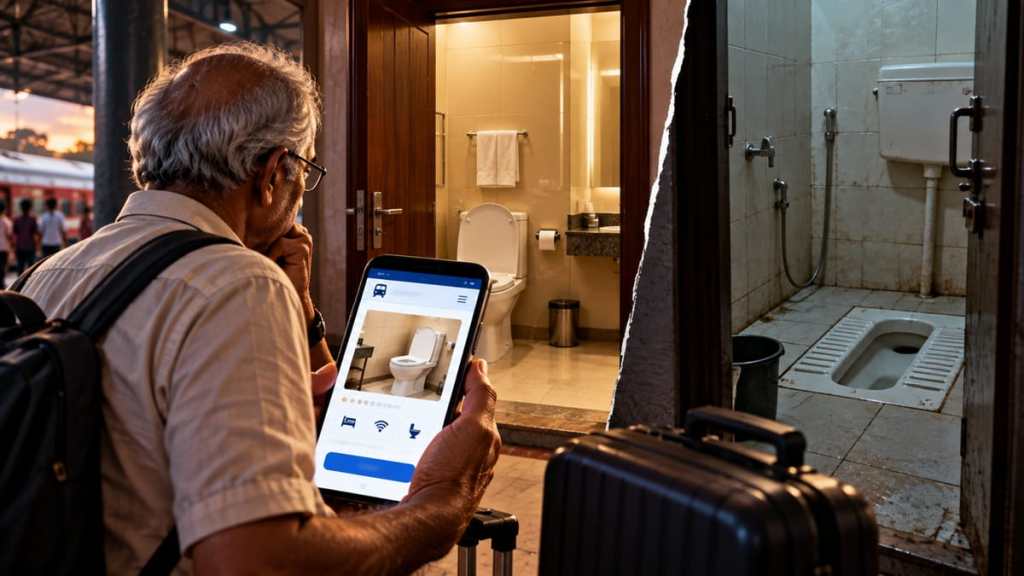

A 72-year-old passenger who booked a railway retiring room for Rs 333 in May 2024 found that it had a different type of toilet from the one advertised online. He returned the keys without using the room and asked for a refund. What came after two years of back and forth with the authorities was a compensation ordered by district consumer forum of Rs 3,000. The man eventually reached out to the state consumer commission challenging the compensation.
According to an Indian Express report, the Chandigarh State Consumer Disputes Redressal Commission held that the earlier compensation was merely “token” and inadequate considering the inconvenience, harassment and effort involved in pursuing the grievance. It further ordered the authorities concerned to pay the man Rs 20,000.
The Indian Express also reported that the commission upheld the direction to refund the passenger’s Rs 333 booking amount with 9% annual interest. The order was passed on September 22 by presiding member Padma Pandey and member Rajesh K Arya.
Rs 333 booking turns into consumer dispute
According to the case details reported by The Indian Express, Bhartendu Sood booked a retiring room at Chittorgarh railway station through the IRCTC portal for May 12, 2024. The online booking information showed that the room had a Western toilet.
Sood, who was 72 at the time, said he relied on this information as the type of toilet was important to him given his age and infirmities.
But when he reached the station, he found an Indian-style toilet in the room instead. Sood complained to the station authorities, who, according to the order, acknowledged the deficiency. He returned the keys without using the room and was initially assured that the booking amount would be refunded.
Passenger says refund was later denied
The Rs 333 refund, however, did not come through. The order records Sood’s claim that Western Railway later denied the refund on the ground that the service had been availed.
Sood then approached the consumer commission, alleging deficiency in service and unfair trade practice. He sought the refund with interest, compensation for mental agony and harassment, and Rs 10,000 towards litigation expenses.
IRCTC, Railways dispute responsibility
IRCTC argued that it and the Railways were separate entities with distinct responsibilities. It said the retiring room at Chittorgarh was managed and maintained by the Railways, including the room’s furniture, beds and toilets.
IRCTC also submitted that the information displayed on its portal was based on data supplied through the Passenger Reservation System and that it had no independent role in verifying or altering those details.
Meanwhile, the Railways denied responsibility and argued that the dispute concerned the IRCTC booking and the retiring-room facility under its Ratlam division.
District commission awards Rs 3,000
The District Consumer Commission-I, Chandigarh, partly allowed Sood’s complaint on March 2, 2026. It directed the respondents to refund the Rs 333 booking amount with 9% simple interest from the date of payment. It also awarded Rs 3,000 towards mental agony, harassment and litigation costs.
Sood challenged the quantum of compensation before the state commission, arguing that the amount was inadequate considering the time, expense and effort required to pursue the case.
Rs 333 refund, 9% interest
The commission retained the direction to refund the Rs 333 booking amount with 9% simple interest from the date of payment. The respondents have 30 days from receipt of the certified order to comply.
If the refund is not made within that period, it will carry 12% annual interest from the date of default. The Rs 20,000 compensation will carry 9% annual interest from the date of default.
Takeaway
The ruling shows that when a service does not match what was specifically represented at the time of booking, the consumer remedy may extend beyond a simple refund. For online bookings, consumers should preserve screenshots of advertised facilities, booking confirmations, payment receipts and communications with the service provider.
Such records can help establish what was promised and whether the service actually delivered matched the representation.