


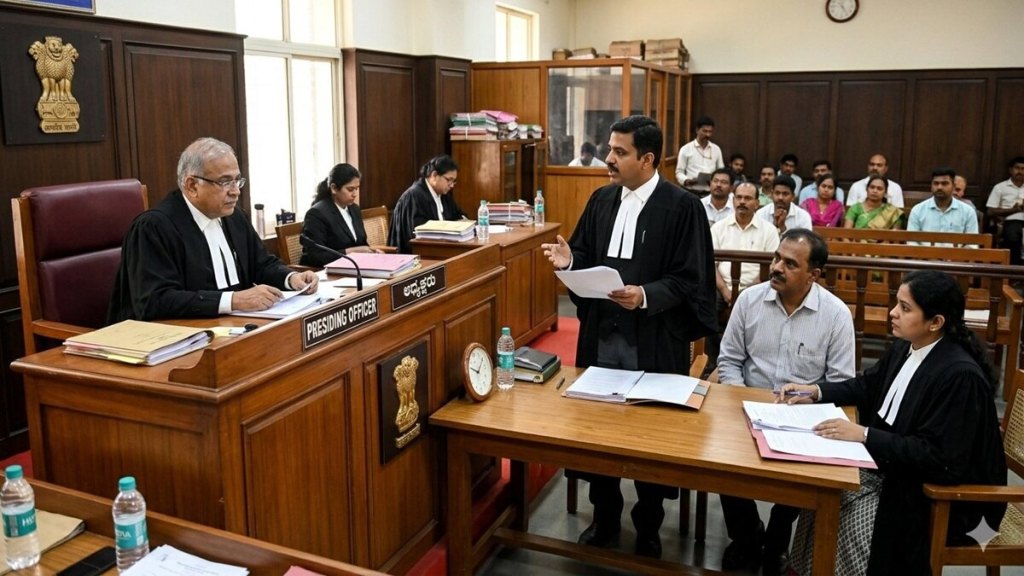

A Bengaluru court directed a bank to refund Rs 16.42 lakh to a 65-year-old businessman after finding that the bank collected excess dues due to mistakes in calculating interest on overdraft facilities. According to The Indian Express news report, the court also ordered the bank to pay Rs 3 lakh as compensation for deficiency in service, bringing the total immediate monetary relief to nearly Rs 19.42 lakh, apart from interest on the refund.
The order was passed on October 9 by Bengaluru LXIII Additional City Civil and Sessions Judge IP Naik in a civil suit that a man filed in June 2017. The court held that the borrower proved the bank wrongly calculated and collected Rs 16,42,400.
“The defendant bank committed a mistake while calculating the account. The plaintiff has successfully proved the excess amount of Rs 16,42,400 was wrongly calculated and collected by the defendant Bank. The defendant Bank is bound to refund said amount. The plaintiff is entitled to compensation of Rs 3,00,000 from the defendant Bank due to their deficiency in service,” the court said.
What the borrower alleged
The complainant ran a business in old newspapers, machinery parts and scrap. He told the court that the bank wrongly calculated his outstanding overdraft dues and included liabilities connected with his son’s separate business.
His main objection was to the interest calculation. He questioned interest rates of 14.25 per cent, 15.25 per cent and 16 per cent applied to the overdraft facilities, and also disputed the method used to compound the interest. According to him, the bank did not provide adequate documents to explain how the dues had been worked out.
The dispute did not begin in the civil court. It arose from a loan-recovery battle dating back to 2009, when the bank issued a possession notice over his mortgaged property in Chittoor, Andhra Pradesh, demanding Rs 21.57 lakh. The property was later auctioned for Rs 75.01 lakh.
A long legal battle
The man first challenged the recovery proceedings before the Debt Recovery Tribunal in Bengaluru and then the Debt Recovery Appellate Tribunal in Chennai. He later moved the Karnataka High Court.
The Indian Express report added that during those proceedings, he deposited Rs 38.84 lakh through four demand drafts in August 2012. In January 2013, the High Court set aside the auction sale and allowed the bank to restart recovery proceedings from the stage of the legal demand notice.
The man then approached the civil court in 2017, claiming he had paid more than what was legally due. The bank denied any wrongdoing and said its recovery action was lawful. It also argued that the civil suit could not be maintained because he had already approached debt-recovery authorities, and that his claim was time-barred.
Gaps in the bank’s documents
A key part of the court’s reasoning concerned the bank’s own records. During the trial, the bank’s assistant manager admitted that he had not examined the sanction letter for the overdraft facility or the consent letter relating to the mortgaged property.
He also accepted that some account statements had been prepared manually, and said the bank would need to verify whether certain statements had been generated through its accounting software. The court noted that neither side produced the relevant loan agreement or sanction documents.
Importantly, the court recorded that the bank’s witness did not dispute his calculations in the relevant portions of his plaint. After examining the account statements and payments, the judge concluded that the bank collected Rs 16.42 lakh in excess due to calculation errors.
Compensation, but no blanket interest waiver
The court did not accept every argument made by him. He sought interest at 15.25 per cent per annum on the refund and contended that the bank should not charge interest during the period of litigation.
The judge rejected the plea for a blanket exemption from interest during litigation, observing that the money involved was public money. However, the court directed the bank to refund Rs 16.42 lakh with interest at 6 per cent per annum from the date the suit was filed until the amount is realised.
On compensation, the court considered the faulty account calculations, the manually prepared statements and the long history of proceedings over the property. It awarded Rs 3 lakh for deficiency in service.
Why the limitation objection failed
The bank argued that the man’s claim was filed too late. The court disagreed, pointing out that his earlier complaint before a consumer forum was dismissed on February 5, 2016, for lack of jurisdiction.
The judge held that the time spent pursuing that complaint could be excluded when calculating limitation, since he approached the earlier forum without any deliberate attempt to misuse the legal process. The court therefore rejected the bank’s limitation objection.
What the bank must now pay
The suit was decreed with costs. The bank has been directed to pay within 30 days of the October 9 judgement:
- Rs 16.42 lakh as refund of excess collection
- Interest at 6 per cent per annum on that amount from the date of filing the suit until realisation
- Rs 3 lakh as compensation for deficiency in service
- Costs of the suit
The case is a reminder that a bank’s recovery claim is only as strong as its documentation. In this instance, missing sanction papers, manual statements and an unchallenged calculation by the borrower proved decisive.