


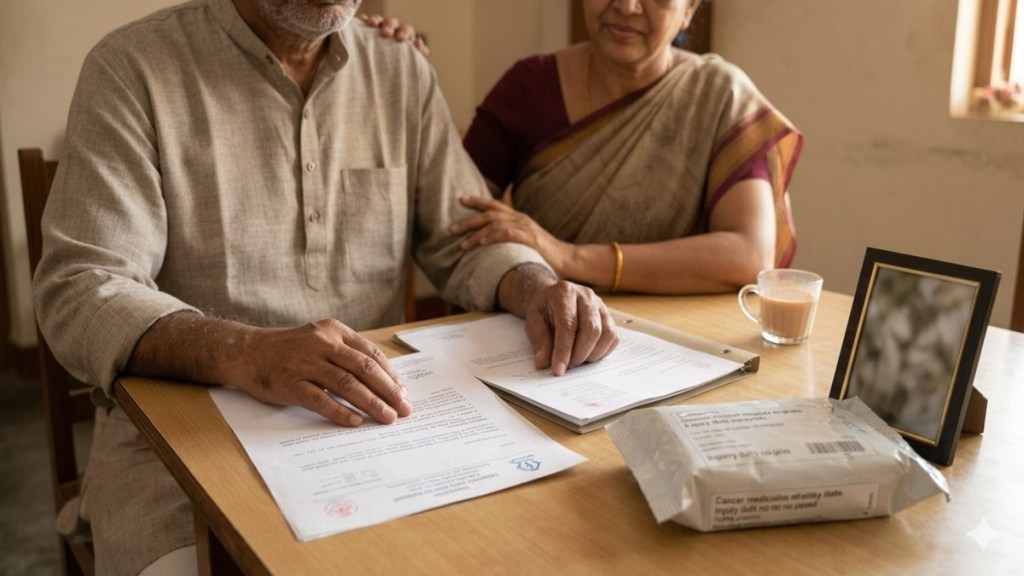

The Hyderabad District Consumer Commission ordered an ayurvedic hospital to pay a total of Rs 63,000 to the parents of a young cancer patient who died before he could use the medicines and therapy sessions they had paid for. According to The Indian Express news report, the amount includes a Rs 53,000 refund for unused medicines and unutilised therapy, plus Rs 10,000 as compensation and legal costs.
The Commission held that keeping money for services never rendered and medicines never consumed, despite the patient’s death, amounted to “unjust enrichment” and an “unfair trade practice.”
The complainants—a 64-year-old woman and her 67-year-old husband—approached the hospital while their son was undergoing chemotherapy for colorectal cancer. They sought supplementary, immunity-supportive Ayurvedic treatment alongside his conventional cancer care.
On September 17, 2025, the couple paid Rs 58,300 to the hospital. According to the complaint, this covered a three-month supply of medicines, consultation charges and 10 therapy sessions.
The hospital provides alternative and Ayurvedic immunotherapy for chronic diseases. The parents said the treatment was intended to support their son’s immunity during chemotherapy, not to replace his cancer treatment.
Patient died before treatment could be used
Soon after the payment, the couple’s son developed complications and had to undergo surgery. He died on October 24, 2025—a little over a month after the parents made the payment. Because of his deteriorating condition and subsequent death, much of the medication remained unconsumed and several therapy sessions were never availed. The parents returned the unused medicines to the hospital and asked for a refund of the amount paid for the unutilised services.
They said they contacted the hospital repeatedly through emails and WhatsApp messages. When those requests failed, they sent a legal notice on January 12. Even then, the hospital allegedly neither responded nor refunded the money.
Commission’s findings and why they called it unfair
The Commission noted that the hospital did not appear before it or contest the complaint. Notices sent to the hospital were returned with the endorsement “no such person at the address,” and a notice published in newspapers also drew no response. As a result, the case proceeded ex parte, meaning it was decided without the hospital’s participation.
The bench—President B Uma Venkata Subba Lakshmi and members C Lakshmi Prasanna and B Raji Reddy—found no evidence from the hospital showing a legal, statutory, or contractual reason to withhold the refund.
“Despite repeated requests by the complainants, the opposite party failed to refund the amount paid for the unavailed services and unconsumed products,” the order said.
The Commission was particularly critical of the hospital’s refusal to refund money in circumstances involving the death of the patient. It said that retaining payment for medicines not consumed and therapy sessions not rendered was not merely a commercial dispute, but an unfair practice.
“Withholding or refusing the refund, especially under such unfortunate circumstances involving the death of the patient before even consuming the medicines and the therapy sessions taken by the patient, unrendered therapy sessions, which not only amounts to unjust enrichment but also constitutes unfair trade practice on the part of the opposite party (hospital),” the order stated.
The Indian Express report added that the Commission also recognised the mental agony suffered by the elderly parents, who had lost their son and then had to pursue the hospital for a refund of money paid for treatment he never received.
The hospital was directed to refund Rs 53,000 for unused medicines and unutilised therapy sessions, along with Rs 10,000 in compensation and legal expenses, taking the total payable to Rs 63,000. The refund of Rs 53,000 was directed subject to the parents returning the unused medicines, which the Commission recorded they had already done.
The decision makes clear that a healthcare or wellness provider cannot simply retain advance payments when the patient dies before receiving the paid-for services. Unless there is a valid contractual, legal, or statutory justification, the provider is expected to refund the unutilised amount.
For consumers, the case is a reminder to preserve payment receipts, treatment agreements, emails, WhatsApp exchanges, and proof that unused medicines were returned. The Commission’s order also points aggrieved consumers to their state consumer helpline or the National Consumer Helpline at 1915 for assistance.