



For students in rural and underserved communities, completing school is often only the first step in navigating the education system. Access to specialised colleges, financial support, career guidance and job-oriented skills can determine whether students are able to continue their education and transition into the workforce.
Recent data also points to the changing nature of this challenge. The ASER 2024 survey, which covered more than 650,000 children across rural India, found that while school enrolment among older children has improved, gaps in learning and digital skills continue. It also found that nearly 90% of 14-16-year-olds reported having access to a smartphone at home, but ownership and digital capabilities varied significantly, particularly by gender.
Against this backdrop, education initiatives in tribal and rural regions are increasingly looking beyond school education to build pathways towards higher studies and employment.
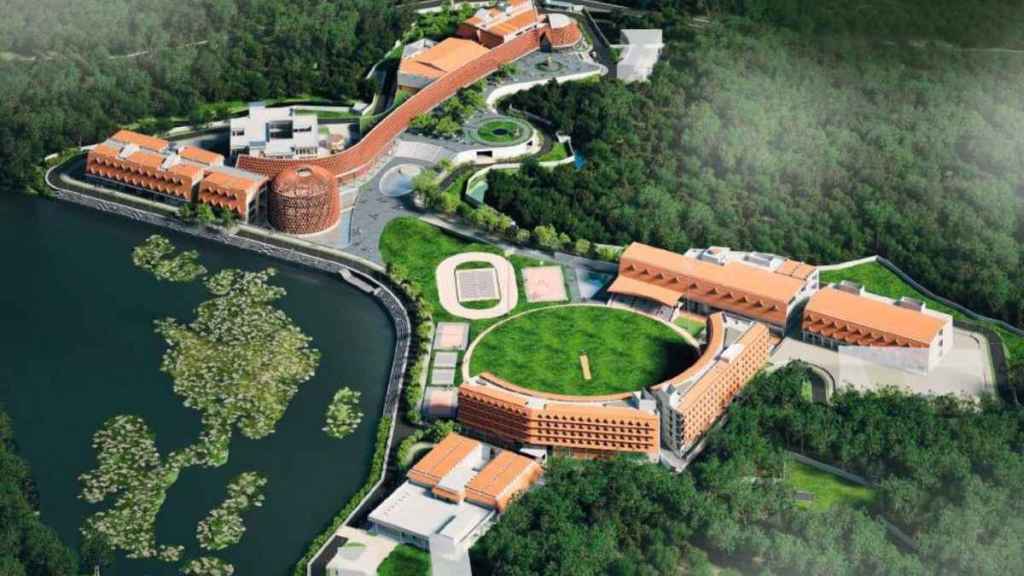
In Gujarat’s Dharampur region, the Shrimad Rajchandra Mission Dharampur has been expanding educational facilities covering school, higher education and vocational training. Its Shrimad Rajchandra Gurukul is opening a 90,000 sq ft campus intended for more than 700 students, while its associated hostel can accommodate over 200 students from nearby villages, according to the organisation.
In Mumbai, the Mission runs a government ITI and is expanding training in EVs, solar energy, robotics and AI. Its free AI-based DISHA platform offers career guidance across more than 1,600 career options. The Mission also supports schools overseas and runs healthcare, livelihood and de-addiction programmes.
The Mission also runs Shrimad Rajchandra Vidyapeeth, a science college offering undergraduate courses in subjects including Chemistry, Microbiology, Botany and Mathematics, along with postgraduate programmes in Chemistry and Microbiology. The institution was established following concerns over limited access to science-focused higher education in the Dharampur and Kaprada areas.
Affordability remains another factor influencing students’ education choices. The Mission’s Vidya Vikas Yojana provides merit-cum-means scholarships and interest-free education loans for higher and technical education, primarily covering students from Valsad and Navsari districts, the organisation claimed.
The broader challenge for India’s education system is therefore not only bringing students into classrooms, but ensuring that they have the academic, financial, digital and vocational support needed to progress beyond them.