



For years, the Big Four study-abroad locations – the US, the UK, Canada, and Australia – were a favourite among Indian students. But as visa walls went higher and post-study work windows were shortened – especially after Donald Trump assumed office for his second term as the US President on January 20, 2025 – this year is marking a turning point.
Rob Grimshaw, CEO of global student mobility platform Studyin, said that this behavioural shift runs deep and fundamentally alters how students view foreign education. “In the past, it was all about the Big Four… students are very prestige-orientated, but the new generation is much more open-minded. The word today isn’t prestige; it’s practicality,” Grimshaw said.
He noted that students are increasingly asking where they can find an affordable course that supports real career aspirations and guarantees a future, regardless of traditional destination country boundaries. “This practicality is supported by the rapid democratisation of English-medium instruction across non-traditional countries — from Germany and France to even China’s top-ranked Tsinghua University — allowing students to bypass local language barriers,” Grimshaw said.
While official figures from the Ministry of External Affairs (MEA) indicate that cumulative Indian student outflows remain massive — more than 1 million globally — education experts point out that the geographical distribution is shifting towards alternative places in Europe and Asia.
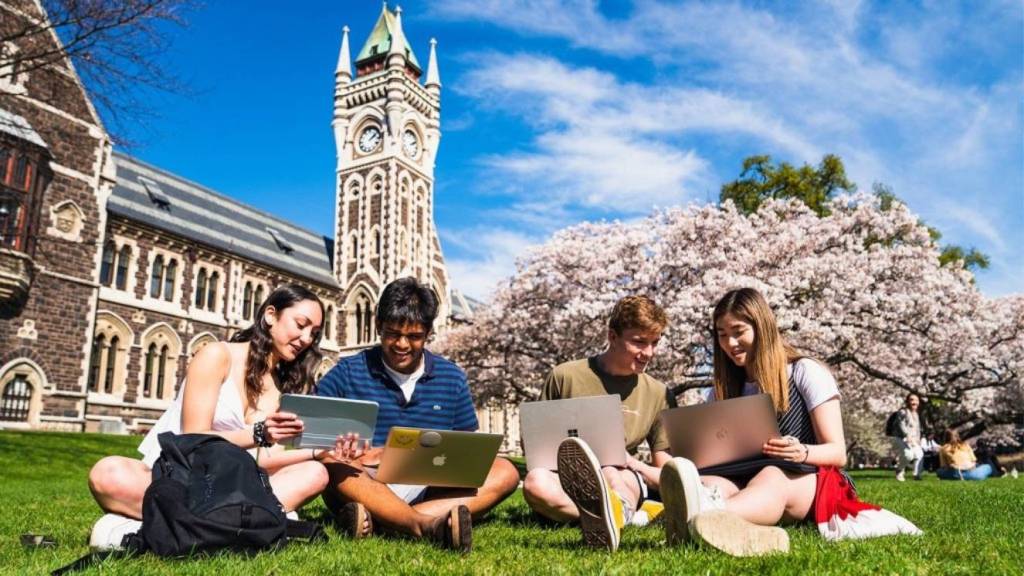
Adding to this momentum, countries like New Zealand are actively working to capture the expanding interest of Indian applicants. Adrian Hirst, Education New Zealand’s (ENZ) regional director for India and South Asia, noted during an interaction that ENZ is building a sustainable, long-term appeal for Indian students rather than banking on temporary spillovers from the Big Four. Latest full-year data shows international student enrolments in New Zealand hitting 92,580 — an 11% growth — with Indian students targeting high-demand sectors like agri-tech, engineering, healthcare, and education.
Germany has similarly emerged as a major choice for Indian STEM aspirants. Data from the German Federal Statistical Office shows that Indian student enrolment reached a record high of 69,816 students for the winter semester 2025-26, representing a 17.5% increase from the previous year. Indians today account for 13.5% of all international students in Germany, aided by most public universities remaining tuition-free (requiring only administrative charges of around 1,500 euros for a two-year course), combined with an 18-month job-seeking visa and opportunities in Europe’s largest economy battling tech labour shortages.
Geographic closeness and cost-efficiency also drove many students towards the Middle East, especially the UAE. Concluding the structural shift, Arnav Kumar, co-founder of study-abroad platform Leap, highlighted that the mindset of Indian applicants has fundamentally evolved. “Over 85% of applicants now prioritise post-study career advancement over academic credentials alone – such as the global ranking and brand of the host institution – and 68% of students cite affordability as their top concern,” Kumar said.
As the full year mobility data starts to come in from government bodies and education companies, one thing is clear that the modern Indian student is focusing on return on investment, and is exploring alternative corridors across Europe and Asia.