


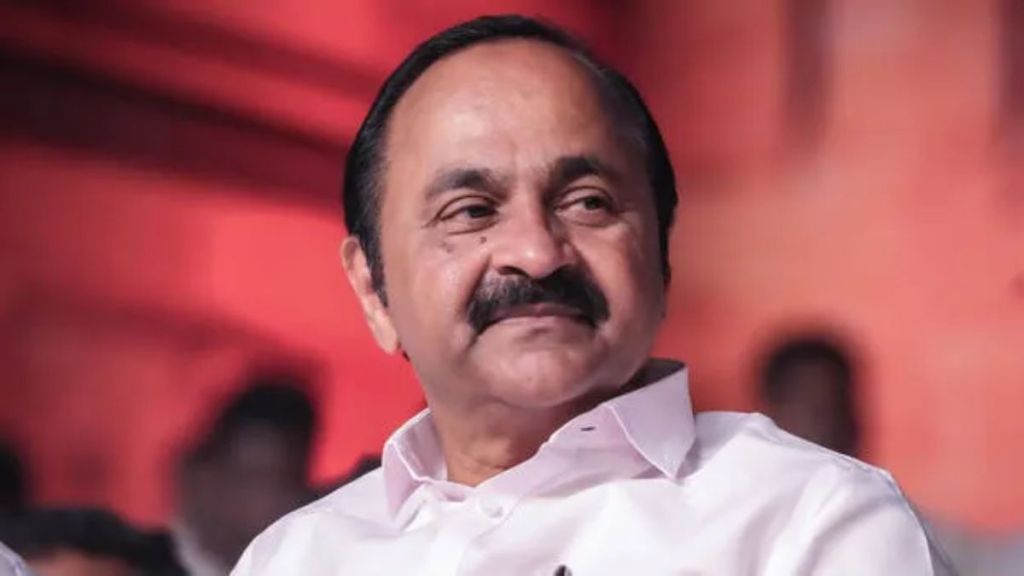

Kerala Chief Minister VD Satheesan has defended his government’s decision to release nearly Rs 4,000 crore during Onam, saying the payments helped boost consumption and business activity despite concerns over the state’s finances.
Speaking at Express Adda, Satheesan said the money was released through pensions, arrears and other payments to poorer households and lower-middle-income families. He said wholesale and retail markets saw increased activity during the festival season, followed by Kerala recording its highest-ever GST share in a month since the tax was introduced.
Satheesan said the government needed to spend to stimulate demand and improve revenue, rather than rely on tax increases.
“I don’t think increase in taxes is the solution to stimulate the economy. First, government has to spend,” Satheesan said.
Why the government released money during Onam
Satheesan said the decision to release nearly Rs 4,000 crore drew questions about whether Kerala could afford the spending. He argued that the payments would support consumption and benefit retailers, wholesalers and other businesses.
“Everybody questioned me why are you pushing this much amount? Then I said, this will create something among the market,” he said.
The Chief Minister described the spending strategy as an application of Keynesian economic theory, which holds that government expenditure can support demand when economic activity needs a boost.
Satheesan argued that money transferred to households would not be spent only once but would circulate through the economy several times as consumers purchase goods and services and businesses make further payments.
“This money will remain in the market. This will be rotated six times, seven times,” he said, referring to the multiplier effect of spending.
While he cited the subsequent GST performance as evidence that the payments had helped stimulate demand, Satheesan did not quantify the additional tax revenue attributable to them. He also did not provide an estimate of the multiplier generated by the spending.
Kerala’s debt and spending commitments
The disbursements came at a time when, according to Satheesan, committed expenditure accounts for around 80% of Kerala’s revenue and the state’s debt exceeds Rs 5 lakh crore. Salaries, pensions and interest payments leave limited room for discretionary spending and fresh development initiatives, he said.
The Chief Minister said his government had conducted a detailed assessment of the state’s finances with experts after taking office and placed a white paper before the Assembly. He described the document as an assessment of Kerala’s fiscal position rather than a political statement.
The discussion also covered Kerala’s share of tax devolution from the Centre and its ability to fund social-sector commitments.
Asked whether Kerala needed a new fiscal compact with the Centre as its share of tax devolution declined, Satheesan focused on the need to stimulate economic activity and improve the state’s financial position. He did not outline specific proposals for a new compact or detail how his government planned to negotiate changes in fiscal transfers.
Tax increases and investment
The Chief Minister said he had resisted pressure to raise taxes in his first Budget, arguing that higher taxes were not necessarily the most effective way to stimulate the economy.
He also pointed to the constraints imposed by the Goods and Services Tax framework, under which key tax decisions are taken through the GST Council.
Satheesan said the government’s approach was to support demand through public spending while attracting more investment. Alongside the Onam disbursements, he stressed the need for investment to strengthen economic activity over the longer term.