


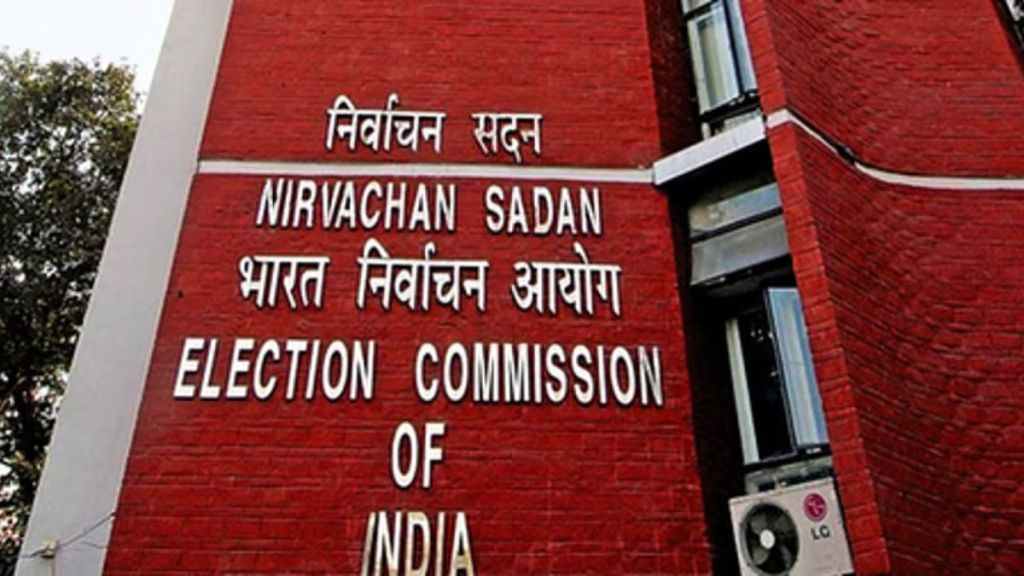

The Election Commission of India (ECI) has told the Supreme Court that its major decisions on the Special Intensive Revision (SIR) of electoral rolls were taken collectively, reported The Indian Express. However, its affidavit has left several questions unanswered about why two Election Commissioners were not informed about key actions taken in the Commission’s name.
The affidavit, approved unanimously by all three members, argues that notes written by individual Commissioners are part of the consultation process and do not represent formal decisions of the Commission.
But an investigation by The Indian Express found that Election Commissioners Sukhbir Singh Sandhu and Vivek Joshi had repeatedly recorded concerns about decisions, software changes and legal proceedings they learnt about only after they had taken place.
The petition filed following the report asked the Supreme Court to examine the Commission’s functioning. While the affidavit explains how the ECI takes formal decisions, it does not fully address the concerns raised by the two Commissioners.
Form 6 change raises questions over approval
One of the disputes concerns Form 6, which citizens use to apply for inclusion in electoral rolls.
According to the Indian Express, in May, Joshi noted that the form could not be changed without amending the Registration of Electors Rules, 1960. Sandhu agreed. However, a declaration linked to the SIR was added to the online version of the form in July.
Sandhu learnt about the change through a newspaper report and described it as “unauthorised/ illegal” in August.
In its affidavit, the ECI said the declaration was a separate document and not an amendment to Form 6. However, it acknowledged that the way it appeared online “could be construed as though an amendment of Form 6 had been made”.
The Commission also admitted that “certain steps taken by the officers” needed “to be corrected”.
On October 21, the ECI’s Electoral Rolls Division decided to display Form 6 and the SIR declaration separately in the online application process.
However, the affidavit does not identify who approved the change in July or explain why it was implemented despite the objections recorded by two Commissioners.
ECINet platform and control over electoral rolls
The affidavit also addresses concerns over ECINet, the platform used for electoral roll-related work.
The Commission said the Electoral Registration Officer (ERO) remains the legal authority responsible for the electoral roll, adding that “no entry is added or deleted or modified except by order of the Electoral Registration Officer,” reported The Indian Express.
It also outlined plans to review the platform’s compliance with the law through a committee involving experts from IIT Mumbai and IISc Bengaluru. New IT modules will also be scrutinised before approval.
However, according to The Indian Express, these measures resemble a proposal Joshi made on May 29. Raising concerns about “the gradual centralisation of the electoral roll database”, he had suggested involving an outside expert from the IITs to ensure that “no one, except the concerned statutory authorities, has credentials to make any change in the database.”
Sandhu supported the proposal in July. But on August 14, he recorded that the outcome of the two Commissioners’ notes “is not known to the undersigned”.
The affidavit describes the committee as a decision taken by the Commission on September 26 and 30 but does not mention Joshi’s earlier proposal.
Sandhu, according to The Indian Express, had also raised concerns in April about the IT division developing “many new modules and portals” without bringing them before the Commission. He said he had learnt about them “from the media only”.
In August, he recorded complaints from field officers who said the software was preventing them from carrying out their legal duties.
The affidavit’s assurance that EROs remain the legal authorities does not explain whether they could exercise those powers through the platform when the problems were reported.
Goa voter deletions expose software problems
The case of Goa highlights these concerns. The affidavit said 97 voters were left off the final electoral roll, of whom 88 had since applied for inclusion through Form 6.
However, it does not explain why the software prevented electoral officers from implementing their decisions in February.
The state’s election office had made eight requests in seven days for changes that would allow officials to reverse the deletions. The Commission’s own Deputy Election Commissioner had noted that the “IT system cannot block necessary action”.
The affidavit does not clarify why the problem occurred or why the officers could not act on their decisions at the time.
West Bengal appeals: Who authorised the filings?
The ECI said appeals against orders restoring voters to West Bengal’s electoral roll were filed by officers in the office of the state’s Chief Electoral Officer (CEO). It added that “these matters were not brought to the Commission”.
The Commission also maintained that the officers had the authority to file the appeals under the Supreme Court’s orders.
Joshi sought details on August 7 after a newspaper report about the appeals. Five days later, Sandhu sent five questions to the same officer. His note recorded that Joshi “told me that he doesn’t have the details,” reported The Indian Express.
The affidavit identifies the officers who filed the appeals and says they were authorised to do so. However, it does not resolve a discrepancy in the accounts.
Sandhu’s note records that West Bengal’s Chief Electoral Officer “told me today that she also doesn’t have any information about the details of this matter.”
The affidavit now cites a letter dated October 22 from the CEO’s office to establish that its officers filed the appeals, but it does not explain the difference between the two accounts.
Questions also remain about how lakhs of appeals were filed on almost identical grounds, whether individual cases were examined and how such a large exercise proceeded without the Commission being informed.
July order issued without Commission’s knowledge
Another dispute concerns an order issued by a senior officer who had been given temporary charge of the Commission’s administration. Within hours, the officer issued an order redistributing work among other officials.
Joshi later wrote to the Cabinet Secretary that when he asked the Administration Division for the file, “it was not provided.”
The ECI said the order was never implemented after Sandhu and Joshi issued a joint direction. However, the affidavit does not explain why the order was issued without the Commission’s involvement, why the file was withheld or what action was taken against the officer.
The Commission also denied releasing the internal documents cited in the investigation, stating that it “has neither released nor authorised the release of any internal note/ file to any news agency”.
Questions remain despite ECI’s response
The affidavit sets out the Commission’s position and lists corrective measures, but it does not fully address the concerns recorded by Sandhu and Joshi.
Their notes point to a recurring problem: key decisions, software changes and legal proceedings were carried out before they were informed.
The central question before the Supreme Court is whether the Commission’s explanations are enough to address these concerns and establish that its members are being properly consulted and kept informed about decisions taken in its name.