


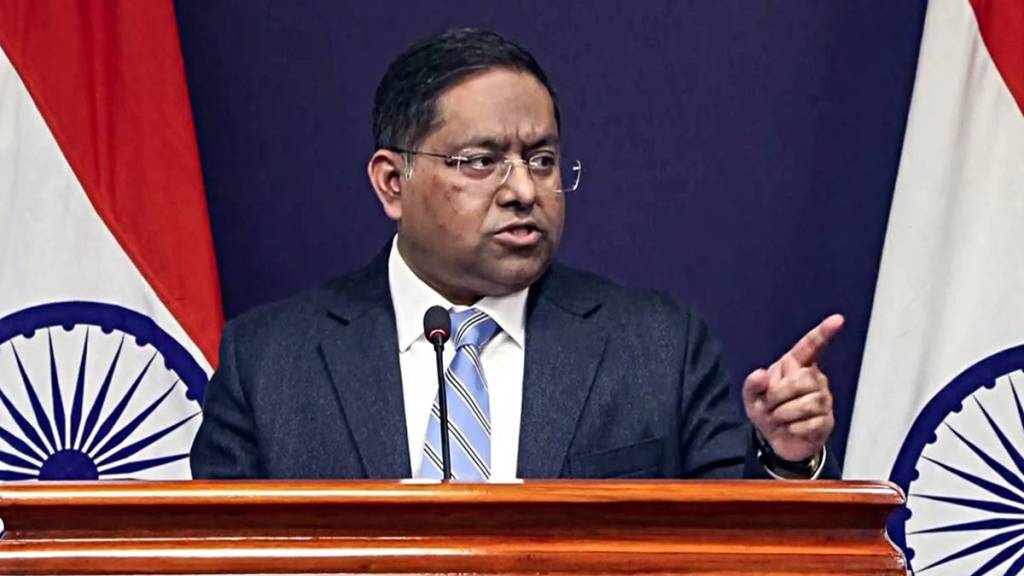

India has lost 22 of its nationals, including 14 seafarers, in the ongoing West Asia conflict over the past eight months, Ministry of External Affairs (MEA) spokesperson Randhir Jaiswal said on Wednesday. The conflict began on February 28, 2026, when the United States and Israel launched airstrikes on Iran, killing its Supreme Leader and other senior officials. Iran retaliated by targeting US bases across the Gulf and restricting shipping through the Strait of Hormuz, a key global route for oil and gas supplies.
“We are deeply concerned with the ongoing conflict in West Asia. So far, we have lost 22 Indian nationals in the conflict, which includes 14 seafarers,” Jaiswal said.
He added that the government was in close contact with the Indian community in the region to ensure their safety amid the continuing hostilities. “On our part, we have been in close touch with the community there so that we can do our best for the safety and well-being,” he said.
How the Iran war began
The Iran war began after the US and Israel launched joint airstrikes on Iran, targeting military installations, nuclear-related infrastructure and the country’s leadership. The attacks came during stalled negotiations over Iran’s nuclear programme, regardless of reports of progress in diplomatic talks. Iran responded with strikes against Israel and targets in Gulf countries, widening the conflict across West Asia.
Iran’s Supreme Leader Ayatollah Ali Khamenei was killed in the initial strikes. A ceasefire and a subsequent agreement in June halted large-scale fighting, but tensions have continued over regional security, economic sanctions and Iran’s nuclear programme. Disputes over the Strait of Hormuz have also raised concerns about global energy supplies and maritime trade.
India calls for dialogue over maritime concerns
India has consistently called for a peaceful resolution to the conflict through dialogue and diplomacy. New Delhi has also expressed serious concern over Houthi attacks on Saudi Arabia’s civilian infrastructure and economic assets, warning that such strikes threaten regional stability and freedom of navigation through the Bab-el-Mandeb Strait.
The Iran-backed Houthi militant group has targeted Saudi Arabia’s East-West oil pipeline, which has become increasingly important for the country’s crude oil exports since the conflict disrupted shipping through the Strait of Hormuz. The pipeline allows Saudi Arabia to transport oil towards the Red Sea, providing an alternative route that reduces its dependence on the Strait of Hormuz.
The Houthi attacks have raised further concerns about the safety of the Bab-el-Mandeb Strait, one of the world’s key maritime chokepoints. Located between the Horn of Africa and the Arabian Peninsula, the strait connects the Red Sea to the Gulf of Aden and the Arabian Sea. Disruptions along this route could affect international shipping, trade and energy supplies.