


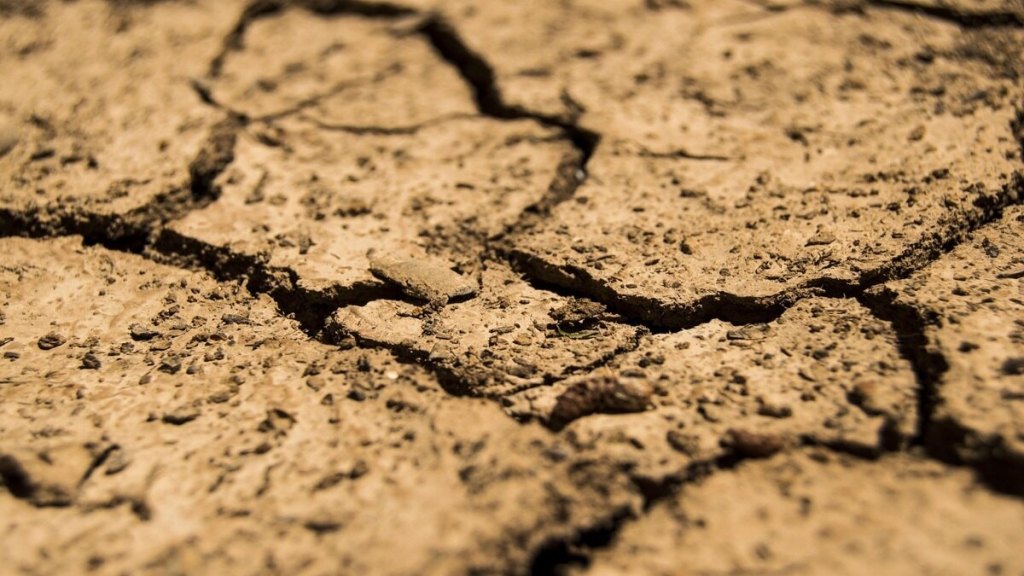

Telangana has declared 365 mandals across 31 of its 33 districts drought-affected for the 2026 kharif season, ordering immediate relief as deficient rainfall, shrinking reservoir supplies and reduced paddy cultivation put pressure on farmers and drinking water resources. The notification, issued on Tuesday (October 27), will remain valid for six months.
The declaration comes ahead of an all-party meeting convened by Deputy Chief Minister Mallu Bhatti Vikramarka on October 28 to discuss drinking water supplies, alternative crops and electricity for irrigation. While the government has linked the crisis to El Niño and a weak monsoon, the opposition Bharat Rashtra Samithi (BRS) has blamed failures in water management.
365 mandals affected, including 111 facing severe drought
Of the 365 mandals covered by the declaration, 111 have been classified as facing severe drought and 254 as facing moderate drought. Mandals are the administrative units covered by the order; the figures do not represent separate counts of mandals and talukas.
The Government Order, issued by Chief Secretary Sanjay Jaju, followed a recommendation by a Cabinet sub-committee that reviewed conditions on October 23.
According to the order, Telangana received 615.5 mm of rainfall between June 1 and September 30, against a normal of 740.6 mm—a shortfall of about 17 per cent. Eighteen of the state’s 33 districts recorded deficient rainfall.
The state-wide average, however, is only one part of the picture presented by the government. Its assessment also points to prolonged dry spells, reduced crop acreage and low reservoir storage, which have affected water availability beyond the monsoon months.
Wider impact: A farm crisis with consequences beyond the fields
Telangana’s declaration brings together several pressures, including insufficient rain, reduced water storage, lower cultivation and growing competition between agricultural and household needs. These are connected problems rather than separate emergencies.
The supplied reports frame the situation as part of wider climate and water stress across India. However, they do not provide comparable drought notifications or figures from other states to establish the scale of a nationwide event, or substantiate the description of Telangana as the sixth drought-hit state.
Within Telangana, the agricultural impact is already visible in the government’s figures. Paddy acreage fell from 69.19 lakh acres to 57 lakh acres, a reduction of about 18 per cent.
That contraction places farmer incomes and the wider rural economy under pressure. The government’s proposed response—covering input assistance, employment, agricultural credit and livestock support—reflects concerns extending beyond the immediate loss of rainfall.
The approaching rabi season presents another difficult decision. Chief Minister A Revanth Reddy has appealed to farmers to postpone paddy cultivation because of the water shortage, while the government has proposed discussions on alternative crops.
Farmer distress and relief: Government orders immediate action
The drought notification directs district authorities to begin relief measures without delay.
“The District Authorities shall forthwith initiate relief measures, including provision of input subsidy through Direct Benefit Transfer (DBT), augmentation of drinking water supply, fodder arrangements and cattle camps where required, and employment generation,” the order said.
District Collectors have also been instructed to take up agricultural loan restructuring and the non-enforcement of coercive recovery with the State Level Bankers’ Committee, subject to Reserve Bank of India guidelines.
These are directions to initiate relief and credit-related discussions. The supplied order does not specify a per-farmer assistance amount, a payment schedule or a blanket waiver of agricultural loans.
At the October 28 all-party meeting, Vikramarka is expected to seek suggestions on protecting drinking water supplies, planning alternative crops and maintaining electricity for irrigation.
The state has also sought central assistance. The Assembly passed a resolution on September 18 seeking, among other measures, a Rs 20,000 crore package to address the impact attributed to El Niño. Revanth Reddy has said he will lead an all-party delegation to meet Prime Minister Narendra Modi, Union Home Minister Amit Shah and other Union ministers in November.
The response has nevertheless become politically contentious. BRS working president KT Rama Rao alleged that the government failed to use available river water and operate irrigation infrastructure effectively.
His claims—including allegations concerning the Kaleshwaram pumps and the volume of water flowing into the sea—remain opposition assertions in the supplied material, rather than independently established findings.
Water crisis: Low reservoir storage raises drinking water concerns
The government reported current live storage of 179.63 thousand million cubic feet (TMC) in major and medium reservoirs, against a stated capacity of 585 TMC. The order identifies risks to drinking water, agriculture, livestock and power. The concern is not confined to crops already affected by the monsoon: limited stored water could also constrain supplies through the coming dry months.
Revanth Reddy has warned that drinking water could become an even greater challenge than irrigation as temperatures and evaporation increase.
“We cannot face this drought without alerting people and making them stakeholders,” he said, calling for public participation in the response.
The government’s directions to augment drinking water supplies, arrange fodder and establish cattle camps where necessary reflect those competing demands. The supplied material, however, does not set out district-wise water availability, a rationing plan or a detailed timetable for additional supplies.
El Niño: Govt points to a climate driver, but preparedness remains central
The state government attributes the weak southwest monsoon to emerging and strengthening El Niño conditions, weak Bay of Bengal low-pressure systems and prolonged dry spells. That is the government’s explanation for the rainfall deficit. The supplied material does not include an independent meteorological assessment establishing how much each factor contributed, or verifying the Chief Minister’s description of a “Super El Niño”.
Revanth Reddy has warned of prolonged drought-like conditions and called for cooperation across political parties, public institutions and the media. He announced that a sub-committee headed by Vikramarka would oversee the response and named Ramakrishna Rao as the nodal officer on El Niño.