


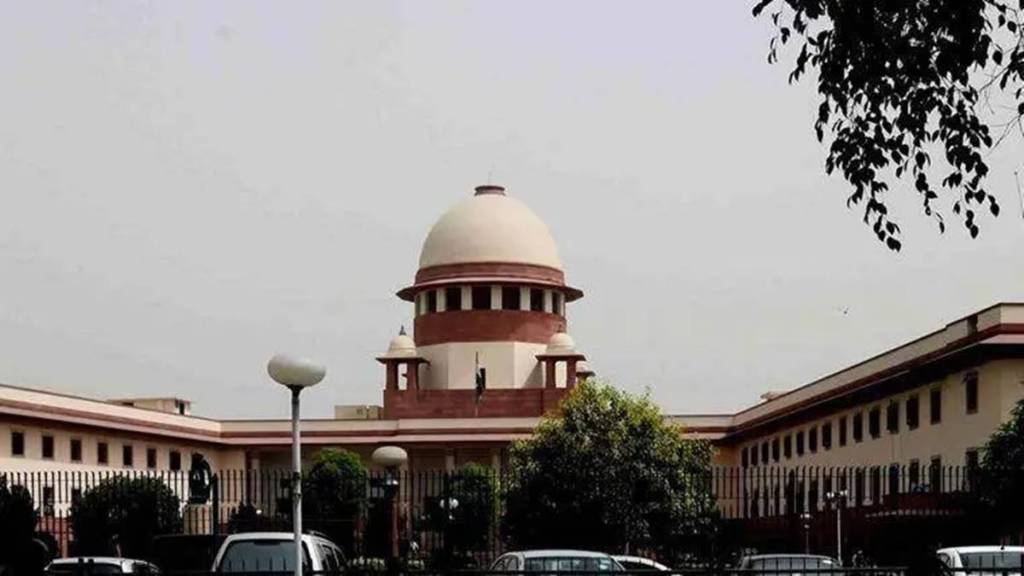

The Supreme Court on Tuesday agreed to hear next week a petition questioning the decision-making process within the Election Commission of India (ECI) under Chief Election Commissioner Gyanesh Kumar. The matter was mentioned before a bench headed by Chief Justice of India Surya Kant, along with Justices Joymalya Bagchi and V Mohana.
The Indian Express reported that Senior advocate Vikas Singh sought an early listing of the plea, arguing that the statutory framework governing the multi-member poll panel requires decisions to be taken either unanimously or by majority.
Singh raised concerns over whether decisions taken by the Commission in recent months had the required collective approval.
“The way the Election Commission is functioning, there is serious doubt over whether the decisions are unanimous,” he submitted.
With this, the top court agreed to take up the matter next week.
Plea comes amid reported differences within ECI
The petition comes against the backdrop of an investigation by The Indian Express into differences within the three-member Election Commission.
The Indian Express reported that Election Commissioners Sukhbir Singh Sandhu and Vivek Joshi had formally objected at least 14 times over a period of 10 months to decisions and orders relating to the Special Intensive Revision (SIR) of electoral rolls.
According to the IE report, the two commissioners said some decisions had been issued without their knowledge or recommendation.
The objections covered issues including changes relating to voter enrolment and deletion, as well as concerns over the handling and centralisation of electoral-roll data.
What the Election Commission has said
The Election Commission has disputed the suggestion that the reported objections showcased a breakdown in its decision-making process. In its response, the poll panel said the letters written by Sandhu and Joshi to the Cabinet Secretary related to an officer on deputation and were not connected with policy or Information Technology division matters.
Previously, the Commission has also maintained that decisions taken by it were unanimous and that observations made by individual commissioners formed part of its deliberative process.
Why the plea matters
The case could bring the Supreme Court’s scrutiny to the way decisions are recorded and taken within the country’s multi-member Election Commission. The petitioner’s argument centres on the statutory requirement governing collective decision-making in the Commission.
The court will now consider the plea next week; the material available at this stage does not establish whether the allegations regarding individual decisions will ultimately be accepted.
The hearing also comes amid continuing scrutiny of the ECI’s handling of the SIR exercise and internal differences reported among its commissioners.