


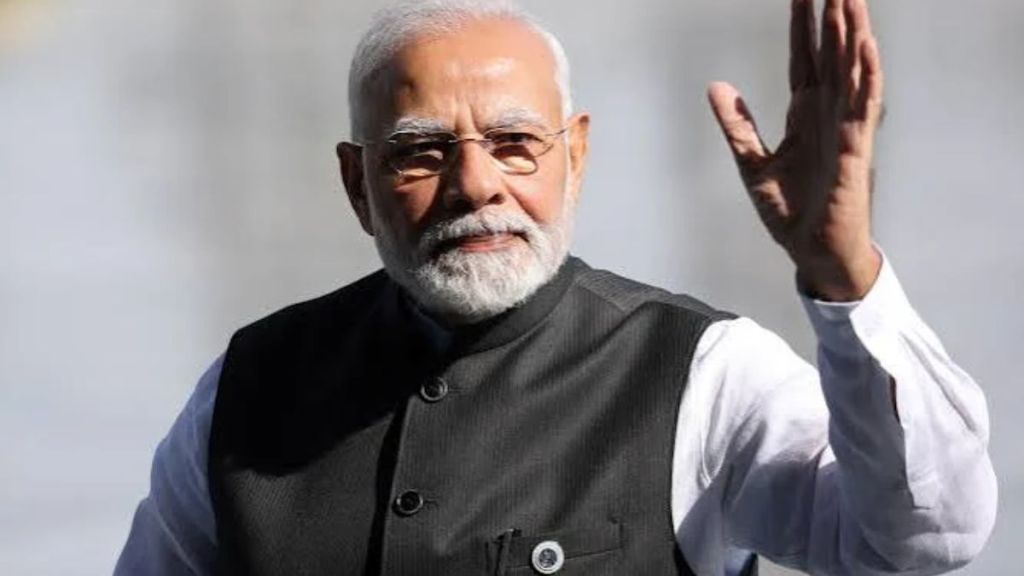

Amid global uncertainties stemming from conflicts, Prime Minister Narendra Modi will meet the top brass of the government’s apex think tank, Niti Aayog, on Thursday to get a first-hand view of the issues they are working on and share his ideas during a freewheeling interaction, sources said.
The government completely revamped Niti Aayog’s top leadership between April and July, appointing Ashok Kumar Lahiri as vice chairman, along with seven new members and a new CEO.
During the interaction, each member is expected to make a two-slide presentation on the issues and policies they are working on, while the prime minister’s inputs and directions will likely be incorporated into their respective action plans, sources said. The interaction comes at a time when the country is facing risks from the three ‘Fs’ — fuel, fertiliser and foreign exchange — amid supply shocks triggered by global conflicts and capital flight.
The discussions are also expected to cover ways to scale up manufacturing and accelerate deregulation, as well as policies focused on the poor and farmers. These challenges are likely to persist into 2027.
The seven members of Niti Aayog are former cabinet secretary Rajiv Gauba, economist K V Raju, former AIIMS director M Srinivas, scientist Gobardhan Das, former science and technology secretary Abhay Karandikar, former Capacity Building Commission member R Balasubramaniam, and academician Joram Aniya.
Niti Aayog has emerged as a vital pillar in India’s policy-making architecture, fostering cooperative federalism, furthering reforms and boosting ‘ease of living’. It serves as a dynamic platform for innovation and long-term strategic thinking across sectors at a time the Centre is pursuing systemic reforms to achieve its vision of Viksit Bharat 2047 and attract global investment.
The rupee hit a record low of 96.96 against the US dollar in May 2026 amid surging oil prices and heavy capital outflows triggered by the West Asia conflict. It strengthened 1% in October to 94.95 per dollar, marking its strongest monthly gain since February, aided by RBI intervention.
Among other issues, the strengthening of India’s human capital through reforms in education, skilling and future-ready employment, while advancing the broader vision of Atmanirbhar Bharat, is also likely to be discussed.
The interaction could also cover how investments in knowledge, health, skills and institutional capacity can support long-term economic growth. Policymakers believe that India’s large working-age population presents a significant opportunity that must be harnessed through coordinated action between the Centre and the states.