


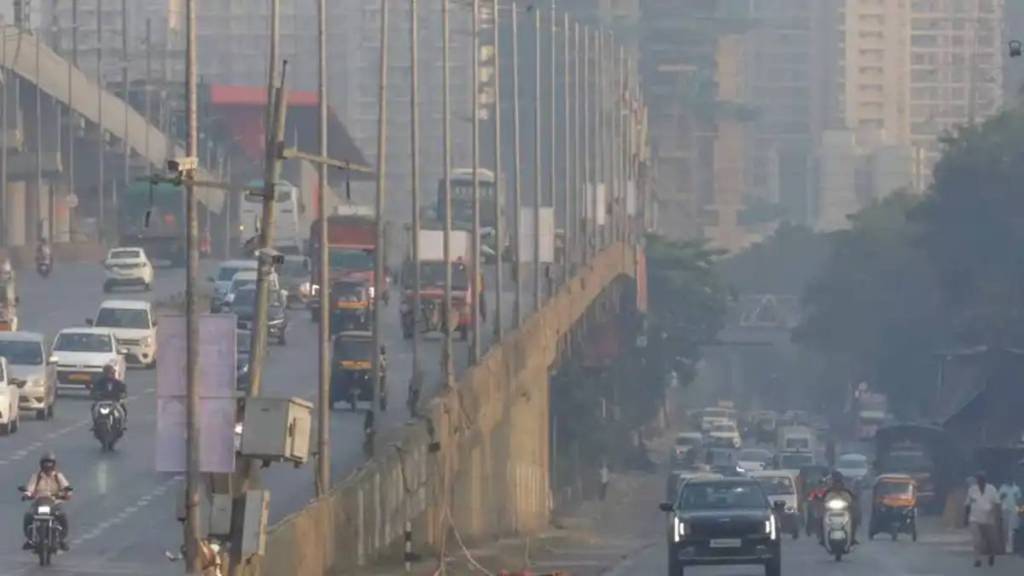

With Brihanmumbai Municipal Corporation’s (BMC) warning of strict action against property developers and contractors who fail to implement dust-control measures at construction sites and adjoining roads, top Mumbai developers have said that both infrastructure projects and vehicles have to be equally blamed for rising pollution in the city.
“It is not proper to target one community (developers). About 90% are following all norms, while 10% may not be complying,” said Niranjan Hiranandani, chairman and managing director of Hiranandani Communities.
Hiranandani said that besides real estate construction, several major infrastructure projects, including bridges and metro lines, were contributing to air pollution in the city.
Among the ongoing projects in the city are the Mumbai-Ahmedabad High-Speed Rail Corridor (bullet train), Versova-Bandra Sea Link (VBS) and Thane-Borivali Twin Tunnel project.
“There is a lot of vehicular pollution happening,” he said, adding that recycled water should be used to clean roads to minimise dust.
Mumbai’s Air Quality Index (AQI) has remained in the ‘unhealthy’ category in recent weeks, prompting the Bombay High Court to express concern over the coastal city’s pollution levels surpassing those of Delhi.
Mumbai had traditionally been considered relatively protected from pollution because sea breezes helped disperse pollutants. However, the natural advantage appears to be diminishing.
Boman Irani, chairman and managing director of Rustomjee Group, said prevailing climatic conditions were not allowing pollutants to disperse effectively.
“Vehicle traffic is a major issue of pollution,” Irani said, adding that infrastructure construction was also contributing to the problem.
He said his company was deploying measures such as spray guns and filters at construction sites and ensuring that trucks were washed before leaving the premises.
However, Gulam Zia, international partner and senior executive director at Knight Frank, said real estate developers were as responsible for the city’s pollution as infrastructure agencies and vehicle owners.
“Real estate development has increased in the last two to three years, even infrastructure works have also increased,” Zia said.
He, however, pointed out that several infrastructure projects were nearing completion, with around 70-80% of metro construction work already completed.
Zia said certain road infrastructure projects, such as the Goregaon-Mulund Link Road (GMLR) had substantial stretches passing through forest areas and therefore had a relatively limited impact on everyday city life.
“Developers are equally responsible for the pollution. Even today, one can see trucks with muddy tyres moving in and out of construction sites,” he said.