



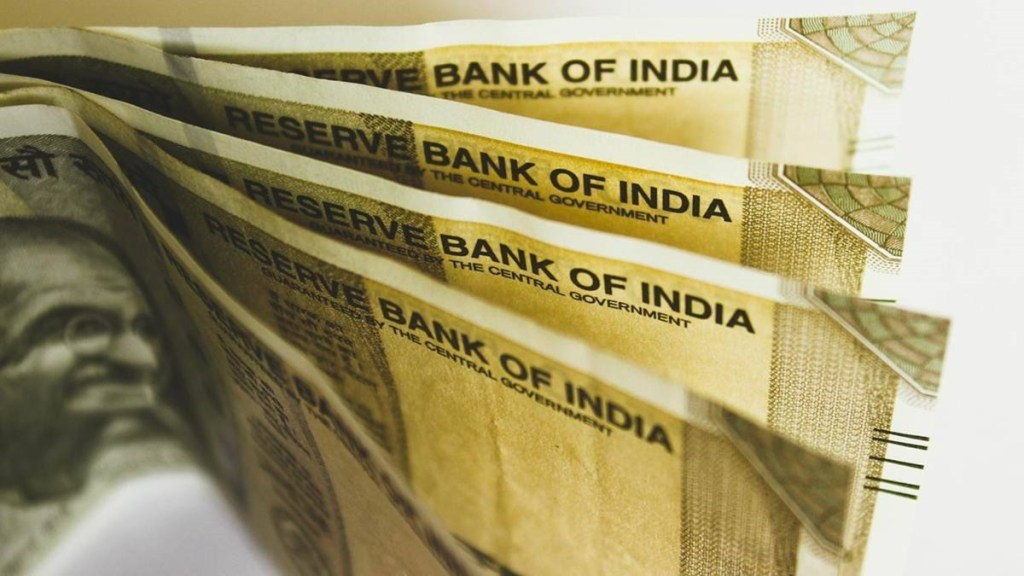
For much of 2022, the rupee behaved like a better-than-average global currency. As the dollar soared under the influence of the Fed’s failure to recognise that inflation was not transitory, and, in quick succession, the huge uncertainties created by the Russian invasion of Ukraine, every currency in the world fell sharply.
The accompanying graphic shows that, for much of the year, the rupee flattered to deceive—in the first half, it fell by just 6%, much less that the yen, sterling or the euro; the only big currency that performed more or less on par was the Chinese yuan. Again, as the dollar kept rising through October, it remained the best performer, falling just 11.6% till it hit bottom (on Oct 20), whilst all the others fell by much more—by 14% to nearly 30%; interestingly, all the others bottomed about 10 days later than the rupee (on November 4).
Also read: Inside track by Coomi Kapoor: 75 and counting: Firsts among many equals
Since then, with the dollar giving up half its gains (reaching back to its mid-year levels), all the other currencies have recovered smartly, but the rupee remains languishing around its maximum annual loss, except, of course, for the yen, which appears to be going through an existential crisis.
To be sure, RBI has been an active party in all the action. During the first half of the year, the reserves fell by $50 billion; perhaps, $20-25 billion of this was due to the appreciation of the dollar (which rendered the dollar value of the non-dollar reserves lower). However, since RBI was intervening heavily in the forwards during that time—viz., selling spot but buying forward to reduce the liquidity pressure created by straight spot intervention—the total intervention was probably much more even than $50 billion; we note that RBI’s forward positions are not included in the reserves.
In the second half, reserves fell by $25 billion; with no material change in the global crosses, there was likely a very small revaluation difference. However, RBI’s forward positions came down sharply—from around $75 billion in April to near zero in October, which means that RBI actually sold dollars to square off these transactions. This may explain the sharp surges in the rupee during September and October.
In parallel with all this, US equity markets tanked as the dollar strengthened, with the Dow losing 21% at its worst point, which was—interestingly—more than a month before the dollar peaked. Like global currencies, the Dow has recovered most of its losses and now sits about 9% below its level at the start of the year.
So, where do we go from here? First off, I believe it is extremely unlikely that the Fed will be able to bring inflation down to its target level (of 2%), which was set in 2012; the world in which this target was set—hyper-globalisation, the China price, just-in-time inventories—has changed completely. This target seemed reasonable at the time since US inflation appeared to be in control, averaging just 2.61% since 1990; however, in the 40 years preceding that, inflation averaged 4.3%. In today’s environment, which is not just totally different than the last 30 years, but also extremely uncertain, to my mind, a more sensible inflation target should be closer to 3.5-4%. If the “natural” inflation rate is, indeed, higher, but the Fed keeps trying to push inflation towards 2%, it will have to keep rates high for longer, and, perhaps, much longer. If it tries to changes its target midstream, it will be seen as giving up the ghost, which would be a huge strike against its already under-threat credibility.
Also read: Looking back at competition law in 2022
Thus, volatility, particularly in US equity markets, will remain high—the possibility of the Dow revisiting its earlier lows (of 28,000 or so) cannot be ruled out. However, it is not certain whether this will be accompanied by dollar strength, which already appears to be wearing thin.

The rupee will, of course, wobble under this global pressure and having already reached 83, it is certainly possible that it could slip to 85 at some point. But I believe RBI will continue to hold the line. Despite the fact that there are many analysts—including most recently, ex-RBI Governor Subbarao—calling for the rupee to be allowed to depreciate, RBI probably recognises, as I do, that the rupee is already too cheap.
I have a very dear friend visiting from New York who, the other day, bought a banana on the street for Rs 5; he told me that two weeks before he had bought a banana at JFK for $2.50; granted airport prices are outrageous, but even if they were 5 times the regular price, the banana-based exchange rate would be around Rs 10 to the dollar! While I understand that one banana alone does not a PPP exchange rate make, a look at any wider basket of goods would tell you that India is hugely cheaper than most countries at current exchange rates—at these rates we are not only importing excessive inflation but also virtually giving away our labour and our assets.
On average over the year, the rupee will be stronger than today’s near-83 level.
The writer is CEO, Mecklai Financial
http://www.mecklai.com