


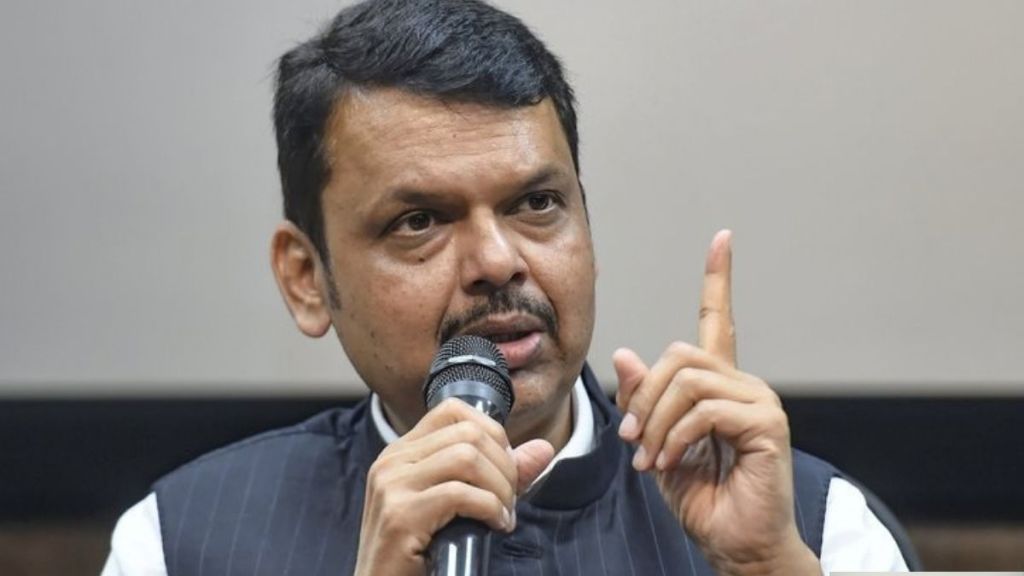

Maharashtra Chief Minister Devendra Fadnavis has announced advance financial assistance of Rs 5,000 for eligible farmers affected by drought, with the state aiming to transfer the money directly to their bank accounts before Diwali.
Speaking in Wardha on October 17, Fadnavis described the payment as unprecedented and said farmers would receive at least Rs 5,000 in advance, with the remaining compensation to be paid later, reported ANI. He said that the amount would not cover their full losses but said it would provide immediate relief to farming households facing financial difficulties.
The announcement comes after Maharashtra expanded its drought-affected list from 265 to 305 talukas out of the state’s 358. The government has brought forward the assistance because the usual process for drought compensation would take longer, Fadnavis said.
However, the final eligibility criteria, beneficiary list and exact payment date have not been announced yet.
Who qualifies for Maharashtra’s Rs 5,000 drought aid?
The assistance is intended for eligible farmers affected by drought in Maharashtra. However, the government has not yet confirmed the detailed eligibility conditions, so inclusion in a drought-affected taluka does not necessarily establish that every farmer in the area will receive the payment.
The state initially declared 265 talukas drought-affected before adding another 40 following a review of conditions and demands to include additional areas. The expansion brings more regions under the government’s drought-relief measures.
Fadnavis said the government had reviewed previous records and noted that drought assistance normally reached farmers in December. This time, it decided to provide an advance before Diwali because of the financial pressure on farming households.
“For the first time, we have provided advance financial assistance to farmers in this manner. Never before have Maharashtra’s farmers received such assistance before December. Earlier, farmers with small landholdings received barely Rs 1,000. Now, every eligible farmer will receive at least Rs 5,000, with the remaining compensation paid later,” Fadnavis said, according to ANI.
The Chief Minister said that Rs 5,000 would not compensate farmers for the full extent of their losses. He also compared Maharashtra’s assistance with drought relief in Karnataka, claiming that the neighbouring state had provided Rs 2,500 to farmers.
“I understand farmers’ hardships, and Rs 5,000 cannot compensate for their losses, but it will offer some relief,” he said, as reported by ANI.
The Rs 5,000 payment is an advance, separate from the remaining compensation Fadnavis said would follow. The announcement does not specify the amount of the additional payment or when it will be made. The final number of beneficiaries and total expenditure will depend on the government’s eligibility rules and implementation details.
When will the Rs 5,000 reach farmers’ bank accounts?
The government aims to credit the assistance to eligible farmers’ bank accounts before Diwali, but it has not announced an exact transfer date.
Fadnavis said the government had decided to speed up the process because farmers were facing financial difficulties ahead of the festival. He described the payment as a Diwali bonus and said the administration had moved ahead rather than wait for the full drought-relief process to conclude.
“This Diwali is going to be difficult for farmers. It will be difficult for them to manage during Diwali. Considering this situation, we have discussed and decided to provide assistance to farmers in the coming days. We have decided to give Rs 5,000 to farmers as a Diwali bonus. This amount should reach the farmers’ accounts before Diwali. The loan waiver amount is also being credited to their accounts,” the Chief Minister said, as reported by ANI.
The government has also announced wider relief measures for the 305 drought-affected talukas. All 12 standard drought-relief concessions will be extended to these areas. They include crop-loan restructuring, land-revenue concessions, electricity-bill subsidies and fee exemptions for farmers’ children.
The state has warned cooperative banks and credit societies against using coercive methods to recover loans from drought-affected farmers. It is also seeking similar restraint from private banks and financial institutions.
Water availability remains another concern, particularly in Marathwada, where groundwater levels have fallen sharply. Fadnavis said the state would arrange water tankers earlier than usual and monitor them through GPS tracking. The government has also reported disconnecting nearly 16,000 illegal water connections to protect drinking-water supplies.
Reported fodder reserves range from 90 days to seven months, depending on the region. The government has said it will purchase fodder produced in suitable areas at the Minimum Support Price.
Separately, Higher and Technical Education Minister Chandrakant Patil directed colleges not to charge examination fees to students from drought-affected talukas. Fees already collected must be refunded, according to the announcement.