


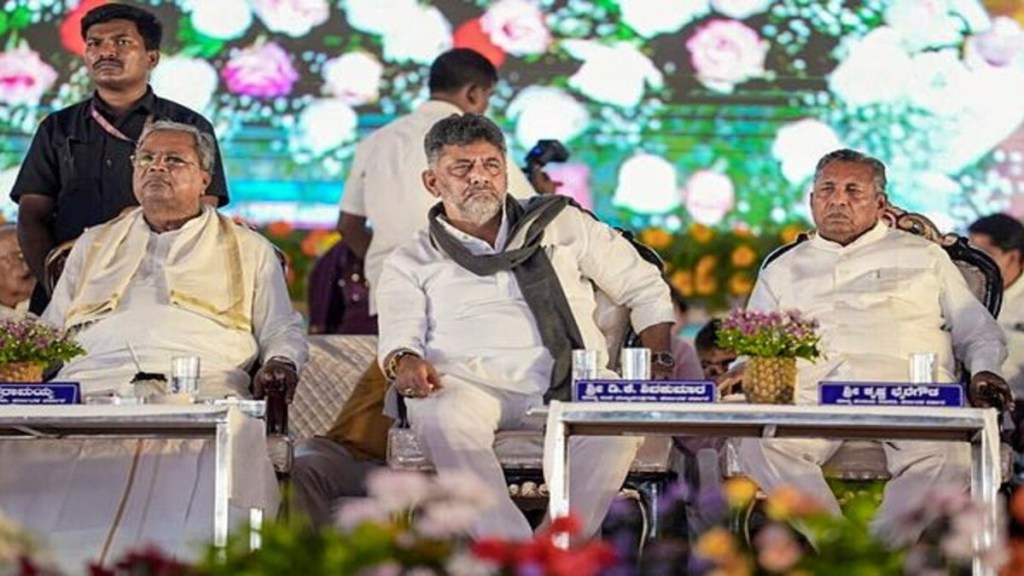

The newly re-formed Karnataka government has set up a ‘Praja Seva Department’for door-to-door grievance redressal. The order passed by Chief Minister DK Shivakumar also called for state Ministers to compulsorily visit two Assembly constituencies every month. The move aims to streamline the process, and end the need for citizens to run from office to office for basic administrative relief.
The move is meant to address long-standing concerns involving road repairs, pension payments, land record updates, electricity connections, and municipal clearances. By centralising complaint handling and improving oversight, the government aims to turn complaints into action more quickly and efficiently.
Shivakumar said the new department will act as the single nodal point for receiving public complaints and ensuring they reach the right authorities for timely action. By institutionalising a clear routing mechanism, the government intends to improve responsiveness, reduce bureaucratic overlaps, and provide a predictable, time‑bound pathway for resolving everyday problems that affect citizens across the state.
Minister, IAS secretary to oversee coordinated grievance resolution
Operationally, the Praja Seva Department will be headed by a minister and supported by an Indian Administrative Service (IAS) officer as secretary, backed by a team of officers responsible for coordinating with line departments. Complaints and applications lodged with the department will be triaged and forwarded to the concerned minister, district in‑charge minister, deputy commissioner, or the authorised official depending on the subject matter. This structure is designed to strengthen inter‑departmental coordination and accountability by ensuring each grievance is tracked to a named official, reducing delays and information gaps that often frustrate complainants.
VIDEO | Karnataka: "We are forming a new department called the Praja Seva Department that will look into all public grievances," says CM DK Shivakumar (@DKShivakumar).
(Full video available on PTI Videos – https://t.co/n147TvrpG7) pic.twitter.com/jz4qlxB3Bh
— Press Trust of India (@PTI_News) July 2, 2026
The initiative is positioned as a governance reform that shifts the emphasis from ad hoc interventions to systematised problem‑solving. By providing a clear escalation ladder and ministerial oversight, the Praja Seva Department is expected to raise the visibility of citizen issues within the government and accelerate resolution times. If implemented effectively, the department could improve public trust in administration, streamline service delivery, and act as a model for other states seeking to simplify access to government services and make redressal mechanisms more citizen‑centric.
Key focus on faster disposal, new system for ‘public grievances’ in Karnataka
The Praja Seva Department is expected to strengthen Karnataka’s grievance redressal system by reducing delays and creating a more accountable structure. CM Shivakumar said, “We will create a system under this department to ensure they are processed,” referring to citizen applications and complaints submitted to the government.
The move is meant to address long-standing concerns involving road repairs, pension payments, land record updates, electricity connections, and municipal clearances. By centralising complaint handling and improving oversight, the government aims to turn complaints into action more quickly and efficiently.
‘Praja Seva Abhiyana’ rollout and district-level access for citizens
Along with the new department, the government will also launch the Praja Seva Abhiyana (PSA). Under this programme, District In-Charge Ministers will be required to visit two Assembly constituencies in their districts on the first and third Saturdays of every month. If those dates are government holidays, the visit will take place on the preceding day.
CM DK Shivakumar said all ministers, along with the MLAs of the respective districts and constituencies, will participate in these outreach meetings. “They will go there to respond to people’s grievances through this PSA,” he explained. The idea is to take the government directly to the people rather than making citizens travel to Bengaluru to submit complaints and wait for responses.
Under the new framework, counters of all relevant government departments will be set up at the grievance meetings. Officials connected to that district will also be required to be present. Citizens will be informed in advance about the minister’s visit and the date of the outreach camp, and application forms will be distributed beforehand at taluk level so people can fill them out and bring them directly to the counters.
Shivakumar said people could also hand over their applications directly to ministers or MLAs during the visits. The arrangement is intended to simplify the grievance process and make it more accessible for rural and semi-urban residents who often struggle to navigate the bureaucracy.
Push for doorstep governance and core benefits for citizens
Explaining the rationale behind the department, DK Shivakumar said, “Instead of people travelling to Bengaluru, waiting here, and submitting their grievances, the government itself should go to their doorstep.” He said the objective is for every district minister to spend two days each month visiting the constituencies assigned to them and listening to people directly.
The Chief Minister also said that he would undertake similar visits to taluks from time to time, underscoring the government’s intent to keep the system hands-on and grounded in local realities. The broader goal, he indicated, is to make governance more responsive and less distant from ordinary citizens.
The Praja Seva Department is expected to offer several benefits, including quicker grievance resolution, better departmental coordination, and more transparency in decision-making. By creating a permanent institutional framework instead of relying only on individual interventions, the government hopes to reduce pendency and improve service delivery across the state.
Officials said the department will also incorporate regular citizen feedback to refine its functioning and improve satisfaction levels. With this initiative, the DK Shivakumar-led government is signalling a stronger focus on practical governance and citizen-first administration.