



Delhi Police has removed Jantar Mantar from the list of designated venues for protests and demonstrations, naming Ramlila Ground in Central Delhi, Burari Ground in northwest Delhi and CBD Ground in East Delhi as alternative sites. The decision, formalised through a standing order dated October 11, marks a change in how public demonstrations are to be organised in the national capital.
The order, issued by Delhi Police Commissioner Anurag Kumar, partially modifies the standing order of April 28, 2022, which had designated Jantar Mantar as a venue for protests. The revised standard operating procedures governing demonstrations at the three new locations will be issued separately.
The decision comes amid protests by the Congress-led INDIA bloc, the Cockroach Janta Party (CJP) and the All India Students’ Association (AISA), which have demanded the resignation of Chief Election Commissioner Gyanesh Kumar over alleged irregularities linked to the Special Intensive Revision (SIR) of electoral rolls.
The move has drawn criticism from CJP leaders, who argue that removing Jantar Mantar from the list of designated protest venues undermines the right to peaceful assembly. The police order, meanwhile, says the change follows recommendations made by a committee constituted by the Union Ministry of Home Affairs (MHA) to examine alternative venues for demonstrations.
Why has Delhi Police removed Jantar Mantar as a protest site?
According to The Indian Express, the Delhi Police order follows a review of alternative locations for public demonstrations by a committee constituted by the Ministry of Home Affairs.
The committee was tasked with examining alternative venues where citizens could organise protests and demonstrations in place of the existing designated site. Based on its recommendations, Delhi Police has replaced Jantar Mantar with three grounds across the capital.
The order does not, by itself, establish a blanket ban on peaceful demonstrations everywhere in Delhi. Instead, it changes the list of designated venues and provides for separate procedures governing protests at the newly notified locations.
The revised standard operating procedures are expected to specify the arrangements for seeking permission and organising demonstrations at the three grounds.
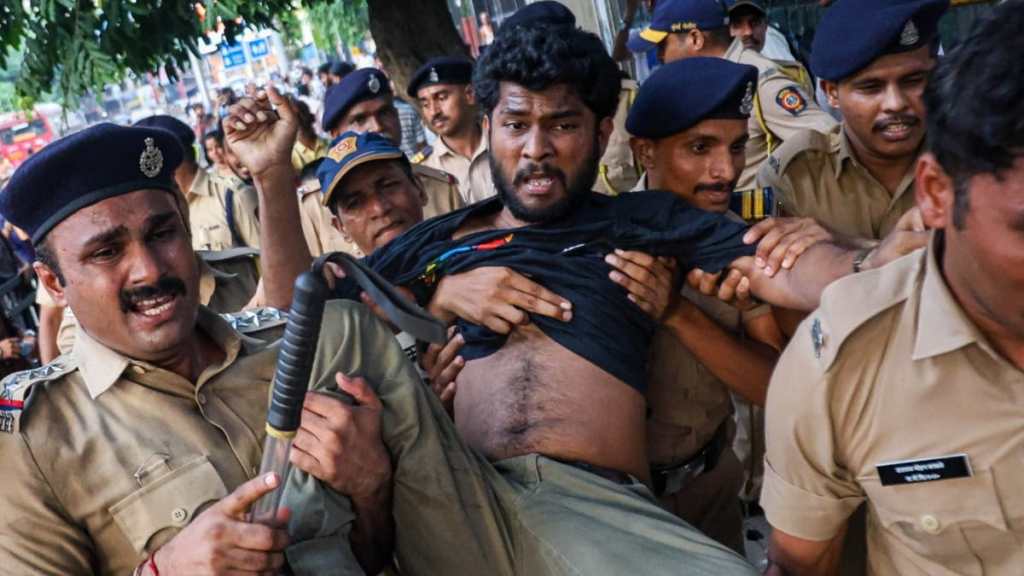
The timing of the decision has brought the issue into sharper focus. CJP and AISA had sought to march to Jantar Mantar over the weekend, but their attempts were met with extensive security arrangements and police action.
Which three venues will replace Jantar Mantar?
The three designated venues are spread across different parts of Delhi. Their locations take demonstrations away from the immediate vicinity of Parliament and the central administrative district.
Ramlila Ground, Central Delhi
Ramlila Ground is the closest of the three alternatives to Parliament, at approximately 3 km away. The venue has a long history of hosting political rallies and mass demonstrations. Among the major gatherings associated with the ground are the rally addressed by Jayaprakash Narayan in 1975 and the anti-corruption movement led by Anna Hazare in 2011.
Its established history as a venue for large public gatherings makes it a prominent alternative to Jantar Mantar. However, it remains outside the immediate area around Parliament.
Burari Ground, northwest Delhi
Burari Ground is located in northwest Delhi, approximately 16 km from Parliament. Its distance from the central administrative area means that protesters seeking to organise demonstrations there will have to travel farther from the seat of government.
CBD Ground, East Delhi
The CBD Ground in East Delhi is the farthest of the three venues from Parliament, at approximately 26 km. Its designation adds another option for demonstrations, but its location places it well away from the capital’s central political district.
The three locations differ in their geographical accessibility and their proximity to Parliament. The revised procedures, including permission requirements and other operational details, are to be issued separately.
What happened during the protests over the weekend?
The decision to remove Jantar Mantar from the designated list followed a weekend of heightened security in Delhi as opposition parties and student groups sought permission to demonstrate against the Election Commission’s handling of the SIR exercise.
The INDIA bloc, CJP and AISA have demanded the resignation of Chief Election Commissioner Gyanesh Kumar over alleged irregularities connected with the revision of electoral rolls.
The planned CJP-AISA march towards Jantar Mantar was met with extensive police deployment, road barricades and restrictions affecting public transport. Metro stations were temporarily restricted, and mobile internet services were reportedly blocked in some areas.
Thousands of police and paramilitary personnel were deployed. Protest organisers and their supporters also alleged that the police used excessive force to disperse demonstrators, including claims of assault on women. These allegations formed part of the criticism directed at the security response.
More than 7,500 people were reportedly detained during the operation, according to the account provided by protest organisers and reports on the police action.
The protests intensified the dispute over access to Jantar Mantar, a location that has historically been associated with demonstrations on political, social and public-interest issues.
CJP sought permission to protest at Jantar Mantar
Shortly before the announcement of the new venues, CJP leaders Saurav Das and Ashutosh Ranka met Delhi Police officials to request permission to hold a demonstration at Jantar Mantar.
The meeting followed criticism of the police’s earlier refusal to allow the protest. In a letter released to the press, CJP said the refusal to allocate the venue had caused distress and discontent among people.
The police had previously maintained that permission for the weekend’s demonstration had been sought too late. The CJP leaders challenged that position, saying they had approached the authorities to obtain clarity on the date and time at which a protest could be held.
Following a meeting lasting around 30 minutes, the leaders said they had given Delhi Police 24 hours to respond.
Ranka said the organisation would decide its next course of action if the police failed to communicate a decision within that period. He also indicated that the group would decide when to return to Jantar Mantar.
The subsequent order removing Jantar Mantar from the list of designated venues changed the context of that demand.
Why is CJP opposing the decision?
CJP has described the decision as unacceptable and an assault on the fundamental right to protest and peaceful assembly. Co-convenor Saurav Das questioned why the government had decided to remove Jantar Mantar from the list and whether citizens and stakeholder organisations had been consulted.
“Why is Narendra Modi scared of Jantar Mantar? It belongs to the people of India. Did the Ministry of Home Affairs consult the people of India when taking this decision,” Das asked.
He also warned that removing the site from the designated list would not end public demonstrations.
“Like they are denotifying the people’s Jantar Mantar, the Prime Minister will soon denotify democracy in India. This move is a step towards that. We do not accept this arbitrary decision. It is an assault on people’s fundamental right to protest and peaceful assembly. The whole country will become Jantar Mantar now,” Das said.
CJP founder Abhijeet Dipke also responded to the decision, saying, “Ab poora desh Jantar Mantar ban raha he.”
The remarks reflect the organisation’s position that the dispute is not limited to the location of demonstrations but also concerns access to a prominent site for public dissent.
What changes for protesters under the new order?
The immediate change is that Jantar Mantar is no longer a designated venue for protests under the revised standing order. Ramlila Ground, Burari Ground and CBD Ground have been named as the alternative sites.
However, the operational details for holding demonstrations at the new venues remain to be issued separately. Delhi Police has said revised standard operating procedures will govern the arrangements.
Those procedures are expected to set out how applications for permission will be handled and what requirements organisers must meet before holding demonstrations.
The change also raises practical questions about accessibility. Ramlila Ground is around 3 km from Parliament, while Burari Ground and CBD Ground are approximately 16 km and 26 km away, respectively. These distances could affect the logistics of organising demonstrations and the ability of participants to reach the venues.
The order changes the designated locations; the precise conditions under which protests can be organised will depend on the revised procedures and applicable permissions.
Why Jantar Mantar has been significant for protests
Jantar Mantar has served as a prominent venue for demonstrations in Delhi, bringing protesters into the central part of the capital and closer to key government institutions.
Its significance has extended beyond its function as a physical gathering point. For political groups, student organisations and civil society movements, the location has provided a visible platform to raise demands and attract public attention.
The designation of alternative venues does not erase that history, but it changes the official framework for organising demonstrations at the site.
Ramlila Ground also has a long record of hosting large political gatherings, while Burari Ground and CBD Ground offer alternative locations in other parts of Delhi. The practical effect of the change will depend on the permission process, the conditions attached to demonstrations and how organisers adapt to the new arrangements.