


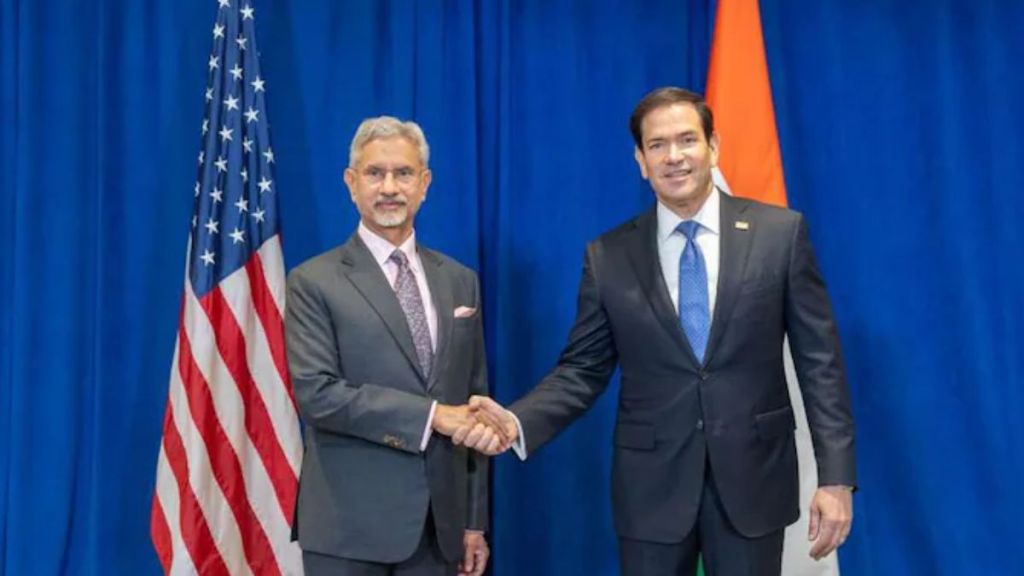

External Affairs Minister S Jaishankar met US Secretary of State Marco Rubio on the sidelines of the UN General Assembly and raised India’s concerns over the Sanctioning Russia and Iran Act (SRIA). Jaishankar said on Wednesday that he had reiterated India’s concerns about the sanctions bill during his talks with Rubio. He also said the two discussed the situations in the Gulf and Ukraine.
“Good to meet @SecRubio of the US. Reiterated India’s interests and concerns with regard to SRIA. Also discussed the Gulf and Ukraine situations,” Jaishankar posted on X.
Good to meet @SecRubio of the US #UNHighLevelWeek
— Dr. S. Jaishankar (@DrSJaishankar) September 23, 2026
Reiterated India’s interests and concerns with regard to SRIA. Also discussed the Gulf and Ukraine situations.
🇮🇳 🇺🇸 pic.twitter.com/163YRVlMZG
Last week, the US had moved to impose a 100 per cent tariff on countries buying Russian oil after the US House of Representatives passed a sweeping sanctions package targeting Russia’s energy sector, financial institutions and its so-called ‘shadow fleet’ of oil tankers.
The bill, passed by a 262-159 vote, was named the ‘Lindsey O. Graham Sanctioning Russia and Iran Act of 2026’ in honour of the late South Carolina senator, who had pushed for tougher measures against Moscow.
US sanctions targeted Russian oil buyers
A key focus of the legislation was Russia’s energy trade, which remained a major source of revenue for Moscow. The bill sought to tighten restrictions on Russian financial networks and target vessels involved in transporting Russian oil while attempting to evade Western sanctions. The legislation also gave US President Donald Trump powers to impose secondary tariffs on countries that continued to buy Russian energy.
Under the bill, Trump could impose tariffs of up to 100 per cent on the top five importers of Russian crude oil and natural gas. India was among the countries that could be affected, as it had remained a major buyer of Russian crude since the Ukraine war began.
Indian refiners had significantly increased purchases of discounted Russian oil after Western sanctions disrupted Moscow’s traditional energy markets. Russian crude had consequently become an important part of India’s overall oil import basket. China, another major buyer of Russian oil, could also have faced the tariff threat.
India said it would protect its interests
After the House passed the legislation, India on Thursday, September 17, said it would “take all necessary measures” to protect its interests. It also reiterated that its oil sourcing decisions would be based on “evolving market dynamics”.
The legislation included limited exemptions for countries that were taking steps to reduce their purchases of Russian energy. The actual impact on India therefore depended on how the Trump administration chose to use the new tariff powers.
The proposed measures meant Indian exports to the US could have faced higher duties if Washington decided to use the provision against countries continuing to purchase Russian energy.