


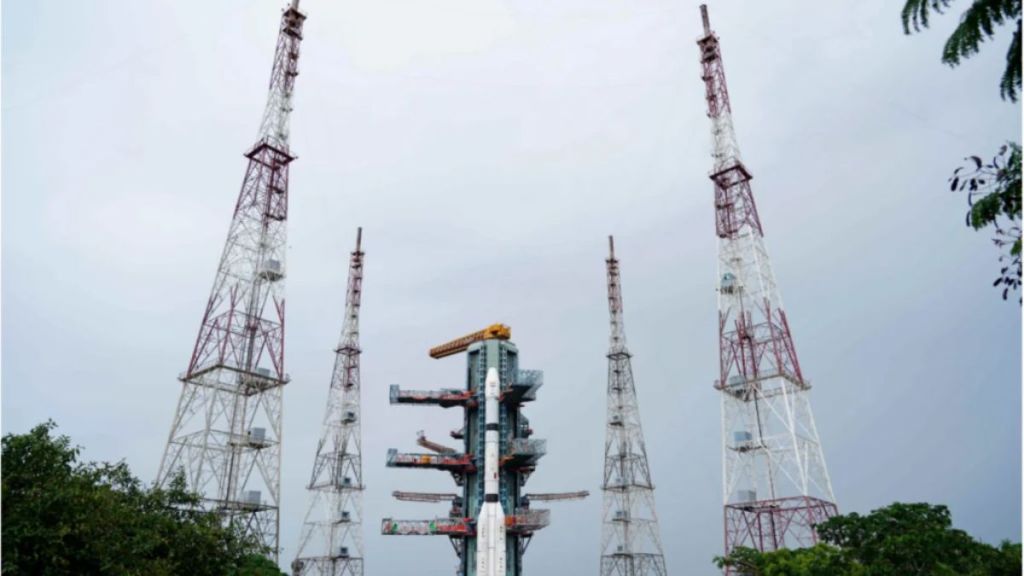

The Indian Space Research Organisation (ISRO) will launch its navigation satellite NVS-03 aboard a GSLV rocket on October 30, 2026, to strengthen India’s regional navigation system, the space agency said on Wednesday.
The GSLV-F18/NVS-03 mission is scheduled to lift off at 11.51 pm from the Satish Dhawan Space Centre in Sriharikota, Andhra Pradesh. The satellite weighs around 2,250 kg and will be placed in a Geosynchronous Transfer Orbit.
NVS-03 is the third satellite in the second-generation Navigation with Indian Constellation (NavIC) series. The system is designed to provide navigation services across India and an area extending around 1,500 km beyond the country’s landmass.
The launch vehicle has been mounted and prepared for liftoff from Sriharikota’s second launchpad. The mission will mark the 20th flight of the GSLV-F18 vehicle, according to the information provided by ISRO.
NVS-03 to carry indigenous atomic clock
The satellite will carry an indigenous atomic clock alongside procured atomic clocks. It will also incorporate the L1 frequency band in addition to the existing L5 and S signals, expanding the capabilities of India’s navigation services.
ISRO has planned five second-generation NavIC satellites, NVS-01, NVS-02, NVS-03, NVS-04 and NVS-05, to strengthen the existing constellation and maintain continuity of services. The addition of L1 signals is intended to broaden the range of navigation services available to users.
NVS-01, the first satellite in the series, was launched aboard GSLV-F12 on May 29, 2023. It was the first mission to carry an indigenous atomic clock.
NavIC provides two types of services: Standard Positioning Service (SPS) for civilian users and Restricted Service (RS). The system delivers Position, Velocity and Timing (PVT) information to users in India and the surrounding region.
Why did the NVS-02 mission fail?
The upcoming launch follows the unsuccessful attempt to place NVS-02 in its intended orbit in January 2025. The satellite was launched aboard GSLV-F15, but the mission encountered a problem during the orbit-raising phase.
An analysis of the failure found that the drive signal was not delivered to the oxidiser-line pyro valve of the engine. The engine was required to raise the satellite from an elliptical orbit to a circular one.
ISRO is planning the NVS-03 mission after corrective measures were recommended by the Apex Committee that examined the NVS-02 mission’s shortcomings.
The launch is part of India’s effort to strengthen NavIC, its independent regional navigation satellite system, and ensure the continued availability of navigation services across its primary coverage area.