


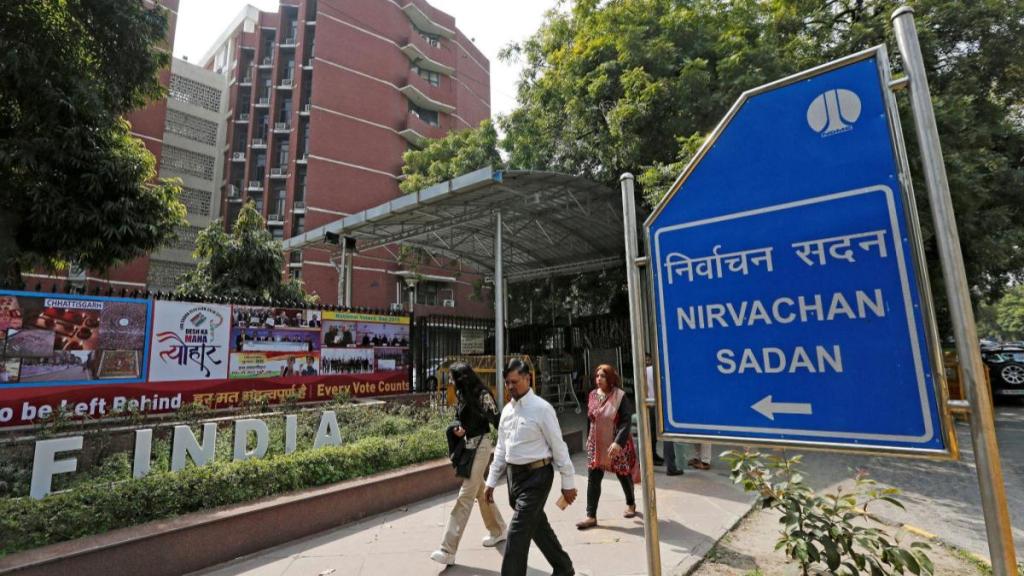

Citing “avoidable inconvenience” caused by bulk submissions of Form 7 – the statutory application used to object to or request the deletion of an entry on the electoral roll, the Election Commission on Friday capped the number of objections or deletion requests an individual can file, the Indian Express reported .
The poll body has now limited the submissions to 10 per individual during the claims and objections period of the revision process. It also limited the submissions to 5 per month during continuous updation in the normal course.
The development comes as the ECI is facing flak over reported targeted bulk Form 7 submissions.
Strengthening procedural safeguards, says EC
The EC, in its instructions to the Chief Electoral Officers of all States and Union Territories, said that instances of bulk Form 7 submissions had been brought to its notice.
Rule 13 (2) of the Registration of Electors Rules, 1960, states that any objection to a name proposed to be included in the electoral roll or application for deletion of a name on the rolls can only be through Form 7, and only an individual who is registered to vote in the same Assembly constituency can submit one.
Although the number of applications to be filed online by an individual elector has been fixed as 6 at a time, there was no limit on the number of physical forms presented in bulk to the Electoral Registration Officers (EROs). This has created challenges for the field functionaries, the commission said.
“Accordingly, the Commission with the intent to discourage bulk filing of objections by an individual elector has decided to prescribe… [limits] on filing of Form 7 applications in both online and offline mode,” the EC said, according to the Indian Express.
According to the reworked mechanism, the electoral registration officer will first issue notice to the objector, hear personally, record the statements separately for each Form 7 and satisfy himself or herself about the validity of objections.
When the ERO is satisfied, he or she will dispose of the application as per rule 19 and 20 of the Registration of Electors Rules, 1960 giving an opportunity of hearing to the person objected to.
The directive seeks to curb excessive or potentially fabricated objections to electoral rolls while reinforcing verification and procedural safeguards before names are deleted.
The commission has directed chief electoral officers of all states and Union territories to circulate the instructions among EROs, assistant EROs and field-level officials and ensure adequate publicity.
With inputs from PTI