


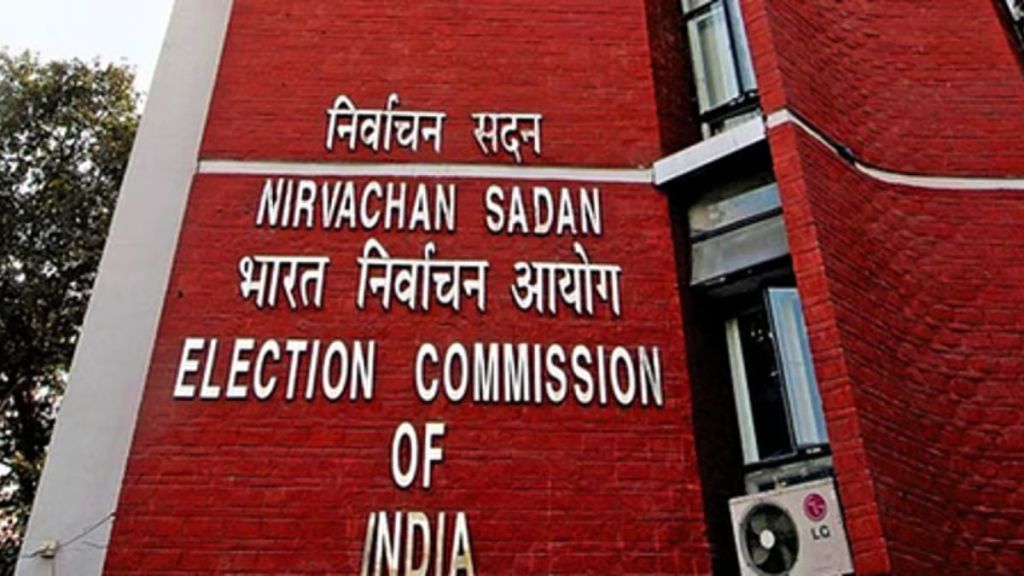

The Election Commission of India (ECI) has directed 20 states and Union Territories where the Special Intensive Revision (SIR) of electoral rolls has been completed to undertake a special drive to identify and enrol eligible voters who may have been left out of the revised rolls, reported The Indian Express.
The instruction, issued in a September 29 letter to Chief Electoral Officers, reiterated at a video conference with state CEOs on Thursday. The exercise will also cover young and first-time eligible voters and will be carried out through the continuous updation process.
The move comes amid scrutiny over the large number of names removed from draft electoral rolls during the nationwide SIR exercise. The Indian Express has reported that around 13 crore names were struck off draft rolls across 30 states and Union Territories.
The ECI’s direction comes amid protests and criticism over the SIR exercise and the deletion of voter names from draft electoral rolls. Opposition leaders, activists and political groups have held demonstrations against Chief Election Commissioner Gyanesh Kumar and the revision exercise, with protesters alleging that eligible voters were being excluded from the rolls. On Friday, several opposition leaders and activists were detained during a protest at Delhi’s Jantar Mantar, with police saying permission had not been granted for the demonstration.
The September 29 letter from the Election Commission’s Secretary to all CEOs states: “In State/UTs where SIR has already been completed, a special drive shall be undertaken by the Chief Electoral Officer, District Election Officers and EROs for the enrolment of left out and young/first time eligible electors under the process of continuous updation.”
The special drive will use the regular statutory Form 6. The additional declaration introduced for the SIR process will not apply in states and Union Territories where the revision has already been completed. The ECI has clarified that the declaration attached to Form 6 “will be used during SIR phase only”, while outside the SIR process, the forms prescribed under the Registration of Electors Rules, 1960 will apply.
CEOs asked to identify voters missing from revised rolls
At Thursday’s video conference, election officials were asked to compare electoral rolls prepared before and after the SIR and identify voters whose names were deleted. The exercise is intended to help determine whether any eligible voters were left out during the revision.
Officials who attended the meeting said Booth Level Officers would be involved in identifying such voters, including cases where people were not mapped elsewhere and had not been identified as duplicates or deceased.
“It has been told to visit the houses, in cases especially if the voters are not mapped elsewhere or were not duplicate or not deceased and get their Form 6 filled up,” one of the officers said.
State election authorities have also been asked to seek the assistance of political parties and their booth-level agents during the exercise.
The same Form 6 route is being used in Goa to facilitate the re-enrolment of voters who were left out of the state’s final electoral roll despite being found eligible by Electoral Registration Officers.
The move also follows concerns raised internally within the Commission over changes to Form 6 and the functioning of ECINet, the software used for electoral-roll management. The ECI has since said that an independent expert will review ECINet and that further changes required to support field-level electoral work will be made operational.
The September 29 communication also followed the Commission’s September 26 meeting, at which it decided that voters served notices for being “unmapped” or having “logical discrepancies” would not necessarily have to appear personally for hearings. Booth Level Officers can instead collect documents from their homes and upload them for consideration by the Electoral Registration Officer.
Maharashtra told to avoid hasty voter deletions
Maharashtra, where the SIR is still under way, has separately instructed Electoral Registration Officers to ensure that eligible voters are given adequate opportunity to submit documents before any decision is taken to remove their names.
A note issued by the Chief Electoral Officer’s office to officials handling Mumbai City and Mumbai Suburban states: “Before taking a decision to exclude the name of the said voter from the electoral roll, sufficient opportunity should be given to the concerned voter to submit the necessary documents, a hearing should be held and the necessary order should be passed,” reported The Indian Express.
The note also states that “an eligible voter should not remain excluded from the electoral roll and there should be no obstruction to the voter’s right to vote”.
Officials have been asked to ensure complete scrutiny at the ERO level and not take decisions to remove names in haste.
Under the revised procedure, Booth Level Officers will collect documents from voters’ homes and upload them for consideration by the ERO. Voters who have already received hearing notices are to be informed by phone or WhatsApp that they do not need to appear in person. Special camps are scheduled for October 3, 4, 10 and 11.
Maharashtra’s draft electoral roll had flagged 1.22 crore records for verification, including 62.48 lakh cases involving discrepancies in relatives’ details and 59.75 lakh cases where voters could not be mapped to a relative in the previous roll.
The latest measures give voters in states where SIR has already concluded a route to seek inclusion through the regular electoral-roll updation process, while officials in states where the exercise is continuing have been instructed to provide opportunities for document submission and verification before deleting eligible voters.