


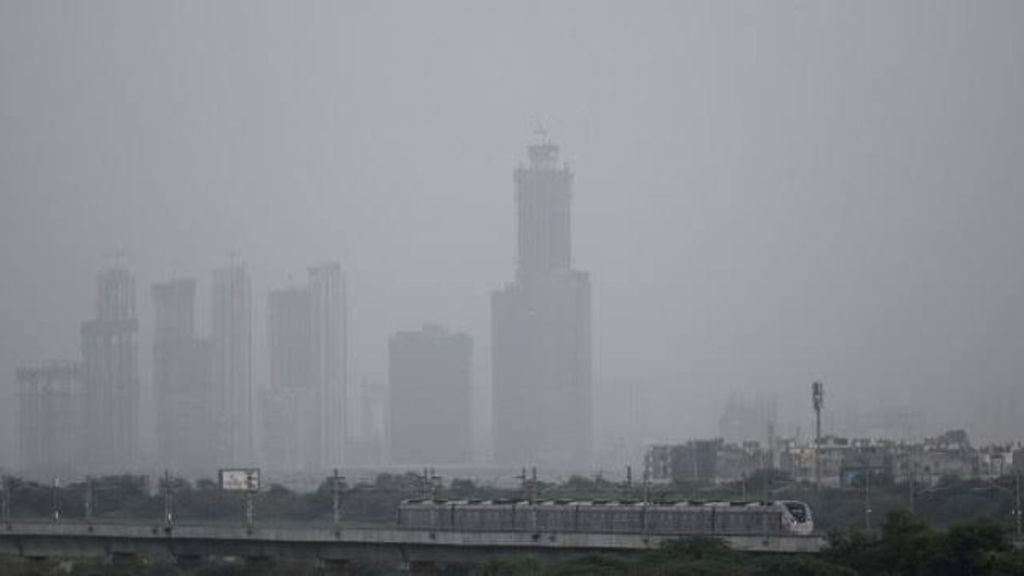

Delhi and its surrounding areas have been placed under GRAP-2 restrictions, as the Air Quality Index (AQI) continues to show alarming levels. This is a significant escalation from GRAP-1 measures. The decision comes ahead of Diwali, amid a sharp deterioration in Delhi’s air quality. The city’s Air Quality Index (AQI) rose to 324 on Monday, placing it in the ‘Very Poor’ category, compared with 261 (‘Poor’) on November 1 and 117 (‘Moderate’) on October 31.
According to the official statement, Stage II of the Graded Response Action Plan (GRAP) was imposed across Delhi-NCR with immediate effect after air quality in the national capital deteriorated to the ‘Very Poor’ category, with the Air Quality Index (AQI) reaching 324.
What is GRAP?
GRAP is a scientifically framed emergency response mechanism introduced in 2017 to combat rising air pollution in Delhi-NCR. It links specific pollution control measures to different levels of air quality, as indicated by the AQI, allowing authorities to introduce increasingly stringent restrictions as pollution worsens.
The decision to invoke GRAP Stage II was taken by the CAQM’s Sub-Committee on GRAP during a meeting on November 2, following a review of the prevailing air quality situation and meteorological forecasts issued by the India Meteorological Department (IMD) and the Indian Institute of Tropical Meteorology (IITM).
What is stated in the order?
According to the CAQM order, Delhi’s AQI stood at 117 in the ‘Moderate’ category on October 31. It subsequently rose sharply to 261 in the ‘Poor’ category on November 1 before climbing to 324 on November 2. The deterioration has been attributed to unfavourable meteorological conditions.
GRAP operates through four stages based on the severity of air pollution. Stage I is activated when AQI falls in the ‘Poor’ category, Stage II when it reaches the ‘Very Poor’ category, Stage III when air quality turns ‘Severe’, and Stage IV when it enters the ‘Severe+’ category. The measures become progressively stricter, covering dust control, construction activities, vehicle movement, industrial emissions and other pollution sources.
GRAP Stage II: Daily mechanical sweeping, water sprinkling and stricter dust control
Under Stage II of GRAP, municipal bodies and road-owning agencies across Delhi-NCR have been directed to undertake mechanical and vacuum sweeping of identified roads daily, preferably during night or early morning hours. The number of shifts and operating hours of sweeping machines will also be increased to increase dust removal, with collected dust required to be disposed of at designated sites or landfills.
Vehicle parking fees will be increased to discourage the use of private transport. Resident Welfare Associations (RWAs) have been directed to provide electric heaters, along with electricity connections, to security, sanitation, horticulture and other staff members to prevent open burning of biomass and municipal solid waste during winter.
Public transport push, restrictions on polluting activities and citizen advisory
The Stage I measures, which will continue alongside Stage II restrictions, include stricter enforcement of pollution control norms at construction sites, industries, brick kilns and hot mix plants. Authorities have been directed to ensure regular lifting of municipal solid waste, construction and demolition waste, industrial waste and hazardous waste from designated sites, while preventing illegal dumping and open burning.
The order also calls for strict enforcement of Pollution Under Control (PUC) norms, with visibly polluting vehicles liable to be impounded or face maximum penalties. Restrictions on overage diesel and petrol vehicles must be enforced, while non-destined truck traffic entering Delhi must be diverted through the Eastern and Western Peripheral Expressways.
Inter-city and inter-state buses entering Delhi-NCR from Haryana, Uttar Pradesh, Rajasthan and adjoining states, including Punjab, Himachal Pradesh, Madhya Pradesh, Uttarakhand and Jammu and Kashmir, will be restricted unless they operate on electric, CNG or BS-VI diesel fuel.
Authorities have also been asked to strictly enforce the ban on coal and firewood as fuel in tandoors at hotels, restaurants and open eateries, ensuring that only electricity-based, gas-based or other clean-fuel appliances are used.
Public transport services are to be augmented through additional CNG and electric buses, metro and Regional Rapid Transit System (RRTS) services, with increased fleet deployment and service frequency. Differential fares to encourage off-peak travel have also been recommended. Offices have been encouraged to introduce unified employee commuting arrangements to reduce the number of vehicles on roads.
The citizen advisory under GRAP Stage II urges people to use public transport, minimise private vehicle usage and take less congested routes. Citizens have also been advised to maintain their vehicles, replace air filters regularly, avoid dust-generating construction activities between October and January, and refrain from open burning of waste and biomass.
People whose job responsibilities permit remote working have also been encouraged to work from home. Citizens can report pollution-related activities through the 311 App, Green Delhi App and SAMEER App, among other platforms.