



The Delhi government is planning a Rs 104-crore, one-year pilot project under which private firms and startups will test pollution-control technologies at 40 public and commercial locations across the national capital. The Delhi Pollution Control Committee (DPCC) wants each site to record a 20% reduction in PM10 and PM2.5 levels, with participating firms required to maintain that reduction.
The sites, each spanning 1 to 1.5 acres, include locations in Khan Market, Connaught Place (CP) and Defence Colony. Discussions and initial planning began last month, while technical reviews are under way this month, according to The Indian Express.
How the pilot will work
Once a site is handed over, the operator will have a strict four-week window to install and commission the pollution-control equipment. The pilot is expected to run for an initial period of one full year, allowing the impact to be assessed across different seasonal conditions, including Delhi’s winter pollution spike.
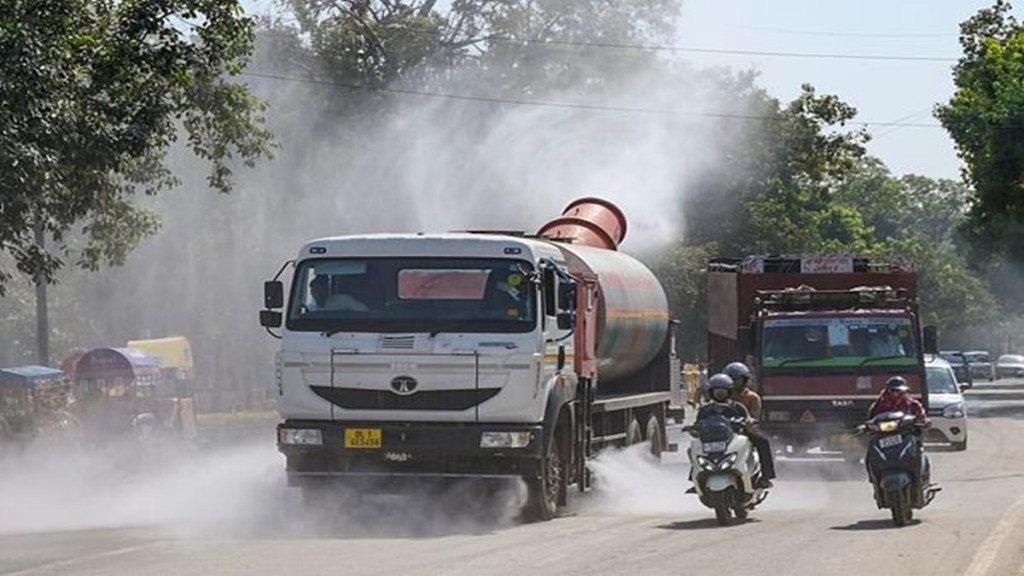
The project is technology-agnostic. Officials said solutions could include outdoor air purifiers, mist-based scrubbers and electrostatic precipitators, provided the equipment is certified by a government laboratory, achieves the 20% particulate-matter reduction target, and does not create secondary problems such as ozone emissions or excessive noise.
Sensors will be installed at the sites and monitored daily under DPCC supervision. An independent committee will assess the impact of the interventions.
Where the 40 sites are
The locations have been divided into five categories: Marketplaces, commercial business districts and commercial hubs, transportation hubs, tourist destinations and hospitals and educational institutions. Commercial areas account for 29 of the 40 sites, or 72.5% of the total.
An analysis by The Indian Express found that Central and South Delhi together account for nearly 48% of the sites — 19 locations — while outer areas such as Bawana, Narela, Mayapuri and the Okhla Industrial Area have been left out. The trans-Yamuna region in East Delhi has five sites, or 12.5% of the total.
The identified tourist locations are Central Park in Connaught Place, the India Gate Children’s Park area and the Lotus Temple corridor. Transport hubs include the ISBTs at Kashmere Gate, Anand Vihar and Sarai Kale Khan, while four hospitals — GB Pant, Rajiv Gandhi Super Specialty, Indira Gandhi in Dwarka and Deen Dayal Upadhyay — have also been shortlisted.
The only educational site is an open or semi-open area near the Arts Faculty in Delhi University’s North Campus.
Why these locations were chosen
A senior DPCC official said the pilot differs from the conventional approach of targeting pollution hotspots because it will focus on selected public and commercial locations where targeted interventions can be implemented and their impact assessed.
The sites were finalised after ground-level consultations with district magistrates and traffic police, who were asked to identify vulnerable stretches. District officials were directed to shortlist locations based on air quality index data and localised pollution sources — traffic congestion, vehicular emissions, road dust from unpaved surfaces and vehicle idling — within a 3-km radius.
For example, the Anand Vihar Bus Terminal was chosen because of heavy vehicle parking and congestion. In earlier assessments, the DPCC had identified road dust from unpaved roads and tailpipe emissions as key concerns in several of these stretches.
What it means for Delhi’s air
The pilot is a procurement and technology experiment as much as an air-quality intervention. The tender divides the programme into 40 separate schedules, each estimated at Rs 2.6 crore, meaning different firms could handle different locations rather than one supplier managing the entire citywide rollout.
The main challenge will be to check whether these technologies actually reduce particulate matter at each site and whether the results can be independently verified. The one-year pilot is designed to cover different weather and pollution conditions. However, it is not yet clear how the monitoring data will be used to address wider sources of pollution, such as traffic, construction dust and waste burning, across Delhi.