


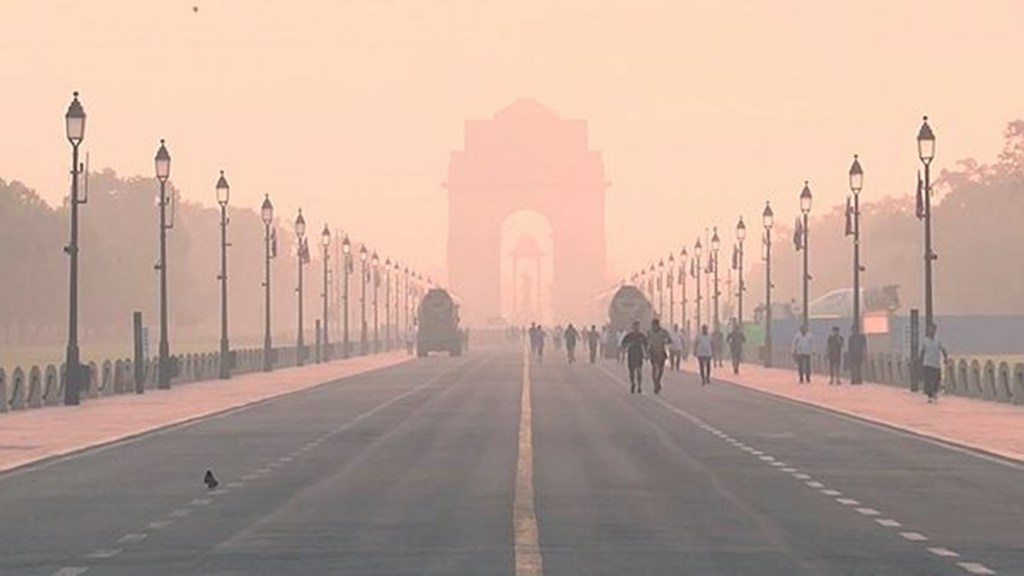

State government and private offices in Delhi and five neighbouring districts will have to limit physical attendance to 50% from November 5 to 20 under fresh anti-pollution curbs. The Commission for Air Quality Management (CAQM) has also ordered restrictions on dust-generating demolition and outdoor construction across the National Capital Region during the period.
The October 30 order seeks to cut emissions ahead of early to mid-November, when the region has historically recorded some of its worst pollution levels.
The curbs are separate from Delhi’s broader Winter Action Plan 2026-27, which includes vehicle restrictions, higher parking charges, dust-control measures and stronger enforcement against polluting industries.
#ORDER | CAQM DIRECTIVES FOR AIR POLLUTION CONTROL | 05–20 NOVEMBER 2026
In view of the anticipated seasonal rise in air pollution across Delhi-NCR, the Commission for Air Quality Management (CAQM) has directed the implementation of precautionary measures from 05 November to 20 November 2026 to prevent and control air pollution.
Key measures to be implemented in Gurugram:
🏗️ Restrictions on Construction Activities
✔️ Dust-generating demolition and outdoor construction activities will remain restricted across NCR.
✔️ Exemptions will apply to essential projects, including Railways, Metro, Airports, Hospitals, Water Supply, Sanitation, National Security and other projects of national importance.
✔️ Restrictions will also cover linear infrastructure projects such as highways, roads, flyovers, power transmission lines and pipelines.🏢 Work From Home Advisory
✔️Government and private offices in Gurugram will operate with up to 50% of staff attending physically.
✔️The remaining staff will work from home.
✔️ Exemptions will apply to essential services and industrial establishments where this arrangement is not feasible.📅 Implementation Period: 05 November to 20 November 2026
All concerned departments, agencies and establishments are directed to ensure strict compliance with the CAQM instructions.
#Order #CAQM #AirPollution #AirQuality #Gurugram #DelhiNCR #GRAP #PollutionControl #WorkFromHome #ConstructionRestrictions #CleanAir #EnvironmentProtection #DistrictAdministrationGurugram #Haryana
— DC Gurugram (@DC_Gurugram) October 31, 2026
Where the 50% work-from-home rule will apply
From November 5 to 20, state government and private offices in Delhi, Gurugram, Faridabad, Sonipat, Ghaziabad and Gautam Buddha Nagar will be required to operate with no more than 50% of their staff attending physically. The remaining employees will work from home.
The direction makes an exception for industrial establishments and essential services where such an arrangement is not feasible. The measure is intended to reduce commuting and vehicular emissions during the period.
What the construction restrictions cover
CAQM has restricted dust-generating demolition and outdoor civil construction activities across the National Capital Region from November 5 to 20, subject to specified exemptions. The curbs extend to highways, roads and other linear public projects.
Exemptions cover railways, Metro services, airports, bus terminals, hospitals, water, sanitation, defence, national security and projects of national importance.
Why CAQM has chosen November 5-20
The commission’s order points to a recurring pattern of worsening air quality during early to mid-November. Its examination of daily Air Quality Index (AQI) data for November 2018-2025 found that pollution in Delhi-NCR had reached the “Severe” and “Severe+” categories on several days during this period.
According to the order, local emissions, seasonal agricultural-residue and biomass burning, and other episodic sources add to the pollution load. Low wind speeds and limited vertical mixing then trap pollutants close to the ground, allowing them to accumulate.
The order states, “The objective of the proposed intervention is to reduce the emission load at source and minimise the accumulation of pollutants.”
Polluting industries face five-day notices
In a separate enforcement move, the Central Pollution Control Board (CPCB) has directed pollution-control authorities in Delhi, Haryana, Uttar Pradesh and Rajasthan to issue show-cause notices proposing closure, with five days to respond, to defaulting industrial units in Delhi-NCR.
The action targets covered units that have neither placed work orders to install or upgrade air-pollution-control devices nor obtained valid adequacy assessments or exemption certificates, according to an IANS report. The revised particulate-matter emission standard took effect on October 1.
The requirements cover 17 highly polluting industrial categories as well as specified red-category, food-processing, textile and metal units.
Authorities have been told to issue closure orders if the units fail to provide satisfactory evidence of work orders or valid exemption or adequacy reports within five days.
Delhi’s separate winter plan
Delhi’s Winter Action Plan is a broader programme covering November 1 to February 28. Under the Delhi plan, dust-generating demolition and outdoor civil construction restrictions are scheduled from November 1 to January 31, with exemptions for essential public infrastructure projects.
A broader ban on construction and demolition activities is scheduled from December 10 to January 20, barring urgent government and emergency works. The plan also requires full CCTV coverage at construction sites and registration on the “Malba App” for building-plan approvals.
Delhi’s plan separately provides for 50% work from home, or work-from-home arrangements for two days a week, from November 1 to January 31, with exemptions for essential and emergency services. It also sets staggered office timings: municipal corporation offices are scheduled to operate from 8.30 am to 5 pm, while Delhi government offices will function from 10 am to 6.30 pm.
Vehicle checks and higher parking charges
Delhi’s winter strategy also targets vehicular pollution through a “No PUC, No Fuel” policy. According to the announced plan, vehicles without a valid Pollution Under Control Certificate and those that have exceeded their prescribed lifespan will not be allowed to refuel at 500 petrol pumps equipped with Automatic Number Plate Recognition systems from November 1 (Sunday).
Petrol and diesel vehicles registered outside Delhi that do not meet BS-VI emission standards will also be barred from entering the city from November 1, while CNG and electric vehicles are exempt under the announced measure.
To discourage private-vehicle use, parking charges at authorised facilities will be doubled, excluding Metro parking facilities. The government has also set daily ridership targets of 72 lakh for the Delhi Metro and 42 lakh for Delhi Transport Corporation buses.
Road dust, waste burning and hotspot inspections
The Delhi government’s plan includes a target to redevelop around 3,000 km of roads to control dust. The government said 1,193 km had been completed when the plan was announced. Other measures include mechanised sweeping, water sprinkling, deep cleaning, improved footpaths, paved road surfaces and the clearance of garbage accumulation points.
The government said 98 mechanical road-sweeping machines had been deployed in two shifts. It also announced weekly inspections at 37 identified air-quality and traffic hotspots by public representatives and nodal officers.
A “Zero Burning” campaign will seek to prevent open burning of waste and biomass. Agencies have also been directed to arrange heating facilities for security guards during winter, as part of the measures accompanying the anti-burning drive to discourage open fires.
334 teams to enforce pollution curbs
The Delhi government said 2,283 polluting industrial units had been sealed or shut down following a survey of 11,271 units. It also warned of action against industries violating pollution-control norms, including those operating in non-conforming areas.
For enforcement, the government reported deploying 334 teams working in two shifts:
- 256 teams from municipal bodies
- 78 from the Delhi Pollution Control Committee
- AI-enabled monitoring is also part of the plan
Chief Minister Rekha Gupta said implementation would involve coordination between the Centre, Delhi government, CAQM, CPCB, local bodies, Delhi Police, the Delhi Metro Rail Corporation (DMRC) and other agencies, with public participation central to the campaign.