



Chhattisgarh is looking to strengthen its position as an investment destination by combining infrastructure expansion, industrial development, tourism and employment generation, with the state government seeking to unlock the economic potential of resource-rich regions such as Bastar.
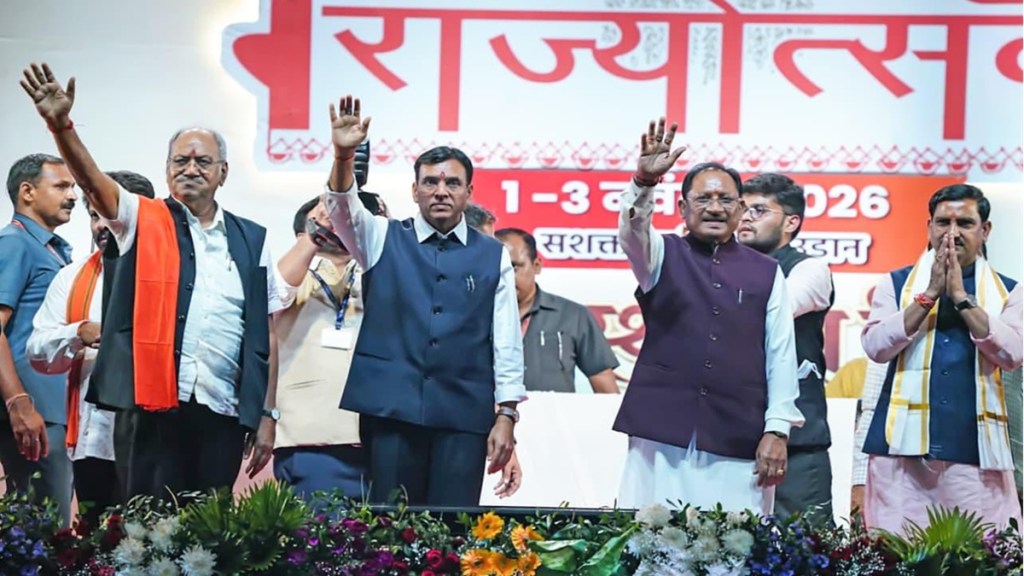
Addressing the inauguration of the three-day Rajyotsav 2026 celebrations in Raipur on November 1, Union Minister Mansukh Mandaviya said Chhattisgarh’s development would contribute to India’s ambition of becoming a developed nation by 2047. He noted that the state’s natural resources, cultural heritage, industrial potential and expanding infrastructure as key drivers of economic growth.
Chief Minister Vishnu Deo Sai also outlined the government’s development priorities, including improving connectivity in remote areas, expanding healthcare and education infrastructure, supporting farmers and women through welfare schemes, and attracting industrial investment.
The emphasis on Bastar was particularly significant, with the state government seeking to move the region beyond the challenges posed by Naxalism and create opportunities in tourism, skill development, employment and industrial activity.
Bastar’s transition towards peace could open up economic opportunities
Mandaviya said Bastar, which was previously associated largely with the challenge of Naxalism, was witnessing new opportunities in sports, tourism, culture and development. He said the region’s natural resources and cultural heritage could support its economic transformation.
Sai said Naxalism had historically prevented development facilities from reaching several parts of Bastar despite the region’s forest wealth, mineral resources and natural attractions. He said improved security conditions were creating opportunities to expand roads, electricity, education, healthcare and communication infrastructure in remote villages.
The state government is also looking to connect areas previously affected by Naxalism with the mainstream economy through skill development and employment opportunities for local youth.
For the state’s economy, improved connectivity and security could support greater economic activity in areas that have remained difficult to access. Tourism, local businesses and resource-based industries are among the sectors that could benefit from the expansion of infrastructure, although the pace of investment will depend on the development of supporting facilities.
Tourism push could create opportunities for local businesses
Tourism is emerging as another area of focus for Chhattisgarh, with the government seeking to promote destinations such as Chitrakote Waterfall, Sirpur, Rajim, the ancient caves of Ramgarh and Mainpat.
State Culture Minister Rajesh Agrawal said these destinations had the potential to attract visitors from across India and abroad. Expanding tourism activity could create employment and income opportunities for local youth, women, artisans and small businesses.
The state’s tribal traditions and folk art forms, including Pandavani, Panthi and Dadariya, are also being positioned as part of its tourism and cultural economy. The government has undertaken initiatives to preserve traditional art forms and recognise artists, including instituting a state honour in memory of Pandavani exponent Teejan Bai.
A stronger tourism ecosystem could support businesses in hospitality, transport, food services, handicrafts and local experiences. However, developing these opportunities would require investment in connectivity, accommodation, visitor facilities and tourism infrastructure.
Industrial investment and infrastructure development remain key priorities
Mandaviya said industrial investment, infrastructure expansion and employment generation were opening new possibilities for Chhattisgarh’s development. He described the state’s natural resources, workforce and cultural strengths as important assets in its effort to attract investment.
The government is also seeking to expand basic infrastructure in remote regions, including roads, electricity and communication networks. These facilities are important for improving access to markets, supporting industrial activity and connecting businesses with wider supply chains.
The emphasis on indigenous resources and local capabilities is expected to remain central to the state’s development strategy. However, the government’s broader investment ambitions will need to translate into actual projects, capital commitments and employment opportunities.
Housing, farmer support and women’s financial assistance
The state government’s welfare programmes also form part of its economic development strategy, with a focus on household incomes, rural demand and financial support for vulnerable sections.
Sai said around 1,600 pucca houses were being completed every day under the Pradhan Mantri Awas Yojana. The programme is aimed at improving housing access for low-income families while supporting construction-related economic activity.
The chief minister said the state was procuring paddy from farmers at Rs 3,100 per quintal, up to 21 quintals per acre. The government has also paid pending paddy bonuses, he said.
Under the Mahtari Vandan Yojana, more than 68 lakh women receive monthly financial assistance directly into their bank accounts. Sai said the scheme was helping strengthen women’s financial independence and supporting household expenditure.
The government has also restarted the Charan Paduka Yojana and is providing annual financial assistance of Rs 10,000 to landless agricultural labourers.
These measures are intended to support rural and household incomes, potentially strengthening consumption demand across the state.
Healthcare and education expansion to support workforce development
Chhattisgarh is also looking to expand its healthcare and education infrastructure to improve access to essential services and strengthen its skilled workforce.
Sai said the state had one medical college at the time of its formation in 2000, compared with 21 government and private medical colleges currently operational.
The government is also focusing on higher education, skill development and competitive examination preparation to improve employment prospects for young people.
Expanding educational and healthcare facilities could support the availability of skilled workers and improve the state’s capacity to attract businesses over the longer term.
The three-day Rajyotsav 2026 celebrations mark the state’s Foundation Day. It also provided an opportunity to showcase its development priorities, cultural heritage and investment potential.