



Who can marry, how property should be inherited and whether live-in couples must register their relationship are among the questions Maharashtra is putting to its citizens as it prepares a Uniform Civil Code (UCC).
The state’s drafting committee has opened a 37-question online survey, inviting individuals and organisations to respond by November 15, Indian Express reported. It seeks views both on the need for a common civil law and on how such a law should address personal matters and religious customs.
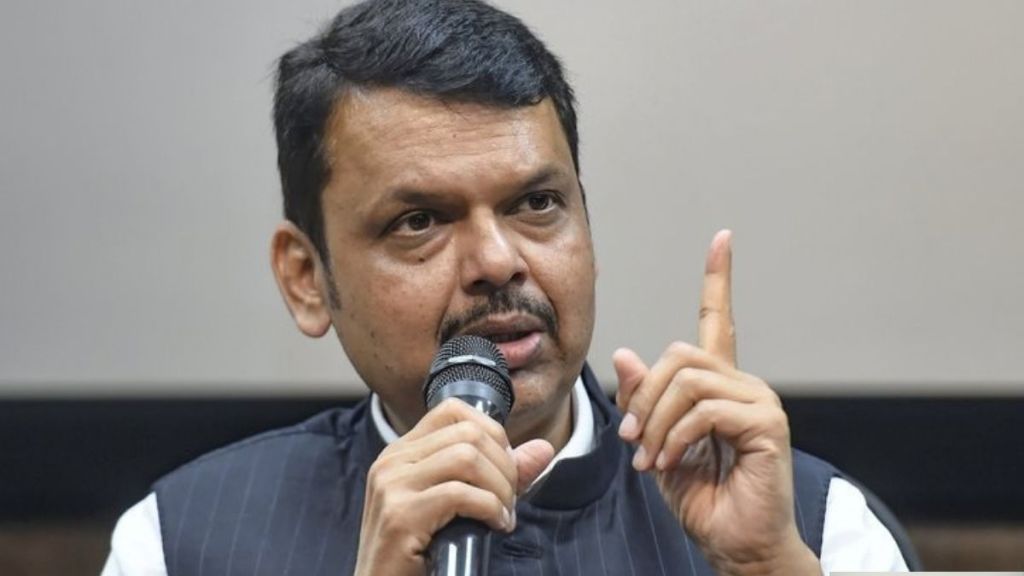
Maharashtra Chief Minister Devendra Fadnavis has said the state government would endeavour to introduce a UCC Bill during the winter session of the state Assembly in December. The committee will consider feedback submitted through the portal, alongside public consultations and hearings across the state.
What does Maharashtra’s UCC survey ask?
The questionnaire seeks public opinion on whether Maharashtra should implement a Uniform Civil Code at this stage, whether a common civil law can be introduced without infringing the constitutional right to freedom of religion, and whether such a code would reduce legal disputes and make legal processes more efficient, according to The Indian Express.
These questions offer respondents three options: yes, no and no comment.
The survey also examines specific aspects of marriage and family law. It asks whether a person should be permitted to marry while already married, whether customary practices and religious marriage ceremonies should be preserved, and whether a standard list of prohibited relationships within which marriage cannot take place should be established.
The questionnaire also addresses bigamy, polygamy and the practice of halala in the Muslim community, Indian Express reported.
Another major area is the legal status of live-in relationships. The committee is seeking views on whether such relationships should be compulsorily registered and whether both entering into and ending a live-in relationship should require registration.
The questionnaire also asks whether the law should protect the rights of partners, including women’s claims to maintenance and inheritance in cases of desertion.
On inheritance, respondents are asked whether men and women should have equal rights across communities, whether common succession rules should apply when someone dies without a valid will, and whether individuals should be free to leave their entire property through a will, according to the Indian Express report.
How does Maharashtra’s survey compare with Gujarat and Uttarakhand?
Maharashtra’s survey has 37 questions, compared with 13 in Gujarat’s. While Gujarat sought opinions on broader issues relating to marriage, divorce, maintenance, inheritance and live-in relationships, Maharashtra has included more specific questions on bigamy, polygamy and halala, IE reported.
Uttarakhand, which began work on a UCC in 2022, had a questionnaire covering similar themes to Maharashtra’s, including marriage, divorce, maintenance, inheritance rights across genders and live-in relationships. However, the Uttarakhand exercise included more detailed questions on certain aspects of marriage, divorce and inheritance.
Retired Supreme Court judge Justice Ranjana Desai, who chairs Maharashtra’s committee, has also headed UCC panels in Uttarakhand, Gujarat and Madhya Pradesh, according to Indian Express.
Who is on Maharashtra’s UCC committee?
Besides Desai, the Maharashtra committee includes former Bombay High Court judge S G Mehare, former Maharashtra chief secretary DK Jain, former advocate general Birendra Saraf, social activist and Padma Shri awardee Ramesh Patange, education expert Suvarna Rawal and former Uttarakhand chief secretary Shatrughna Singh, The Indian Express reported.
Alongside the online consultation, the committee will conduct public hearings across Maharashtra to gather views from citizens and other stakeholders.
The portal allows both individuals and organisations to submit feedback, including detailed suggestions.
What happens after the public consultation?
Once the consultation process is completed, the committee is expected to prepare and submit its draft report to the state government. The proposed Bill would require Cabinet approval before being introduced in the state legislature.
The Bill would need to complete the legislative process in Maharashtra, which has both an Assembly and a Legislative Council, before going to the Governor. If reserved for the President’s consideration, it would require presidential assent. Implementation would then depend on the law’s commencement provisions and the rules framed under it.
Uttarakhand’s experience illustrates how such exercises can extend over several months. Its consultation process included discussions in villages and colleges, meetings with officials from departments such as police, law, social welfare, women empowerment and child development, and consultations with religious leaders, according to The Indian Express.
Although the Uttarakhand portal was launched in September 2022, consultations continued until June 2023, when the completion of the draft code was announced. A report that included a survey of the state’s demography was submitted in February 2024.
Where does Maharashtra fit in the wider UCC push?
The UCC debate has gained momentum across several states. Union Home Minister Amit Shah has set a 2029 target for implementing a Uniform Civil Code in the 21 states governed by the BJP-led NDA, IE reported.
Uttarakhand implemented its UCC in January 2025. Gujarat, Assam and Madhya Pradesh passed UCC Bills this year, while Gujarat and Assam received President Droupadi Murmu’s assent on September 17 and September 29, respectively, according to records published by the President’s Secretariat. Chhattisgarh and Rajasthan have also set up committees to draft a code.
For Maharashtra, the November 15 feedback deadline leaves a short window to assess responses and finalise a draft if the government is to meet its December target for introducing the Bill.