


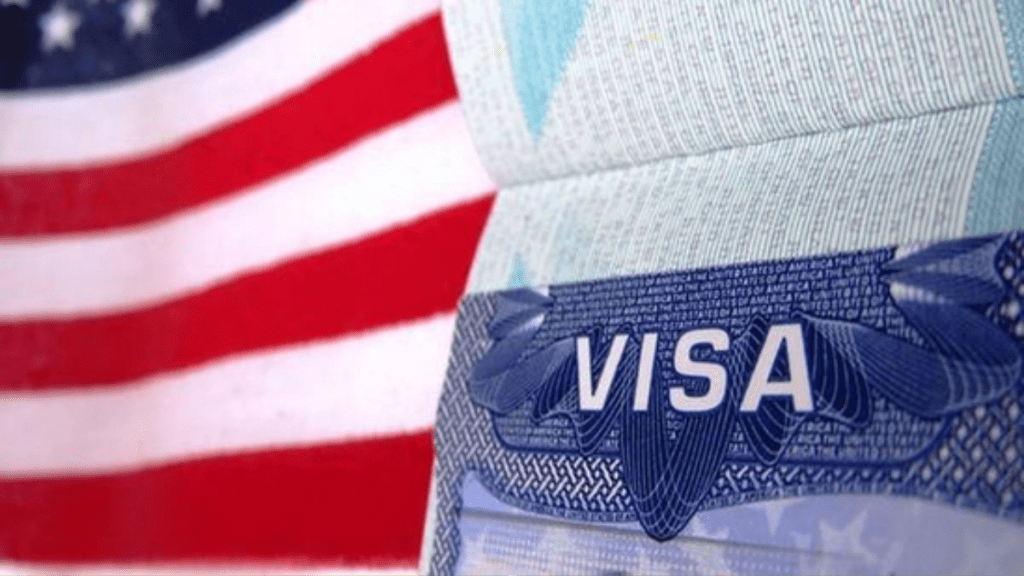

The United States has introduced a new visa-bond programme under which eligible visitors from 50 countries may have to pay up to $20,000 before they can receive a US tourist or business visa.
The programme requires some B1/B2 visa applicants to post a financial bond of $10,000, $15,000 or $20,000. The exact amount will be decided by a US consular officer during the visa interview.
Indian passport holders, however, are exempt from the visa-bond requirement.
The new rule is aimed at addressing visa overstays and applies to people travelling on passports issued by countries included on the US State Department’s designated list.
How the US visa bond works
The programme operates under Section 221(g)(3) of the Immigration and Nationality Act.
The US uses visa overstay rates from the Department of Homeland Security‘s Entry/Exit Overstay Report when deciding which countries are covered by the programme.
The rule applies based on the applicant’s nationality and passport. This means the requirement applies even if the person submits their US visa application in a country other than their own.
The final rule was issued by the US State Department on August 3, 2026.
Applicants who are told to post a bond must complete Department of Homeland Security Form I-352 and make the payment through the US Treasury’s official Pay.gov platform.
The State Department has warned applicants not to pay the bond through any website or service unless it has been specifically mentioned in the instructions given by a US consular officer.
Countries covered by the US visa-bond programme
The visa-bond requirement has been introduced for 50 countries in phases. The first group was added in 2025. Malawi and Zambia came under the programme from August 20, 2025. The Gambia was added from October 11, 2025.
Mauritania, Sao Tome and Principe, and Tanzania were added from October 23, 2025.
From January 1, 2026, the requirement covered Bhutan, Botswana, the Central African Republic, Guinea, Guinea-Bissau, Namibia and Turkmenistan.
A larger group was added from January 21, 2026. This included Algeria, Angola, Antigua and Barbuda, Bangladesh, Benin, Burundi, Cabo Verde, Côte d’Ivoire, Cuba, Djibouti, Fiji, Gabon, Kyrgyz Republic, Nepal, Nigeria, Senegal, Tajikistan, Togo, Tonga, Tuvalu, Uganda, Vanuatu, Venezuela and Zimbabwe.
From April 2, 2026, the programme was expanded to Cambodia, Ethiopia, Georgia, Grenada, Lesotho, Mauritius, Mongolia, Mozambique, Nicaragua, Papua New Guinea, Seychelles and Tunisia.
For travellers from these countries who are covered by the rule, the new requirement means that getting a US tourist or business visa can involve a large upfront financial commitment.
India remains exempt
Indian passport holders do not have to pay the visa bond under the current programme.
This means eligible Indian applicants for B1/B2 visitor visas will not face the additional $10,000, $15,000 or $20,000 financial requirement simply because of their nationality.
Nepal and Bangladesh, however, are among the countries covered by the programme.
Who can pay the visa bond?
The bond does not necessarily have to be paid by the visa applicant. A relative, friend or business associate can also make the payment. However, the person listed as the obligor on Form I-352 must be the same person who actually makes the payment.
The bond has to be paid in US dollars. If the money is refundable, it will also be returned in US dollars.
This means the person paying the bond takes the risk if the exchange rate changes between the time the payment is made and the time the money is returned.
Paying the bond does not guarantee a US visa
The US government has also made it clear that paying the required bond does not mean that the applicant will automatically get a visa.
A consular officer will still decide whether the applicant qualifies for the B1/B2 visa.
The State Department has also warned that people who voluntarily pay a bond without being instructed to do so by a consular officer may not get their money back.
Travellers must use commercial air entry and exit points
People who are required to post the bond will also face specific travel conditions.
They must enter and leave the United States through commercial airports of entry. This includes eligible Customs and Border Protection pre-clearance locations.
They cannot enter or leave the US using charter flights, general aviation, land borders or sea ports of entry while they are subject to the visa-bond requirement.
This means a traveller who has posted the bond cannot simply choose another method of entering or leaving the country.
When will the visa bond be returned?
The deposit can be returned automatically if the traveller follows all the conditions attached to the bond.
This can happen when the traveller leaves the US on time, when the visa expires without the person travelling to the US, or when the traveller leaves through an authorised commercial air exit point while meeting US immigration requirements.
However, the money can be at risk if the traveller violates the conditions of the bond.
The Department of Homeland Security can refer suspected violations to US Citizenship and Immigration Services for a decision.