



The proposed $103,265 fee on H-1B petitions is weighing heavily not only on foreign workers but also on the career prospects of international students in the US.
Many international students who graduate from US colleges rely on employers subject to the H-1B cap to sponsor them. That is how they stay in the country and work. A fee of more than $100,000 could make those employers much less willing to sponsor.
NAFSA, an Association of International Educators and JB International indicate a projected decline in international student enrollment for Fall 2026. An analysis by NAFSA estimates that as many as 111,000 fewer international students at U.S. colleges and universities will result in up to $3.4 billion in lost revenue and nearly 40,000 fewer jobs.
The proposed $103,265 fee on H-1B petitions could make it much harder for US colleges and universities to recruit and retain international talent. The American Council on Education (ACE) and 18 other higher education associations are calling on the Department of Homeland Security (DHS) to withdraw the proposal.
But why are colleges and universities worrying? They are not required to pay the fee at all.
Why Are Exempt Universities Still Worried?
Their H-1B petitions are exempt from the annual cap. But in comments submitted on September 24, the associations said the effects would reach well beyond the institutions’ own hiring.
The groups put it this way: “While we appreciate that colleges and universities are exempt from this as non-cap subject employers, we would like to emphasize the detriment this fee would have broadly on our ability to recruit and maintain global talent.”
Could It Change Where Students Choose to Study?
The comments link job prospects after graduation to the ability of US institutions to compete for international students. The associations said the chance to use their education in the US workforce through programs like H-1B is an important factor for students choosing between American and foreign universities.
There is money at stake too. International students contribute more than $40 billion a year to the US economy, the groups noted. They also support academic programs and institutional capacity that benefit domestic students.
US International Student Economic Trend
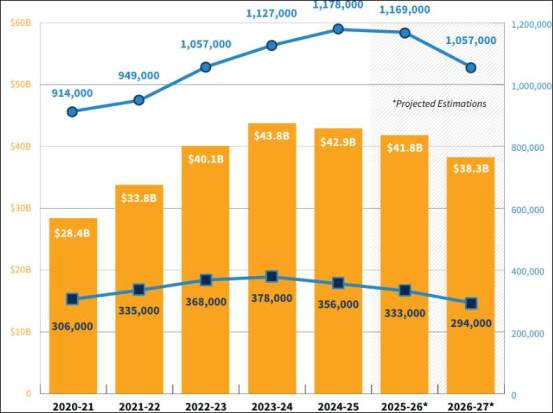
Source: NAFSA
The Startup Numbers Behind the Warning
The associations also pointed to the longer-term impact. They cited research from the National Foundation for American Policy. It found that 24 percent of US “unicorn” startups were founded by people who first came to the country as international students. Unicorns are privately held companies valued at $1 billion or more.
Where Would the Fee Money Go?
ACE and the other groups raised a separate concern. Historically, US Citizenship and Immigration Services (USCIS) filing fees have been tied to the cost of processing applications and petitions. The proposed H-1B fee would go “far beyond the direct adjudication cost” of an individual petition, the groups said.
According to the proposed rule, the revenue could fund immigration-related activities at DHS, and also at the departments of Justice, State and Labor. The associations questioned whether that fits the legal and historical purpose of USCIS fees.
Their warning: “We are concerned that this large amount of revenue will be used for programs and activities beyond those authorized and appropriated by Congress as this contravenes the historical and statutory role of the filing fees.”
The $100,000 H-1B Fee
In September 2025, Trump announced a $100,000 fee for H-1B petitions. Currently, the Department of Homeland Security (DHS) has proposed a fee of $103,265 on all H-1B cap-subject petitions, including those eligible for the advanced degree exemption. This fee applies to all petitions within the 85,000 cap. But for US universities, there is no such cap on H-1B visa recruits.
Meanwhile, the National Foundation for American Policy (NFAP), a nonpartisan policy research organization, has questioned a claim by the Department of Homeland Security (DHS). DHS had said the proposed $103,265 fee would raise $8.8 billion a year for the government. NFAP calculates that it would raise only $2.6 billion, or 70% less than DHS claimed.
Disclaimer: This article is for informational purposes only and should not be treated as legal or immigration advice. Please consult a qualified immigration attorney before making any decision.