


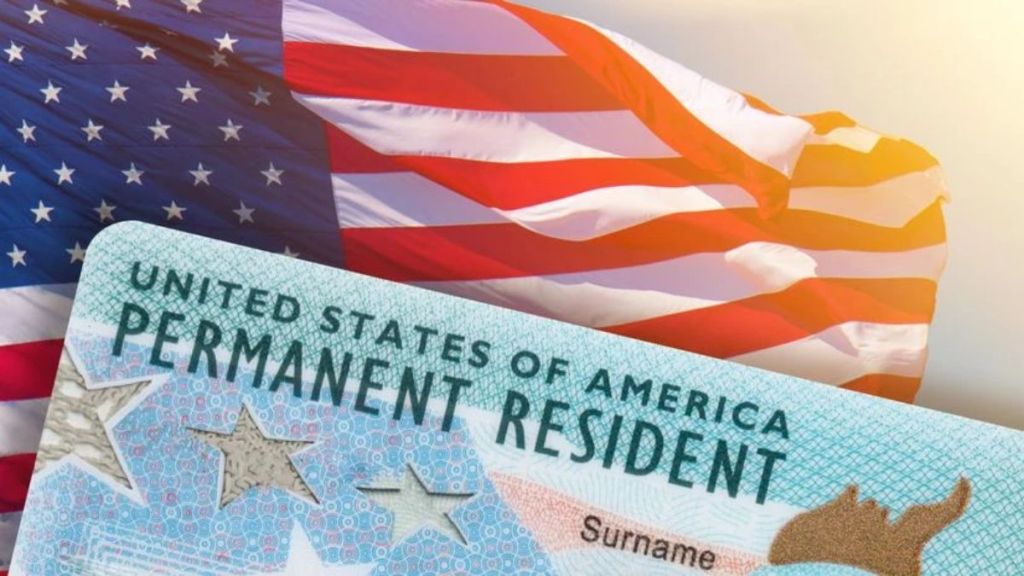

A new US fiscal year has brought changes for several green card applicants, with visa numbers resetting, some priority dates moving forward and others moving backwards.
At the same time, the US has brought back a broader public-charge standard, raised EB-5 fees and changed how USCIS treats some filing deadlines that fall on weekends and federal holidays.
The changes affect family-sponsored and employment-based green card applicants as well as people planning to invest through the EB-5 programme. Applicants should check their category, priority date and the latest USCIS rules before filing.
New fiscal year brings changes to green card priority dates
The US federal government’s 2027 fiscal year began on October 1. Every year, immigrant visa numbers reset at the start of the new fiscal year. This allows the State Department and USCIS to start issuing green cards again in categories that had reached their annual limits.
The October 2026 Visa Bulletin shows that some dates moved forward after the reset. However, some employment-based categories for applicants from countries outside the main oversubscribed countries also moved backwards as the State Department tries to keep visa issuances within its quarterly and yearly limits.
The department said it is monitoring the situation and could make further changes.
For Indian applicants, some of the biggest changes came in the employment-based categories. The EB-2 India category reopened with a Final Action Date of November 1, 2013, after being listed as unavailable in September.
The EB-5 unreserved category for India also reopened, with a Final Action Date of December 1, 2023. The EB-1 India date moved forward from October 15, 2022, to February 1, 2023.
The picture is different for applicants from most other countries. The EB-2 Final Action Date for most countries, Mexico and the Philippines moved from the current to January 1, 2025. The EB-3 Final Action Date for most countries and Mexico is May 15, 2024.
This means EB-2 and EB-3 applicants from these countries could face longer waits before their green cards can be finally approved.
For family-sponsored applicants, the F2A category, which covers spouses and unmarried children under 21 of US lawful permanent residents, has a Final Action Date of September 22, 2026 for most countries, including India, China and the Philippines. Mexico’s date is March 22, 2026.
The Dates for Filing chart, however, shows F2A as current for all countries. The Visa Bulletin also says F2A numbers that are exempt from the per-country limit will be available to applicants from all countries whose priority dates are earlier than March 22, 2026.
USCIS allows more applicants to file Form I-485
The State Department issues the monthly Visa Bulletin, but USCIS separately decides which chart applicants inside the US should use when filing Form I-485, the application to adjust status to permanent resident.
For October 2026, USCIS has chosen the more generous Dates for Filing chart for all family-sponsored and employment-based preference categories. Dates for Filing chart can allow an eligible applicant to submit Form I-485 before their priority date reaches the Final Action Date.
But filing the I-485 does not mean the green card will be approved immediately. The Final Action Date still controls when a visa number can actually be used and when the green card can be approved. An applicant may therefore be able to file in October but still have to wait years for final approval.
USCIS reviews which chart it will use every month. There is no guarantee that it will continue using the Dates for Filing chart in November.
Broader public-charge rules now apply to new green card applications
DHS has announced a new final rule on July 16, 2026, and published it in the Federal Register on July 20. The rule took effect on September 18, making October the first full month under the new system.
The new rule removes the 2022 public-charge regulation and brings back a broader approach to deciding whether an immigrant is likely to become primarily dependent on government support.
Under the 2022 rules, immigration officers had a more limited list of benefits they could consider. The new approach gives officers wider discretion. They can look at the applicant’s overall circumstances, including age, health, family situation, finances, assets, liabilities, education and skills.
The new guidance applies to Forms I-485 that are subject to the public-charge ground and were postmarked or submitted electronically on or after September 18, 2026. Benefits received before September 18 are considered under the 2022 rules, while benefits received on or after that date are considered under the broader standard.
There is also a revised Form I-485 linked to the new public-charge standard.
The rule also changes the provisions dealing with public-charge bonds under 8 C.F.R. § 103.6(c). However, receiving public benefits does not automatically make an applicant ineligible for a green card. The public-charge ground applies only to certain applicants, and exemptions depend on the person’s immigration category and individual circumstances.
EB-5 fees will almost double from November 30
People planning to apply through the EB-5 immigrant investor programme will also face higher fees soon. The new fees will take effect on November 30.
The new charges will apply to petitions postmarked on or after November 30.
For a standalone EB-5 investor filing Form I-526, the fee will rise from $3,675 to $7,615. For Form I-526E, used by regional centre investors, the fee will increase from $3,675 to $7,850. The fee for Form I-829, which is used to remove conditions on permanent residence, will rise from $3,750 to $5,000.
A new Form I-527 filing will also carry a $10,330 fee. There was no fee for this filing under the earlier schedule. The I-526 and I-526E fees include a new $75 EB-5 technology fee. The Integrity Fund fee paid by regional centre investors is also expected to rise from $1,000 to $1,100.
The new I-527 filing is meant for certain older EB-5 investors whose regional centre or project has been terminated.
USCIS changes rules for deadlines falling on weekends
On September 23, 2026, USCIS issued Policy Alert, titled “Definition of Day for Purposes of Filing Deadlines.” The policy takes effect on October 23 and returns USCIS to its interpretation from before 2023.
It reverses a March 29, 2023 policy alert. Under the new guidance, deadlines that are counted in a specific number of days will still receive an extension when the last day falls on a Saturday, Sunday or federal holiday.
For example, if someone has a set number of days to respond to a notice and the final day falls on a weekend or federal holiday, a paper filing will be considered timely if USCIS receives it by the end of the next business day.
But the same extension will no longer apply to deadlines that are not expressed in days. This includes deadlines such as a filing that must be made before a person’s 21st birthday. If that date falls on a weekend or federal holiday, the applicant will not automatically get the next business day to file.
Electronic filings are treated differently. USCIS will not give an extra business day for online submissions.
Religious worker green card category extended until December
The EB-4 category for certain religious workers has also been extended, but only for a limited period.
The October Visa Bulletin notes that H.R. 6500, which was signed into law on September 2, 2026, extends the Employment Fourth Preference Certain Religious Workers, or SR, category through December 11, 2026.
The category has the same dates as the other EB-4 categories. For all listed countries, the Final Action Date is December 15, 2022, while the Dates for Filing date is January 1, 2025.
Because the extension ends on December 11, religious worker applicants and their sponsors will need to watch for any further action from Congress before the category expires.
USCIS discretion memo could affect how I-485 cases are reviewed
There is also another USCIS policy that was introduced earlier this year but remains important for people filing adjustment-of-status applications this fall.
On May 21, 2026, USCIS issued Policy Memorandum PM-602-0199. The memo says adjustment of status is “a matter of discretion and administrative grace” and describes it as an extraordinary form of relief that allows applicants to avoid the normal consular visa process.
The memo directs USCIS officers to consider both positive and negative factors when deciding individual cases. The policy does not change the legal eligibility requirements for adjustment of status. USCIS continues to accept Form I-485 applications.
The memo also recognises that applying for adjustment of status is not inconsistent with holding a dual-intent status such as H-1B or L-1. However, having one of those statuses does not guarantee that USCIS will exercise discretion in the applicant’s favour.
The memo is internal guidance for USCIS officers rather than a new law or regulation.
Disclaimer: This article is for general informational purposes only and does not constitute legal, immigration, or tax advice. Immigration laws and government policies are subject to frequent change without notice. While we strive to provide accurate updates, readers are strongly advised to verify the latest requirements with the official embassy, consulate, or government portal of the respective country. Financial Express is not responsible for any decisions made based on this information. For personalized guidance, please consult a qualified immigration attorney or a certified professional advisor.