


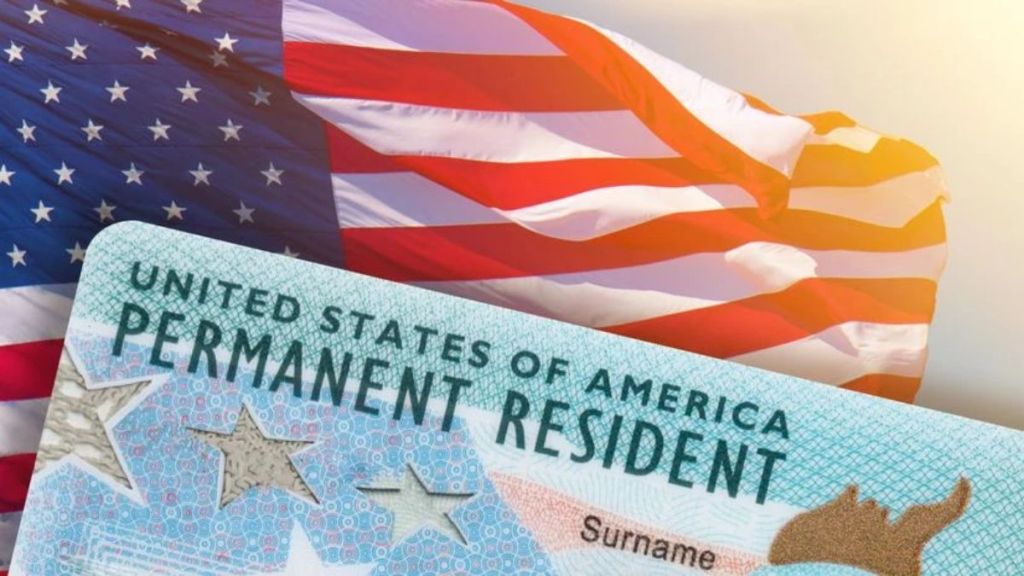

A new US Senate bill could massively impact existing family and employment-based Green Card categories as foreign nationals continue to face more difficult legal pathways into the United States under the Donald Trump administration. This week, Republican Senator Tommy Tuberville introduced a sweeping proposal called the ‘Americans First Immigration Act,’ which seeks to overhaul the country’s legal immigration system by making American workers its No.1 priority.
This particular bill serves as a companion to the similarly titled House Bill (HR 8586), the Americans First Immigration Act introduced by Representative Barry Moore in April. While both proposals remain identical at their core, the Senate version adds certain changes, including stricter penalties for certain employer violations and revised transition rules for those already in the immigration system.
Although not yet passed, the legislation adds to the increasing policy changes already introduced by the Trump administration, especially since the MAGA leader returned to office for a second term in 2025.
The current administration has recently ramped up its aggressive statements against the H-1B visa program, which recruits high-skilled foreign employees to the United States. Indians have dominated approvals in the work visa program in recent years, according to official US Citizenship and Immigration Services (USCIS) data. US employers largely rely on this category of non-immigrant visa sponsorships to hire people in STEM fields.
Americans First Immigration Act – What it seeks to achieve
According to an official press release from the office of Tommy Tuberville, the US Senator for Alabama, this proposed bill primarily seeks to achieve three goals: prioritise American workers, strengthen the nuclear family and ensure newcomers in the US are picked based solely on merit.
To achieve that, the bill would eliminate the Diversity Visa Lottery and replace it with a points-based model that prefers skill, education, English proficiency and high-value job offers, military service and extraordinary achievement.
The annual Diversity Visa (DV) Program allows up to 55,000 immigrants to enter the US each year from countries with low rates of immigration to the United States. India is not included in this list. Since it is also called the Green Card Lottery, the US Department of State-administered program relies on random selection among all entries.
Secondly, the legislation seeks to narrow family-sponsored immigration to spouses and minor children in the US by prioritising the nuclear family. Additionally, it will require US employers to hire American workers first, pay them fair wages, and ensure foreign labour doesn’t displace US employees.
New bill to replace existing employment Green Card categories
The bill is expected to make the path to acquiring lawful permanent residence in the US harder. Replacing the existing employment-based Green Card categories with a points-based system, the bill seeks to start with an annual worldwide threshold of 192,000 visas. However, these would ultimately drop depending on how many people were not detained or were released in previous fiscal years despite being subject to mandatory detention under provisions listed in the legislation.
To gain higher points and ultimately be accepted into the system, basic requirements among applicants would include a US job offer, an English proficiency score in the fifth decile or higher. Moreover, the foreign national must not be younger than 18 or older than 51 years on the date when the petition is filed.
Applications tied to higher salaries could score up to 35 points. The same goes for a doctoral degree in a field of science, technology, engineering or mathematics from a US institution of higher education, or a doctorate of medicine 8 from a graduate medical school at a United States institution of higher education, according to the bill’s full text available online.
Employers, on the other hand, would be required to provide evidence that they first recruited US workers, in addition to facing restrictions and scrutiny over laying off American workers.
In case of willful noncompliance tied to a US worker being laid off, employers could face penalties worth $50,000 each.
Impact on family sponsorships
If the proposed bill is implemented, parents of US citizens would be removed from the immediate-relative category. As a result, only spouses and minor children of lawful permanent residents or citizens would be considered in the family-sponsored category.
Currently, parents of American citizens who are at least 21 years old are deemed immediate relatives and exempt from the annual cap applied to family-preference categories.
“Our current immigration system does little to evaluate the type of people we let in — it’s a free-for-all,” said Senator Tuberville in a statement.
Branding US entry a privilege, he asserted that lawmakers need to ensure foreign nationals coming to the country must be willing to go by America’s laws and contribute to society.
“We can’t allow this current system to continue prioritizing foreign workers who aren’t willing to assimilate to our values. I’m proud to introduce the Americans First Immigration Act to end disastrous diversity lotteries and instead shift to a merit-based admissions process. I’ll keep fighting to put AMERICANS first,” he added.
The proposal largely borrows from Trump’s heavily endorsed ‘America First’ agenda. As part of it, the Republican leader has repeatedly argued that visa programs must not allow “cheap foreign labour” to displace American workers. Basing the administration’s entire H-1B crackdown campaign on this ideology, he launched Project Firewall last year. Ramped-up efforts have targeted instances of alleged visa fraud in the US, with the Department of Labour even recently suspending “H-1B processing” and PERM filing for companies like Cognizant and Cloudera.
It remains unclear when the legislation will be brought up in Congress since the House already left for an early recess on September 16 before the upcoming November 3 elections.
Disclaimer: This article is intended for informational purposes only and is based on publicly available immigration guidance. Rules and deadlines are subject to change; readers should verify current requirements directly with USCIS or consult a qualified immigration attorney before making decisions based on this information. Financial Express is not responsible for any decisions made based on this information.