


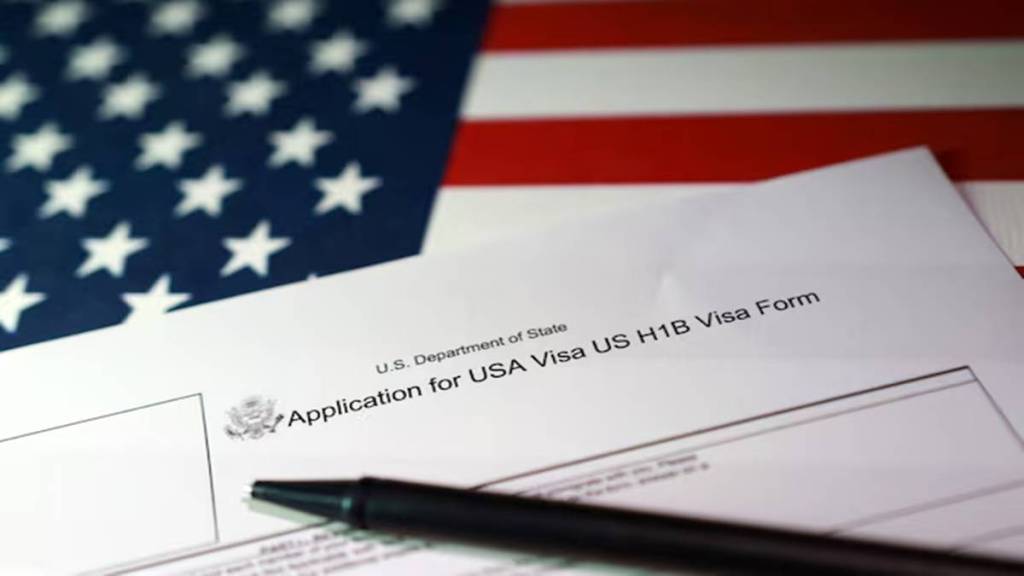

The Trump administration has proposed eliminating the 60-day grace period post-job loss and intends to complicate the stay of H-1B workers’ spouses.
The H-1B program is staring down its biggest overhaul in years, and it touches almost every stage of the visa, from the chances of getting an H-1B visa to the grace period after a foreign worker loses the job to the fee an employer pays before filing.
Some of the steps taken by the Trump administration are already implemented, while many others are in the pipeline. The primary goal is to lower the priority of H-1B visas for US employers, encouraging the hiring of American workers over foreign ones.
Three separate proposals are moving through federal channels at once: a shorter window to leave the country after a layoff, the end of work permits for H-4 spouses, and a fee that could run past $100,000 per petition. Here’s what’s actually changing, and what isn’t yet final.
The 60-day grace period may vanish
Regulations allow for a maximum 60-day grace period for workers in E-1, E-2, E-3, H-1B, H-1B1, L-1, O-1, or TN classifications (and their dependents) after employment ends. This period ensures they are considered to have maintained their status until either the 60 days or their authorized nonimmigrant validity period ends, whichever is shorter.
That cushion may be about to shrink. The federal Office of Management and Budget (OMB) is examining a USCIS proposal to remove the 60-day grace period for certain employment-based foreign workers and their dependents after employment ends. The specifics of the proposal are pending publication in the Federal Register, and the current grace period remains in place until then.
This 60-day grace period was introduced in 2016. If it’s removed, the removal of the 60-day grace period may end up with a 10-day period for the immigrant to prepare and leave the US.
Could H-4 spouses lose their work permits?
H-4 nonimmigrant status is available for spouses and children under 21 of H-1B employees, allowing them to stay in the U.S. only while the H-1B holder maintains valid status.
That status could soon come with a catch. The Trump administration is proposing a rule that would eliminate employment authorization eligibility for spouses of H-1B workers. This was noted in a regulatory agenda for the Department of Homeland Security, although no timeline for the rule’s release was specified.
Most H-4 dependents cannot work in the U.S. and are ineligible for a Social Security number, with limited exceptions for H-4 spouses of H-1B visa holders who are in the employment-based permanent residence process. Eligibility requires the H-1B principal to have an approved I-140 petition or a post-sixth-year extension of H-1B status.
A New H-1B Fee for US Employers
DHS wants a $103,265 fee, payable at the time of filing, on every H-1B cap-subject petition, including those that qualify for the advanced degree exemption. That means all petitions within the 85,000 cap fall under this $103,265 fee.
This is a separate charge from the one announced last year. The September 2025 proclamation stated that all US employers hiring foreign workers would be required to pay a $100K fee for petitions submitted after September 21, 2025.
In September 2025, Trump’s proclamation put a price tag of $100,000 on H-1B petitions, while now the Department of Homeland Security has proposed a $103,265 fee on H-1B cap-subject petitions.
The two numbers, $100,000 and $103,265, look almost identical, but they are different, and their application will also differ.
Higher pay now decides your H-1B odds
Starting in fiscal year (FY) 2027, USCIS has implemented a weighted selection process which favors the allocation of H-1B visas to higher-skilled and higher-paid aliens, while maintaining the opportunity for employers to secure H-1B workers at all wage levels.
What this means for H-1B workers and employers
Not all of these new H-1B rules are final yet. The grace period cut and the H-4 work authorization rule are both still moving through federal review, with no confirmed timeline for either. The weighted wage-based selection, by contrast, is already locked in for FY 2027, making it the one change H-1B applicants and their employers can plan around today.
Taken together, the direction is clear even where the details aren’t: the program is tilting toward higher-paid, higher-skilled workers, while the safety net around job loss and spousal work rights gets thinner.
For anyone currently on H-1B or H-4 status, the practical takeaway is to watch the Federal Register for the grace period rule and the DHS regulatory agenda for the H-4 proposal, since both remain proposals rather than settled law.
Disclaimer: This article is for general informational purposes only and does not constitute legal, immigration, or tax advice. Immigration laws and government policies are subject to frequent change without notice. While we strive to provide accurate updates, readers are strongly advised to verify the latest requirements with the official embassy, consulate, or government portal of the respective country. Financial Express is not responsible for any decisions made based on this information.