



The Donald Trump administration expanded its crackdown on foreign work visa programmes and US employers accused of replacing American workers with foreign employees. Earlier this week, it indefinitely suspended major tech companies, including Microsoft and Adobe, from the PERM programme, which allows employers to sponsor foreign workers for US Green Cards. The US government is also investigating nine American universities, including Yale, Harvard and Stanford, over their use of J-1 visas for foreign scholars.
The list of companies impacted by the first part of the crackdown includes various companies with ties to India, such as the Chennai-founded Cognizant and Indian IT giants Tata Consultancy Services (TCS), Infosys, Wipro and HCL.
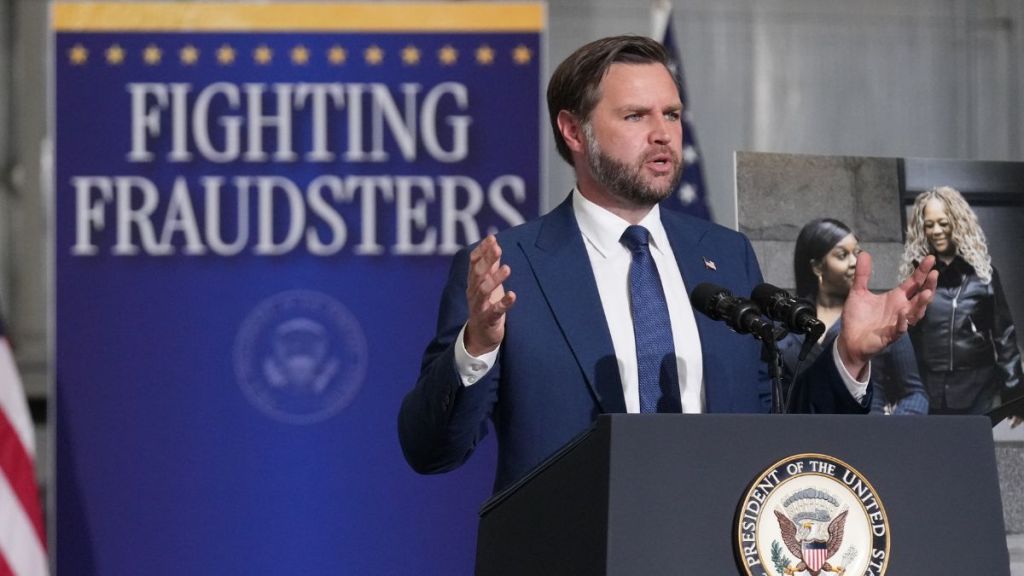
Vice President JD Vance, dubbed Trump’s “fraud czar,” said Thursday that the companies had “abused” the H-1B visa program and the Green Card process to “replace American workers with what is effectively foreign indentured servants.”
Considering that President Trump and his cabinet have repeatedly accused certain companies of using the H-1B work visa program at the expense of American workers, US Department of Labor (DOL) Inspector General Anthony D’Esposito defended his department’s latest move targeting what they’ve called “visa abuse” in tech and education.
Trump admin says employment-based benefits are being used as a ‘back door’ to US citizenship
Sitting down for a chat with Fox News over the weekend, he emphasised that the ‘specialty occupations’ visa program was always meant to be a temporary setup and not a business model.
As previously mentioned by Vice President Vance, DOL’s Inspector General Anthony D’Esposito singled out Microsoft. He claimed the company, currently headed by Indian-origin CEO Satya Nadella, laid off 6,000 workers in 2025 and subsequently replaced them with foreign workers on H-1B work visas instead.
“This is an assault on the American worker,” D’Esposito told Fox.
Taking aim at the Joe Biden administration, the US Labor Department official said that the previous Democratic president’s government viewed “fraud” as an “accounting error, as a paperwork error,” whereas the Trump administration views it as a “crime” and is issuing subpoenas as part of its widespread investigation into the tech and education sector.
He argued that plenty of people graduating from schools and universities in the US are looking for jobs. The Labor Department’s top official claimed that the companies they’ve suspended from the PERM program are “using the H-1B as a business model” to take American jobs away from American workers.
D’Esposito further went on to emphasise that President Trump “secured the front door” of the USA by “securing” the country’s border, which Republicans have repeatedly claimed was unlocked by former President Joe Biden and Vice President Kamala Harris. He then said that the current administration is now working at great length to secure the “back door,” signalling that visa programs and other immigration benefits people are using to “sneak” into the country and claim US citizenship.
Companies flagged in the H-1B crackdown
PERM (Permanent Labor Certification) filings play a major role in helping foreign workers secure employment-based Green Cards (lawful permanent residence) in the US, which, in turn, could eventually make a case for one acquiring naturalised citizenship in the country. Suspending this program doesn’t directly impact existing H-1B visas, which are temporary non-immigrant work permits. Nonetheless, their approval data sheds light on how much companies rely on them to hire international employees.
Recent years’ data from the US Citizenship and Immigration Services (USCIS) show that Indian nationals have received over 70% of the reserved annual H-1B visas. On top of that, USCIS’ H-1B Employer Data Hub reveals that 406,347 petitions were approved in fiscal 2025, up from 227,351 in 2009.
Amazon, Meta, Microsoft, TCS, Google, Apple, Cognizant, Deloitte, Walmart and JPMorgan Chase emerged as the top 10 sponsors of the work visa program in FY25. Although the US Labor Department refrained from red-flagging the two biggest H-1B sponsors, the eight firms named by the Trump admin so far appear among the top 50 supporters of the H-1B visa program.
The list goes as follows: Microsoft (at No. 3 with 6,258 approvals), TCS (at No. 4 with 6,139 approvals), Cognizant (at No. 7 with 4,365 approvals), Infosys (at No. 11 with 2,891 approvals), HCLTech (at No. 14 with 2,256 approvals), Capgemini (at No. 16 with 2,186 approvals), Wipro (at No. 22 with 1,819 approvals), and Adobe (at No. 45 with 777 approvals).
According to the USCIS data hub cited by CNBC, Microsoft surpassed Amazon as an H-1B sponsor for years. However, the company founded by Jeff Bezos, which had 19,178 approvals in FY25, out-sponsored Microsoft in 2017 and gets about three times as many approvals. At the same time, the report also shows that while Microsoft received more than 6,000 H-1B approvals last year, as Vance said, 2 in 3 were meant for people already working there and not for new workers.
How India responded to the major immigration crackdown move
In light of several companies suspended from the PERM program being based in India or with large operations there, the Indian government issued a sharp response to the latest US move.
Issuing a statement on Friday, the Ministry of External Affairs said, “We are aware of the US Department of Labor’s decision concerning the Permanent Labor Certification (PERM) programme for certain companies.”
“It should be noted that PERM is distinct from the H-1B visa programme. The suspension of PERM applications does not, by itself, affect the validity of existing H-1B visas or the status of H-1B visa holders and their dependents, though there could be some impact on the permanent-residency/Green Card process of eligible employees of the affected companies.”
Though correct, the US government has also separately ramped up efforts to clamp down on the H-1B visa program. Among several policy overhauls already proposed or introduced, the massive shakeup began last year when the Trump administration enhanced the screening and vetting process for H-1B applicants and their H-4 dependents. On top of that, the US president and the Department of Homeland Security have pushed separate hefty fee impositions of $100,000 and $103,265, respectively, on new applications.
In addition to replacing the H-1B lottery with a wage-weighted selection process prioritising higher-skilled and higher-paid foreign workers, the Republican leader’s administration has even proposed a rule to eliminate a 60-day grace period that allows H-1B visa holders to find other work opportunities after losing a job in the US.
The Indian government also stressed that talent mobility between the US and India benefits both sides economically. In addition to creating opportunities for Indians, it also helps American firms with “cutting-edge talent, innovation, research, productivity, competitiveness and job creation, besides creating shareholder wealth in the US.”
“This is therefore an area of tremendous mutual benefit for the two countries and our expectation is that all stakeholders in this process can appreciate this fact,” the statement added. “The steps announced by the US do not advance the shared ambitions of both countries.”
Disclaimer: This article is for general informational purposes only and does not constitute legal, immigration, or tax advice. Immigration laws and government policies are subject to frequent change without notice. While we strive to provide accurate updates, readers are strongly advised to verify the latest requirements with the official embassy, consulate, or government portal of the respective country. The views and opinions expressed by the experts quoted herein, if any, are their own and do not necessarily reflect the views of the publication. Financial Express is not responsible for any decisions made based on this information.