


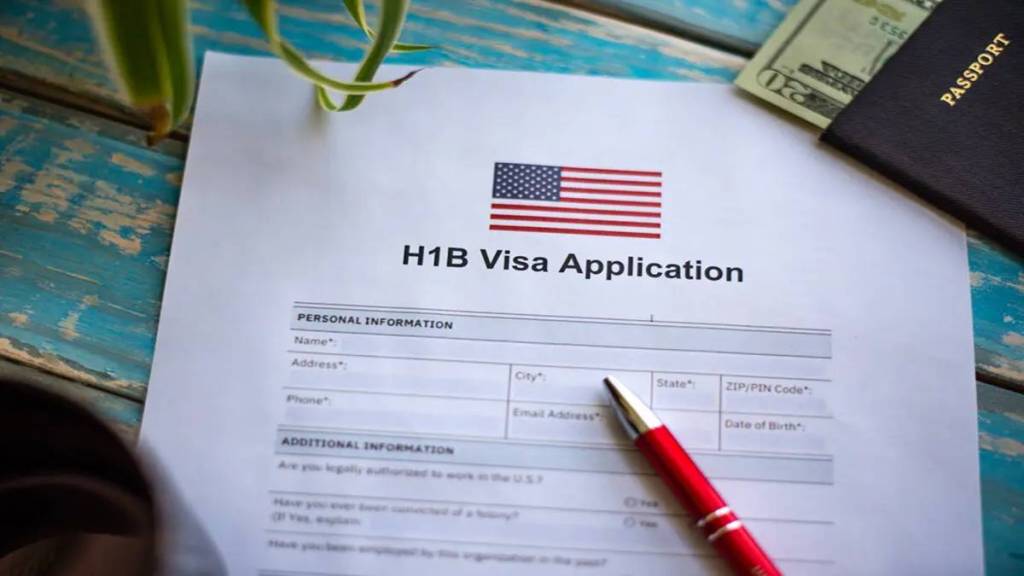

The Trump administration is prioritizing the hiring of American workers by imposing high fees on foreign work visas. In September 2025, a proclamation set the H-1B petition fee at $100,000, and now the Department of Homeland Security has proposed a new fee of $103,265 for every new H-1B cap-subject petition.
In total, there are 85,000 cap petitions issued in a year, including the ones issued for Master’s. The Department of Homeland Security (DHS) says it will raise $8.8 billion a year. But will it?
The National Foundation for American Policy (NFAP), a nonpartisan policy research organization, says the numbers do not add up. In a comment filed on September 24, 2026, NFAP tested the proposal against DHS’s own data.
What the proposed rule says
DHS wants the fee paid at the time of filing on all H-1B cap-subject petitions, including those eligible for the advanced degree exemption. It would come on top of other applicable fees. DHS says the money would help recover part of the cost of running the lawful immigration system.
“Cap-subject” refers to the annual limit of 65,000 H-1B petitions, plus 20,000 for those with an advanced degree. That makes 85,000. Applying the fee to that volume, DHS projects about $8.8 billion a year.
Why NFAP says the revenue claim falls short
NFAP calculates the fee would raise only $2.6 billion, or 70% less than DHS claimed. The reason comes from DHS’s own data. After the $100,000 fee began in September 2025, initial consular H-1B petitions fell 91.2%, from 13,823 to 1,212 over a comparable period.
NFAP applied that drop to the 343,981 eligible registrations in the FY 2026 cap season. That leaves 30,270 petitions, or 54,730 fewer than the 85,000 limit. At $103,265 each, that is $3,125,831,550. NFAP then subtracted $476,687,835 in lost revenue from other fees, including the asylum fee and the anti-fraud fee. The result is $2,649,143,715, which is $2.6 billion.
NFAP calls its estimate conservative. Here is one reason. A presidential proclamation dated September 18, 2026, says the $100,000 payment has been made for just over 700 petitions.
What did DHS leave out?
NFAP says DHS was not forthcoming. The 91.2% decline sits in a technical appendix, not in the Federal Register discussion of the rule. The appendix also shows that consular filings by 13 of 30 companies dropped by 85% or more between the FY 2026 and FY 2027 cap registrations.
While submitting its comments on the Notice of Proposed Rulemaking to establish a $103,265 fee on H-1B cap-subject petitions , NFAP says, DHS cites a January 2024 analysis to argue that high fees do not deter filings. NFAP found the results point the wrong way. The DHS regression suggests every $1 increase in I-129 fees leads to 1,031 more applications a year.
Mark Regets, a labor economist and NFAP senior fellow, says small fee changes cannot predict the effect of a fee more than 100 times larger. NFAP likens it to a study saying one soda a day is fine, so 100 must be fine too. Even the smallest estimate, Regets says, shows nearly doubling fees would cut applications by 62%.
Revenue tool or a restriction?
NFAP says the rule is meant to restrict H-1B hiring, not fund immigration functions. The 2025 proclamation said its $100,000 fee was intended to restrict admissions. Vice President JD Vance posted on X.com: “If an American corporation needs workers, it should hire and train Americans.” Yet DHS presents its fee as cost recovery.
Does the 16% pay gap hold up?
DHS leans on a paper by Harvard economist George Borjas, which says H-1B workers earn 16% less than comparable natives. NFAP points out that the Labor Department’s proposed wage rule would raise required salaries by an average of 33% for Level I, 24% for Level II, 21% for Level III and 22% for Level IV. That would erase the gap DHS relies on.
The paper is also disputed. George Mason University economist Michael Clemens found H-1B holders earn 6% more than comparable US-born professionals.
The bottom line
NFAP’s message to DHS is direct: its own data undercut the rule’s central premise. If filings collapse as they did after the $100,000 fee, the revenue will not arrive. Legal experts quoted by NFAP expect a court challenge if the rule is finalised.
NFAP also believes that the DHS proposed rule does not attempt to quantify the significant damage it will likely inflict on the U.S. economy and on American companies’ ability to innovate and compete in global markets.
“Immigrants have founded or cofounded 59% (455 of 775) of America’s privately held startup companies valued at $1 billion or more,” according to a National Foundation for American Policy analysis. The collective value of the 455 immigrant-founded billion-dollar companies is $5 trillion, larger than the total market value of companies listed on stock markets in
all but 7 countries.
Disclaimer: The views, estimates and analysis in this article are for information only and do not constitute legal, immigration or financial advice. The rule is a proposal and may change before it is finalised. Readers should consult a qualified immigration attorney or adviser for guidance on their individual case.