


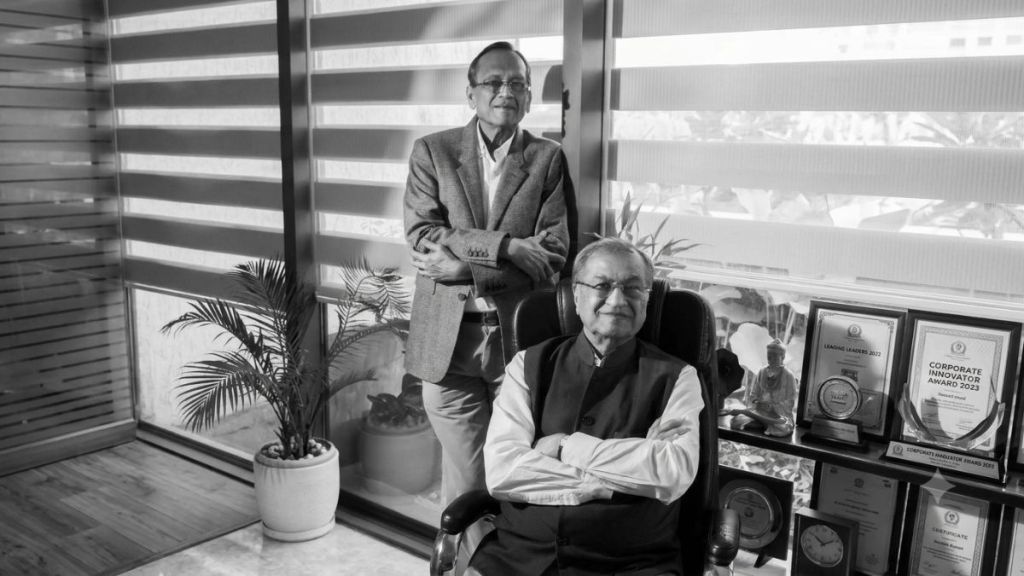

In 1969, a young man from Jaipur stood at a crossroads that would define not just his life, but the map of global manufacturing. Sharad Kumar Saraf had just graduated from IIT Bombay with a degree in electrical engineering.
He had admission offers from two American universities. Scholarships. The golden ticket that every Indian middle-class family dreamed of in those days. The US was calling. And he said no.
Instead, he went to East Germany for a year of industrial training. He stayed back after hours in factories, watching machines that Indian workers had never seen, learning precision techniques that German masters guarded closely. He came back with something more valuable than a foreign degree. He came back with the knowledge of how things are made properly.
Three years later, in 1972, he set up a factory in Murbad. A village in Thane district, Maharashtra. Not Mumbai. Not Pune. Murbad. He had less than ₹2 lakh in capital, borrowed from family and scraped together from personal savings.
He was 25 years old. His brother Sudarshan, also an IIT Bombay graduate, joined him. They made steel drum closures. The small metal caps and plugs that seal industrial drums carrying chemicals and oils. The global market was dominated by an American giant called Greif Inc. Nobody gave the Saraf brothers a chance.
They had one advantage. They knew how to build machines that others couldn’t afford to import.
The boy who took machines apart
Sharad Kumar Saraf was born on 5 August 1947 in Jaipur, Rajasthan, into a Marwari business family. The Sarafs were traders by tradition, but Sharad was different. As a teenager, he developed an obsession with electronics and HAM radio.
He would visit flea markets in Jaipur, digging through piles of discarded electronic components, looking for parts he could use. He took machines apart to see how they worked. He put them back together, sometimes better than before.
This wasn’t just a hobby. It was preparation.
The Sunday tea tradition
His family had a tradition. Every Sunday afternoon, brothers and cousins would gather for tea. They discussed family matters, business ideas, the state of the world. It was at these Sunday sessions that Sharad and Sudarshan first talked about starting something together.
The tradition continued for decades. Even as the business grew from a village workshop to a global empire, the Sunday tea remained sacred.
After school, Sharad went to IIT Bombay. He chose electrical engineering, specializing in electronics. In 1969, when he graduated, India was a different country. The Licence Raj ruled. You needed government permission to start a factory. Raw materials were rationed. Imports were restricted. Credit was scarce. Most of his batch mates left for America. He chose to stay.
The year in East Germany changed him. He saw precision manufacturing at a level that didn’t exist in India. He watched how German workers calibrated machines to tolerances measured in microns. He learned that quality wasn’t an accident. It was a system. When he came back, he carried those images in his mind. He would recreate them in Murbad.
The seal that held everything
The product they chose was unglamorous. Drum closures. The metal caps, plugs and flanges that seal steel drums. These drums carry chemicals, oils, industrial fluids across the world. If the seal fails, the contents spill. Containers rust. Accidents happen. The closure is a small part, but critical.
At the time, Greif Inc., through its Tri-Sure division, dominated this market globally. They had the technology. They had the scale. They had the brand. Indian manufacturers were nowhere in the picture.
Building their own machines
The Saraf brothers started with less than ₹2 lakh. They built their own machines. Special Purpose Machines, or SPMs, designed in-house because imported machinery was too expensive and required licences that took years to obtain.
Their first machines struggled. The precision required for drum closures is measured in fractions of millimeters. The early products didn’t meet standards. They refined. They adjusted. They failed and tried again.
By the late 1970s, they had developed a proprietary thread-rolling process. They secured patents. The machines got better. The products got more precise. They started exporting.
The breakthrough came quietly. By 1990, Technocraft was exporting to more than 40 countries. They had ISO 9002 certification, a badge of quality that opened doors in international markets. They were no longer the small Indian company trying to compete. They were becoming a global player.
The gamble in the east
In the mid-2000s, Sharad Saraf made a decision that separated Technocraft from every other Indian manufacturer in their segment. He decided to build a factory in China.
Quanjiao, Anhui province. Not Shanghai. Not Beijing. A second-tier industrial town. The logic was simple but bold. To serve Asian markets effectively, they needed a manufacturing presence in Asia’s manufacturing heartland. Shipping from India was expensive. Logistics were complicated. Customers in East Asia wanted local supply.
The first five years of hell
He later described the experience with typical understatement. “After a successful entry, life is easy as compared to China, but the first five years are hell.” The first five years were indeed hell.
Cultural differences. Regulatory hurdles. Supply chain issues. Quality control challenges. But they persisted. The facility became operational and transformed Technocraft from an Indian exporter into a multinational manufacturer.
This was the big bet. Not the IPO. Not the acquisitions. The China facility. It required vision to see that the future was global manufacturing, not just exporting. It required nerve to invest in a country that most Indian businesses feared as a competitor. And it required patience to survive those first five years.
Technocraft: From 1972 to 2026
| # | Number / Metric | What It Tells Us |
| 1 | Less than ₹2 lakh | Starting capital in 1972, from personal savings and family loans |
| 2 | 25 years old | Sharad Saraf’s age when he founded Technocraft |
| 3 | 1972 | Year of establishment in Murbad, Thane district |
| 4 | 40+ countries | Export reach by 1990 |
| 5 | ₹105 per share | IPO price in 2007 |
| 6 | ₹87.36 crore | IPO issue size |
| 7 | 35–36% | Global market share in drum closures outside China |
| 8 | ₹70.15 crore | Cost of acquiring BMS Industries in June 2023 |
| 9 | ₹2,758.98 crore | FY26 consolidated revenue |
| 10 | ₹6,810 crore | Market capitalisation as of September 2026 |
These numbers tell a story of patience. Of building slowly, carefully, without hype. While other companies chased valuations, Technocraft chased precision. While others burned cash, Technocraft built machines.
The diversification discipline
By the 1990s, the drum closure business was stable. Profitable. But Sharad Saraf knew that dependence on one product was dangerous. They had cash flows from the core business. They used them to diversify.
In the 1990s, they entered scaffolding and formwork systems. Construction was booming globally. Infrastructure projects needed modular systems for building concrete structures. Technocraft applied the same precision manufacturing philosophy to this new segment.
In 1998, they entered textiles. A 100% export-oriented unit in Murbad. Cotton textiles. It seemed unrelated to their industrial business. But it was a calculated move. Textiles provided steady cash flows. They managed the cyclical pressures, the cotton price fluctuations, the demand swings in export markets.
In 2000, they established Technosoft Engineering Projects Ltd. Engineering design and CAD/CAM services. This was services, not manufacturing. But it leveraged their engineering expertise. It provided another revenue stream.
Four segments now. Drum closures. Scaffolding and formwork. Textiles. Engineering services. Each different. Each profitable. Each feeding the others with knowledge and cash.
The crisis that wasn’t
Unlike many business stories, Technocraft’s history doesn’t have a single dramatic moment of near-death. No debt default. No promoter dispute. No regulatory action that nearly killed them.
Their crises were quieter. The Licence Raj in the 1970s, when getting permission to expand was harder than building the factory itself. Raw material shortages. Limited credit. Bureaucratic hurdles that could delay a shipment by months.
The first five years in China. “Hell,” as Saraf himself described them. The temptation to quit must have been strong. The losses must have been real. But they persisted.
The textile business faced cyclical pressures. Cotton prices rose and fell. Export demand fluctuated. But they managed through it.
The real crisis was the temptation to take shortcuts. To compromise on quality. To copy instead of innovate. To import instead of build. Every day, they chose the harder path. That was the real test.
The factory that teaches
In Murbad, next to the factories, stands the NTTF Training Centre. Established through Shanti Seva Nidhi, it offers technical education and engineering training to young people. Not charity. Investment.
The centre trains the next generation of precision manufacturers. Many of them end up working at Technocraft. All of them carry forward the knowledge that Sharad Saraf brought back from East Germany in 1970.
At IIT Bombay, his alma mater, he supported the establishment of the Technocraft Centre for Applied Artificial Intelligence. In August 2022, he was appointed Chairperson of the Board of Governors at IIT Bombay. The boy who took machines apart in Jaipur flea markets now leads the institution that shaped his mind.
The family that stays together
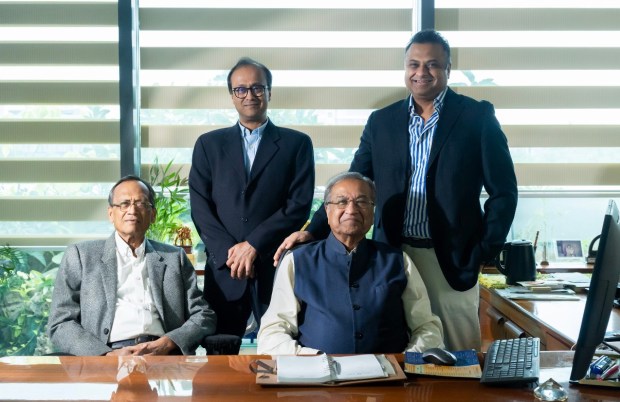
The Sunday tea tradition continues. Brothers and cousins gather. They discuss business, family, the future. The next generation is already in leadership. Navneet Kumar Saraf is CEO and Whole-time Director. Ashish Kumar Saraf is CFO and Whole-time Director. The transition is happening smoothly, without drama, without court cases, without media spectacle.
Promoter holding stands at 74.75%. High enough to maintain control. Low enough to ensure accountability to public shareholders.
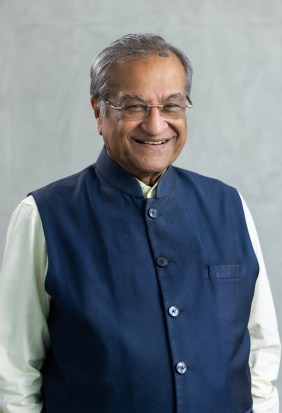
Sharad Saraf is Chairman and Managing Director. His brother Sudarshan is Co-Chairman and Managing Director. They have worked together for over fifty years. No public rifts. No succession battles. Just two brothers who started with less than ₹2 lakh and built something that feeds 80 countries.
The empire today
Today, Technocraft Industries operates four business segments. Drum closures remain the core, with approximately 35-36% of the global market outside China. Scaffolding and formwork systems serve construction projects worldwide. Textiles provide steady export revenue. Engineering services leverage their technical expertise.
FY26 consolidated revenue was ₹2,758.98 crore. Standalone revenue was ₹2,129 crore. Consolidated net profit was ₹293.08 crore. Consolidated EBITDA was ₹569.7 crore.
The latest quarter, Q1 FY2027, showed consolidated net sales of ₹804.97 crore, EBITDA of ₹174.95 crore, and net profit of ₹133.69 crore.
Global footprint
They export to more than 80 countries. They have manufacturing facilities in India and China. Distribution operations in the US, UK, Poland, Australia and New Zealand. They are one of the world’s largest manufacturers of drum closures.
In June 2023, they acquired BMS Industries Private Limited for ₹70.15 crore. BMS had been manufacturing drum closures, clamps and metal capseals for Technocraft for decades. The acquisition consolidated their supply chain, funded entirely through internal accruals. No debt. No dilution. Just cash generated from operations, reinvested in the business.
The Philosophy of Precision
Sharad Saraf has a quote that captures everything. “Every adversity has been an opportunity for us as we transformed all adversities into opportunities.”
This isn’t motivational poster talk. It’s operational reality. When they couldn’t import machinery, they built their own. When the Licence Raj restricted growth, they focused on exports. When China seemed impenetrable, they built a factory there. When textile markets turned cyclical, they managed through it.
Another quote reveals the pragmatism behind the vision. “After a successful entry, life is easy as compared to China, but the first five years are hell.” No romanticism. No illusions. Just the truth that building something valuable is hard, especially in unfamiliar territory.
What the Drum Taught Him
A drum closure is a small thing. It costs little. It attracts no attention. But without it, the chemicals leak. The oil spills. The supply chain breaks.
Sharad Saraf built his life around this principle. The small things matter. Precision matters. Quality matters. Not because they are glamorous, but because they are essential.
He could have gone to America in 1969. He could have had a comfortable career, a suburban house, a retirement fund. Instead, he chose Murbad. He chose uncertainty. He chose to build machines that didn’t exist, to compete with giants who had dominated for decades, to create jobs in a village where opportunities were scarce.
The drum closures that leave his factories today seal containers carrying chemicals to construction sites in Dubai, oils to factories in Germany, industrial fluids to ports in Australia. Small metal caps. Made with precision. Made in India. Made by a man who turned down America to prove that India could make things the world needed.
Editorial Note: This profile is based on original reporting. To ensure a comprehensive perspective, FinancialExpress.com corroborated this information with public records and third-party sources. FinancialExpress.com retains full editorial independence and final authority over all editorial decisions.