


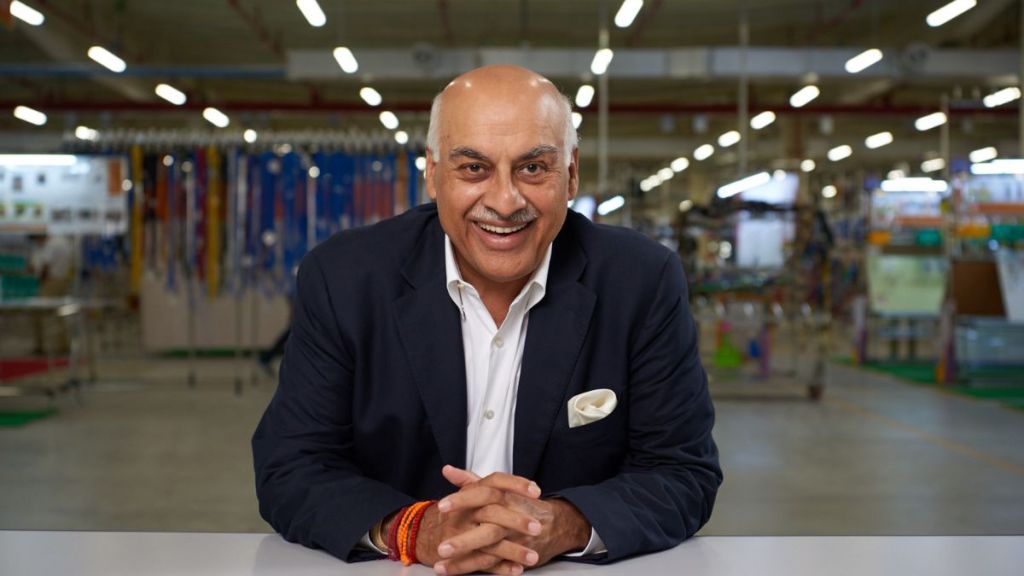

Vivek Chaand Sehgal was eighteen when he learned that money could be heavy. Literally. He carried silver bars to the airport in Delhi during the Hunt brothers’ boom, feeling the weight of precious metal in his hands and the weight of expectation in his chest. It was 1974. He earned ₹2,500 a month, a small fortune then, enough to make him dream.
Twenty-one years later, in 1995, he stood in a factory in Noida and made a decision that would either build an empire or destroy everything. He had just become Chairman of Motherson Sumi Systems.
The company made wiring harnesses for cars. Safe business. Steady business. But Sehgal wanted more. He wanted to buy companies that were bleeding, fix them, and make them his own. Everyone said he was crazy. Indian companies didn’t buy European manufacturers in those days. They just didn’t.
He did it anyway. Fifty-four times over the next two decades.
The boy who learned to weigh risk in silver
Vivek Chaand Sehgal was born in Delhi on 28 September 1956. His father was in the silver business, a well-known jeweller who understood precious metals and the people who traded them. His mother, Swaran Lata Sehgal, was the steady hand in the family, the one who kept things grounded.
His grandfather was also a jeweller, so the family knew value. They knew weight. They knew that what glitters isn’t always gold, but silver pays the bills too.
He went to Birla Public School in Pilani, then got his bachelor’s degree from the University of Delhi. Nothing fancy. No IIT, no IIM. Just a middle-class Delhi boy who understood early that business was about relationships and nerve.
At eighteen, during the silver boom engineered by the Hunt brothers in America, he was carrying silver to the airport for buyers. He learned to negotiate. He learned to read people. He learned that timing matters more than almost anything else. When to hold. When to sell. When to walk away.
These lessons would matter later. Much later.
In 1975, when he was nineteen, his father suggested something. Why not start a business with his mother? The name came easily. Motherson. Mother and son. It signified trust between a mother and her child. They started with silver trading. Simple business. Buy low, sell high, keep your word.
But Sehgal wanted to make things. Not just trade them.
The cable that connected everything
By 1977, Motherson had moved from trading to manufacturing. They set up a cable factory in Noida. Electrical wires. The kind that go into everything from fans to cars. It wasn’t glamorous. It wasn’t sexy. But it was real. They were making something with their hands now, not just moving metal around.
The factory was small. The team was smaller. Mother and son, plus a handful of workers who believed in them. They worked long hours. They made mistakes. They learned.
Check Out: List of Auto Sector Stocks
Then came 1983. And everything changed.
Sehgal heard about a new car coming to India. The Maruti 800. The first affordable car that would be assembled locally. He learned that its wiring harness, the nervous system of the car that connects all its electrical components, had been designed by a Japanese company. He saw an opportunity.
He didn’t write a letter. He didn’t wait for an introduction.
“I got a visa and I was in Tokyo within ten days!” he recalls in Motherson’s official history. Then the door shut. “I pitched for the business, but they refused to show me the factory.”
So he did what a trader does when the seller won’t open the godown. He took samples home, and his small team worked day and night to make the same thing in India.
Nobody recorded how many attempts it took, or how many nights. But it worked.
When the Maruti plant opened, a handful of Indian-made parts went on display. Motherson’s harnesses were among them.
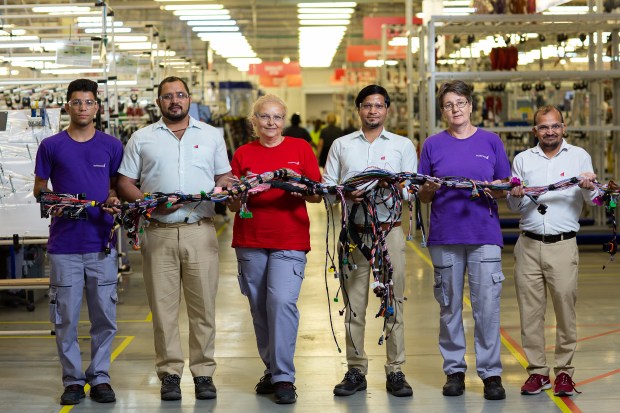
It was a breakthrough. Not just an order. A statement. An Indian company could make components for a Japanese-designed car.
The handshake with Sumitomo
In 1983 Motherson made its first automotive part, a harness for Maruti Suzuki. The same year it signed a technical agreement with Tokai Electric, now Sumitomo Wiring Systems.
Three years later, in 1986, the two formed a joint venture, Motherson Sumi Systems. This was the real breakthrough. The Japanese brought technology. Motherson brought speed and local know-how. Maruti brought volumes.
Customers followed in a steady line. Tata commercial vehicles in 1991. A stock market listing in 1993. Mercedes in 1995. Hyundai and Ford in 1997. Sehgal was managing director until 1995, then became chairman, which he still is.
The boy who carried silver was now running a listed company.
When one customer was 70 per cent of everything
Here’s the thing about a breakthrough customer. It can become a trap.
In 1997-98 Maruti hit volume problems, and Motherson found that roughly 70 per cent of its business depended on it. The fix was to spread out. A Hyundai harness venture. Then Europe.
The first overseas office opened in Graz, Austria, in 1999. In 2002 came the first acquisition, Ireland’s Wexford Electronics, and the first overseas plant, in Sharjah. Outlook reported the Irish manufacturing was moved there within 70 days.
That fright hardened into a rule the company calls 3CX10. No customer, country or component should exceed 10 per cent of revenue. It sits in every five-year plan, including the one that runs to 2030.
So does a 40 per cent ROCE target, in every plan since 2000-05. Motherson has never hit it. Group ROCE was about 18 per cent in FY25. Honestly, it reads less like a forecast and more like a dare.
Yet Sehgal insists, “Our best strategy has been not to have a strategy.” That was to Autocar Professional in September 2018, where he also said, “The most important mantra at Motherson is have no excuses.” The targets stay fixed. The route changes every time a customer calls.
Check Out: List of Auto Ancillaries Stocks in India
The Gambler’s instinct
Here’s the thing about Sehgal. He wasn’t content with safe growth. He wanted scale. Global scale. And he knew that organic growth would take too long. India was opening up in the 1990s, but the real action was elsewhere. Europe. America. Places where car companies were struggling and their suppliers were dying.
In 2009, he made his first big move. Visiocorp, a German company that made rearview mirrors, was in trouble. The global financial crisis had crushed the auto industry. Companies were selling assets for pennies on the dollar. Sehgal bought Visiocorp’s mirror business for about USD 31.6 million.
People thought he was mad. Buying a distressed German company during a recession? But Sehgal saw something else. He saw technology. He saw customers. He saw a way to enter the global supply chain not as a small Indian player, but as an owner.
It worked. The business became Samvardhana Motherson Reflectec, or SMR. It made mirrors for BMW, Mercedes, Audi. The Germans couldn’t believe an Indian company was fixing what they couldn’t.
Then came 2011. Peguform, another German company, this time making polymer products for cars. 18 percent stake. Completed in November 2011. Again, distressed. Again, doubted. Again, turned around.
The pattern was set. Find a company in trouble. Buy it cheap. Fix it. Make it profitable. Repeat.
The Number that explains everything
Let me give you the numbers that matter.
| # | Number | What It Tells Us |
| 1 | ₹2,500 per month | Sehgal’s first income carrying silver at eighteen |
| 2 | 19 years old | His age when he founded Motherson with his mother in 1975 |
| 3 | 1983 | The year he flew to Tokyo and won the Maruti contract |
| 4 | 1993 | The year MSSL listed on Indian stock exchanges |
| 5 | USD 31.6 million | Price paid for Visiocorp’s mirror business in 2009 |
| 6 | ₹1,26,104 crore | FY26 revenue, up 11% year on year |
| 7 | 54 acquisitions | Total deals completed since 2002, all at customers’ request |
| 8 | ₹1,191.65 crore | Crisis loss Q1FY21: Covid halved sales in one quarter |
| 9 | 0.8x | Turnaround: net debt 0.8x EBITDA by FY26, the lowest in company history |
| 10 | ₹1.71–1.75 lakh crore | Market capitalisation as of late September 2026 |
These numbers tell a story. Not just of growth, but of discipline. Of knowing when to borrow and when to pay back. Of understanding that acquisitions are tools, not trophies.
When the world stopped
March 2020. The world shut down. COVID-19. Lockdowns. Factories closed. Car sales collapsed. Supply chains broke.
Motherson had factories across the globe. Over 400 facilities. More than 150,000 employees. Suddenly, all of it was at risk. The debt that had funded the expansion was still there. Revenue had stopped.
The numbers were stark. Consolidated net debt at March 2020 was ₹6,917 crore according to one Business Standard report, though another 2020 report cited over ₹9,000 crore. Different definitions, different figures, but the same reality. The company was leveraged. The crisis was real.
Semiconductor shortages followed. Then production interruptions at automakers. Then higher raw material costs. Then freight inflation. It was a perfect storm.
The lowest point came in those early months of the pandemic. Factories in Europe were shut. Workers were furloughed. The acquisitions that had seemed so brilliant now looked like burdens. Loss-making units that needed cash just when cash was disappearing.
People wondered if Motherson had overextended. If the acquisition spree had finally caught up with them. If the debt would crush them.
Sehgal didn’t panic. He had been through crises before. The silver crash of the 1980s. The Asian financial crisis. The dot-com bust. He knew that panic kills companies faster than debt does.
The discipline of survival
The comeback wasn’t dramatic. It was methodical. Boring, even.
They focused on cash. They cut costs where they could. They kept their best people. They didn’t sell assets in a fire sale. They waited.
Silver Rate Today in India- Tap to know
And they diversified. Not just in automotive, but into aerospace, health and medical, logistics, consumer electronics. The Emerging Businesses segment grew about 50% year on year to ₹17,072 crore in FY26. Consumer electronics revenue grew about 7.5 times and turned EBITDA positive. Aerospace revenue grew about 40%.
By FY26, the numbers told the story of recovery. Net leverage was down to 0.8x, the lowest ever. Revenue was ₹1,26,104 crore. EBITDA was ₹12,033 crore. Normalised PAT was ₹4,258 crore.
The crisis had tested them. They had passed.
The empire today
Walk into Motherson’s headquarters in Noida today and you feel the weight of history. Not the silver kind. The industrial kind.
Over 475 facilities across 47 countries. More than 205,000 employees. Booked business of USD 96 billion. Revenue of ₹1,26,104 crore in FY26.
The business mix tells you how far they’ve come. Modules and Polymer Products bring in ₹62,894 crore. Wiring Harness, the original business, contributes ₹36,508 crore. Vision Systems, from that first distressed German acquisition, adds ₹21,001 crore. Integrated Assemblies contribute ₹11,035 crore. And Emerging Businesses, the future, already generate ₹17,072 crore.
The latest quarter, Q1FY27 ended June 2026, showed revenue of ₹35,244 crore, up about 17% and the highest ever quarterly revenue. EBITDA was ₹3,104 crore, up 26%. Normalised PAT was ₹1,032 crore, up 55%.
The company isn’t just surviving. It’s thriving.
| Metric | Then (1975) | Now (2026) |
| Business | Silver trading | Diversified global manufacturing |
| Products | Silver, later expanding into cables | Wiring harnesses, mirrors, polymers, modules, aerospace, consumer electronics |
| Team | Mother and son | Over 205,000 employees |
| Facilities | None | Over 475 facilities across 47 countries |
| Revenue | Not verified | ₹1,26,104 crore |
| Market Value | Not applicable | ₹1.71–1.75 lakh crore |
| Countries | 1 | 47 |
| Customers | Local traders | Global automakers, aerospace companies and electronics giants |
The rules he lives by
Sehgal has principles. Not the kind you frame and hang on a wall. The kind you actually follow.
The 3CX10 rule. No single customer, no single country, no single component should account for more than 10% of revenue. It forces diversification. It forces discipline. It means that when one market collapses, others hold you up.
The 40% ROCE target. It’s been in every five-year plan since 2000-2005. They’ve never hit it. Group ROCE was about 18% in FY25. But Sehgal keeps it there. As an aspiration. As a reminder that there’s always more to do.
Vision 2030. Gross revenue of USD 108 billion by FY30. 40% ROCE. Continued 3CX10 diversification. Ambitious? Yes. But so was buying a German company in 2009.
The son who followed
Succession in Indian family businesses is often messy. Fights between brothers. Cousins scheming. Fathers unable to let go.
Not here.
Laksh Vaaman Sehgal, Vivek’s son, is Director of SAMIL and Vice Chairman of the Motherson group. He grew up in the business. Learned it from the factory floor up. Not handed the keys on day one. Earned his place.
The promoter holding is about 48.6% as of late September 2026. Enough to control, not enough to be reckless. Professional managers run key operations. Pankaj Mital is Whole Time Director and COO. Gandharv Tongia is Group CFO.
It’s a blend. Family ownership with professional management. Next-generation involvement with institutional discipline. It works.
What the silver taught him
I keep coming back to the silver. Those early years when Sehgal carried metal to the airport. When he learned to weigh things. Not just physically, but metaphorically.
Risk versus reward. Timing versus patience. Trust versus verification.
He still thinks like that trader. Every acquisition is weighed. Every risk is calculated. Every opportunity is timed.
But there’s something else the silver taught him. The value of relationships. His mother was his first partner. His father gave him the name. His family gave him the foundation. He hasn’t forgotten.
Samvardhana Motherson International Share Price- live share price along with daily highs, lows, percentage changes and volume trends and all financial information- Tap to know
When he talks about Motherson, he talks about family. Not just his own, but the extended family of employees. Over 205,000 people across 47 countries. All of them part of the Motherson story.
In his own words “At Motherson, we have always believed that trust is earned over time and strengthened through what we do every day. I thank our customers for placing their confidence in us and our people for their unwavering commitment. Together, we will continue to grow with humility, stay close to our customers, and create long-term value for everyone connected with Motherson.”
The last word
The silver bars are long gone. In their place stand 475 factories across 47 countries, employing more than 200,000 people. A mother and son who began by trading silver built a company that now competes with the world’s biggest manufacturers.
In 1974, Mr. Sehgal stood outside a Japanese factory he wasn’t allowed to enter. Decades later, his company would acquire a Japanese auto parts maker. The door that once stayed shut had become a door Motherson could open for itself.
His mother, Swaran Lata Sehgal, didn’t live to see how far their dream would travel. But her name remains over 475 factories across in 47 countries across the world. Every morning, somewhere in the world, a shift begins under it.
Sehgal once said Motherson stood for trust. Perhaps that’s the real story here. Not just how an Indian company grew into a global giant, but how a mother’s belief became a legacy that outlived her.
The silver was only the beginning. The real inheritance was trust.