


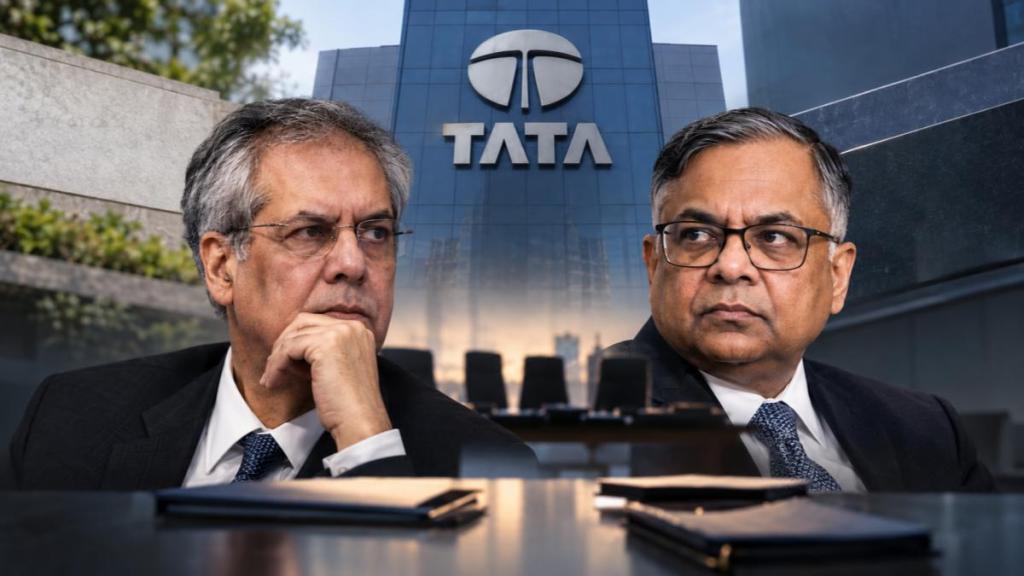

There is a new twist in the Tata Sons succession tale. Tata Sons and its controlling shareholder, Tata Trusts, are openly at odds over who gets to decide the group’s leadership. Less than an hour after the Tata Sons board on Thursday approved another five-year term for N Chandrasekaran as executive chairman, the Trusts called the resolution illegal, arguing that the board could not validly approve it without the support of both their nominee directors.
The September 17 decision has turned a disagreement over succession into a dispute over the board’s authority and the rights of its majority shareholder. Tata Trusts holds about 66% of Tata Sons, but its chairman, Noel Tata, was outvoted at the meeting.
The Tata Sons statement elaborated that “at the meeting of the Board on September 17, 2026, Chandra acceded to the Board’s request to re-consider his decision. The Board thereafter resolved by a majority vote to re-appoint him as Executive Chairman for a further term of five years upon the expiry of his current tenure”.
The Tata Sons statement added that “the Board also resolved to initiate steps to comply with the applicable RBI Guidelines and will seek guidance from RBI, Tata Trusts and other stakeholders on applicable compliance requirements.”
Less than an hour later the Tata Trust issued a statement that it “maintain that the Resolution to re-appoint N. Chandrasekaran as Chairman, Tata Sons, is illegal”. According to the Trusts’ statement, four directors supported Chandrasekaran’s reappointment and Noel Tata opposed it. Venu Srinivasan, the other Trust nominee, backed the proposal, Indian Express reported.
A majority vote, two different positions
Tata Sons said Chandrasekaran had “acceded to the board’s request to re-consider his decision” to leave when his current term ends in February 2027.
The company traced its decision to the Trusts’ unanimous support for another term in July 2025. Its nomination and remuneration committee subsequently recommended his reappointment on September 3, citing his contribution and the group’s wider interests, according to Tata Sons’ statement.
The Trusts’ objection goes beyond disagreement over the choice of chairman. They maintain that Tata Sons’ Articles of Association require a majority of the Trust nominee directors to support an appointment or reappointment. With two nominees, their position is that both must vote in favour.
Since Noel Tata opposed the proposal, the resolution was a “legal nullity”, the Trusts said. That is the Trusts’ legal position, rather than a court ruling. “Noel N. Tata further submitted a legal opinion obtained from Justice Dr DY Chandrachud (former Chief Justice of India) regarding the correctness of the Trusts’ stand. The same was not taken note of by the Board,” Tata Trusts said in the statement.
An exit the Trusts consider final
At the heart of the disagreement is Chandrasekaran’s August 12 letter saying he would not seek another term after February 20, 2027. The Tata Trusts said they accepted that decision the following day and asked Tata Sons to begin setting up a selection committee for his successor.
In his statement to the board, Noel Tata said the decision had been voluntary and was not the result of a board review. He argued that reappointing Chandrasekaran would set aside the chairman’s announcement, the majority shareholder’s acceptance and the succession process it had requested.
“The Chairman has conveyed his decision; the shareholders have conveyed their acceptance; it is now time to move on,” Noel further said in the statement.
Noel Tata also questioned whether the decision was premature. He said Chandrasekaran’s position as a director remained unresolved because the general meeting intended to consider it could not proceed for lack of quorum. Proceeding with the chairmanship decision could expose the company to a shareholder challenge, he warned.
Listing adds another point of friction
The leadership dispute comes alongside pressure to list Tata Sons. The RBI last week rejected its application to surrender its registration as a core investment company. Tata Sons has been classified as an upper-layer NBFC since September 2022; the regulatory framework requires such entities to list within three years.
The board also decided to proceed towards listing. Its decisions require shareholder ratification at the AGM, where the Trusts’ majority stake remains significant.
The Shapoorji Pallonji Group, which owns about 18.4%, favours a listing to unlock value, while the Trusts have opposed it.
Noel Tata urged the board to keep regulatory compliance and succession separate. He said that each question should be decided on its own merits. For now, the board has backed continuity, while its controlling shareholder insists the search for a successor should proceed.