


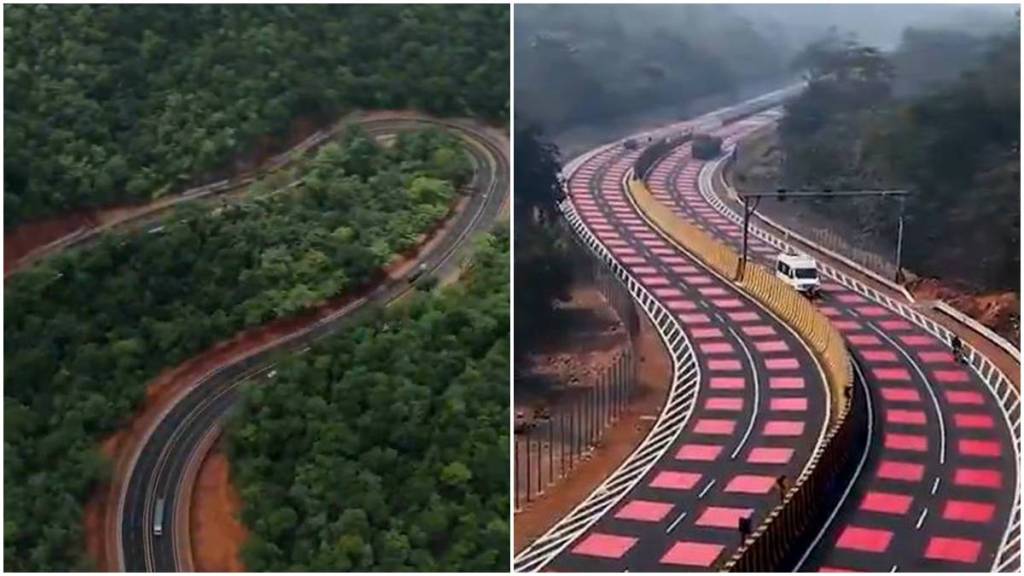

Motorists travelling on the Bhopal-Jabalpur section of National Highway 45 (NH-45) in Madhya Pradesh will now witness a distinctive road surface designed to encourage slower and more cautious driving through a wildlife-sensitive area. The National Highways Authority of India (NHAI) has launched the measure along the highways passing through Veerangana Durgavati Tiger Reserve to enhance safety for road users and wild animals.
In an official X post on October 21, NHAI called the initiative a first-of-its kind measure aimed at reducing animal-vehicle collisions. The authority also shared a video explaining how the specially designed road surface works and underlining additional wildlife protection measures along the highway.
Why has NH-45 been given a red road surface?
The new road treatment consists of a raised red section that aims to alert motorists when they enter the forest stretch.
As per the NHAI’s video, the specially designed table-top red surface layer is 5 mm thick. Its raised profile and distinctive colour intend to make drivers more aware of the wildlife-sensitive surroundings.
Explaining the initiative, NHAI mentioned in its post on X, “A specifically designed raised red “table-top’ surface alerts motorists as they enter a wildlife -sensitive stretch, encouraging them to slow down and exercise caution.”
The authority also mentioned the goal is to reduce collisions involving vehicles and animals while making the highway safer for travellers.
What should Motorists know before driving through this stretch?
Drivers using the Bhopal-Jabalpur section of NH-45 should treat the red road surface as a warning to slow down and remain alert. The raised red sections are designed to attract attention to the possibility of wildlife movement near the highway.
Motorists should exercise caution while crossing the forest stretch, especially where animals may approach the road.
White shoulder lines introduced to guide traffic
Along with the red surface, NHAI’s video also underlines another safety measure: white shoulder signs along the highway. These markings also aim to help motorists stay within the designated road area and alerting vehicles to avoid straying towards the forested edges.
The combination of raised sections and shoulder markings is aimed at encouraging safer driving through the protected wildlife habitat.
25 wildlife underpasses constructed along NH-45
The video also underlined the construction of 25 strategically located wildlife underpasses to support animal movement across the highway corridor. These structures are designed to allow animals to cross beneath the road rather than move directly across lanes.
As per NHAI, the underpasses are made in a way to boost ecological connectivity by providing safer crossing routes for wildlife. The initiative brings together road-safety measures for motorists and infrastructure with an aim to shield animals moving through the surrounding forest.
NHAI focuses on wildlife safety and sustainable highways
The Bhopal-Jabalpur section of NH-45 passes through Veerangana Durgavati Tiger Reserve, making wildlife protection an essential consideration for highway operations. NHAI stated its new road-safety initiative reflects an effort to balance highway connectivity with environmental conservation.