


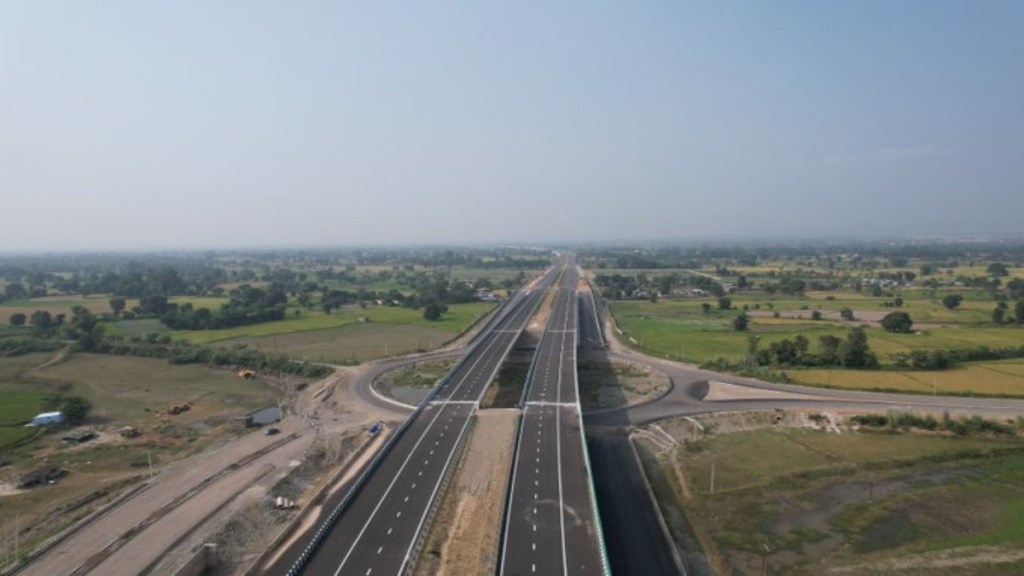

A faster road journey between Punjab and Jammu and Kashmir is on the horizon, with a nearly 40-km stretch of the Delhi–Amritsar–Katra Expressway expected to open in December 2026.
The new section will cut travel time between Pathankot in Punjab and Dayalachak in Jammu and Kashmir from the current 50–70 minutes to around 25–30 minutes.
The stretch will bypass the Lakhanpur toll plaza, helping travellers save time on the route. Dr Jitendra Singh, Union Minister of State for Science and Technology and Earth Sciences, shared the update on X.
The Delhi–Amritsar–Katra Expressway project,aims to improve connectivity across the region.
#Delhi-#Katra Expressway Update:
A major boost to connectivity in the region! The nearly 40-km Pathankot–Dayalachak stretch of the Delhi–Amritsar–Katra Expressway is expected to open by December, bypassing the Lakhanpur toll plaza and reducing travel time from 50–70 minutes to just 25–30 minutes.
A significant step towards providing ‘ease of travel’, which has been a hallmark of the @narendramodi government.
— Dr Jitendra Singh (@DrJitendraSingh) October 22, 2026
Delhi–Amritsar–Katra Expressway: Route, length and cost
The Delhi–Amritsar–Katra Expressway is a 669-km greenfield project being developed at a cost of around Rs 40,000 crore.
The corridor starts from the Kundli-Manesar-Palwal (KMP) Expressway in Delhi and passes through Haryana, Punjab and Jammu and Kashmir. Around 137 km falls in Haryana, 399 km in Punjab and 135 km in Jammu and Kashmir.
Delhi to Amritsar in 4 hours, Katra in 6 hours
Once completed, the expressway is expected to reduce travel time between Delhi and Amritsar to around four hours and between Delhi and Katra to around six hours.
It will also shorten the Delhi–Katra travel distance by 58 km, from the existing 727 km.
In July 2026, the Prime Minister Narendra Modi dedicated a 157.92-km, four-lane, fully access-controlled section of the expressway, covering Packages 1 to 5, to the nation. The section was developed at a cost of around Rs 9,680 crore.
Expressway to reduce traffic pressure on NH-44
The Delhi–Amritsar–Katra Expressway is expected to take some of the long-distance traffic off National Highway 44 , also known as the Grand Trunk Road.
By offering an alternative route, the corridor could help improve traffic flow and make road travel smoother across parts of Punjab and Jammu and Kashmir.
Faster access to pilgrimage destinations
The expressway will connect several important religious sites, including the Golden Temple in Amritsar and Shri Mata Vaishno Devi in Katra.
The route will also provide access to Sultanpur Lodhi, Goindwal Sahib, Khadoor Sahib and Gurdwara Darbar Sahib in Tarn Taran. These links could make it easier for pilgrims to plan road journeys to multiple destinations across the region.
Road links to support Punjab’s industry and logistics
The corridor will also pass through industrial centres such as Ludhiana, Jalandhar, Patiala, Sangrur, Malerkotla, Kapurthala and Gurdaspur.
Improved access to these areas could help transporters move goods between industrial hubs and major markets, while supporting logistics and trade across the region.
Another key feature of the project is a 1,300-metre cable-stayed bridge over the Beas River, described in the project information as Asia’s longest of its kind.