


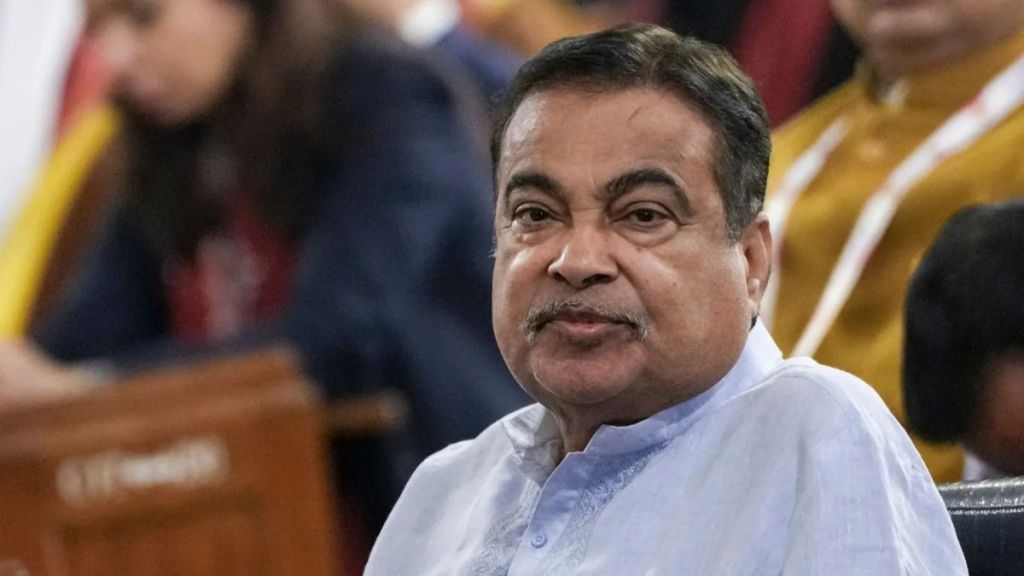

Union Minister for Road Transport and Highways Nitin Gadkari on Tuesday revealed that he instructed authorities not to issue traffic challans to vehicles travelling at speed of up to 120 kmph on expressways, reported The Indian Express. He added that motorists exceeding this speed by up to 20% should also be let off, with challans issued only for higher speeds.
“Some people are receiving notices on the road due to speed. I have instructed that no notices should be sent for speeds up to 120 kmph. And even above 120, if someone exceeds it by 20%, let them go. If someone goes beyond this, issue a challan,” the Minister said.
Gadkari was speaking at an event organised by industry body CII on the future of India’s highways. He also called for industry support to implement an AI-based Advanced Traffic Management System (ATMS) to improve enforcement and detect violations of lane discipline.
Gadkari calls for AI-based traffic monitoring
The minister’s remarks on speed enforcement come amid efforts to improve traffic management on India’s expanding highway network. An AI-based ATMS could help authorities identify lane discipline violations and strengthen enforcement, with technology playing a greater role in monitoring road users.
Gadkari also addressed the recent criticism of ethanol blending in petrol, describing the protests against E20 fuel as “paid propaganda”.
“Since 2022, 4 crore cars and 20 crore two-wheelers have been running on E20 fuel. Three months back, there was a lot of uproar (halla) over ethanol. Now everything has gone quiet. E20 is being used since 2022, has anyone’s vehicle broken down yet? This was entirely paid propaganda,” said Gadkari at an event by the industry body CII over Highway of India’s future.
E100 notification allows flex-fuel vehicles to use higher ethanol blends
The comments came a day after the Ministry of Road Transport and Highways amended the Central Motor Vehicle Rules, 1989, to allow flex-fuel vehicles to run on fuel containing up to 100% ethanol, known as E100.
The notification does not mean that all petrol-powered vehicles can use E100. The ministry has clarified that E85 or E100 can be used only in vehicles specifically designed by original equipment manufacturers (OEMs) as flex-fuel vehicles. Vehicles designed for conventional petrol or E20 are not automatically compatible with E100.
The regulatory change expands the range of fuels that compatible vehicles can use and could support the development of flex-fuel vehicle components, ethanol production infrastructure and the deployment of such vehicles.
India mandated E20 compatibility for all new petrol-powered vehicles from 2023. E20, which contains 20% ethanol blended with petrol, is now the most commonly available fuel blend at petrol pumps across the country.
Gadkari calls E20 protests ‘paid propaganda’
Gadkari also criticised the opposition to blending 20% ethanol in petrol, calling it “paid propaganda”. He said that 4 crore cars and 20 crore two-wheelers had been running on E20 fuel since 2022 and questioned whether the fuel had caused vehicles to break down.
“Since 2022, 4 crore cars and 20 crore two-wheelers have been running on E20 fuel. Three months back, there was a lot of uproar (halla) over ethanol. Now everything has gone quiet. E20 is being used since 2022, has anyone’s vehicle broken down yet? This was entirely paid propaganda,” said Gadkari at an event by the industry body CII over Highway of India’s future.