


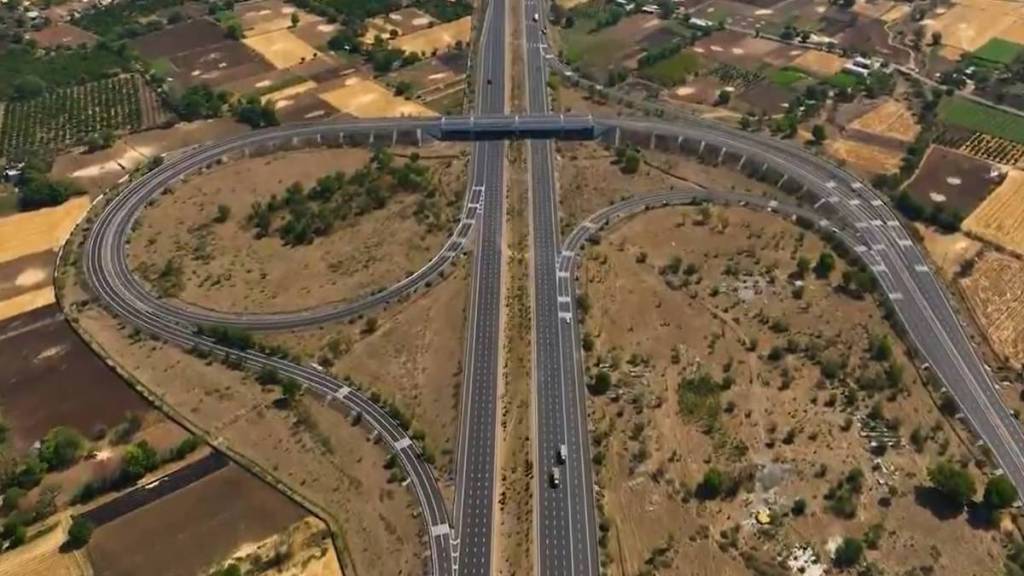

Travelling between Ujjain and Garoth in Madhya Pradesh has become faster with the development of the 136.1 km Ujjain-Garoth section of National Highway 752D. The four-lane access-controlled highway has reduced travel time between the two places to 90 minutes from around four hours, the National Highways Authority of India (NHAI) said.
This corridor also has a direct connectivity with Delhi-Mumbai Expressway, further enhancing the road connectivity for the pilgrims visiting the Mahakaleshwar Jyotirlinga in Ujjain.
The highway “cuts down travel time, bolsters connectivity with Rajasthan and Gujarat, improves freight movement and increases access for pilgrims visiting Shri Mahakaleshwar Jyotirlinga”, NHAI said on X.
The project is also expected to facilitate movement of devotees during the Simhastha Kumbh 2028.
How much time can motorists save on Ujjain-Garoth highway?
According to the official video of NHAI, the journey between Ujjain and Garoth now takes about one-and-a half hours, against around four hours earlier. The video also claims savings of six to eight hours on some longer trips.
The highway is connected to the Delhi–Mumbai Expressway at an interchange at Garoth, providing better connectivity between the Malwa region of Madhya Pradesh and the rest of the national highway network.
Which cities will benefit from the highway?
The corridor provides better expressway connectivity to Ujjain, Indore, Ratlam and Dewas in Madhya Pradesh. It also enhances connectivity by road toward Kota, Delhi, Jaipur, Vadodara and Ahmedabad through the Delhi-Mumbai Expressway connectivity.
The corridor provides an additional route for drivers travelling between these areas, and freight operators can benefit from better access to major markets.
Key Features of the Ujjain-Garoth Highway
The 136.1 km long highway has been constructed as a four lane access controlled corridor with a number of structures for smooth traffic movement and road safety.
As per NHAI, the project comprises:
| Infrastructure | Number |
| Flyovers | 3 |
| Service roads | 7 |
| Road overbridges (ROBs) | 3 |
| Major bridges | 6 |
| Minor bridges | 83 |
| Culverts | 230 |
| Vehicular underpasses (VUPs) | 14 |
| Major junctions | 14 |
| Bus lay-bys | 28 |
Bus lay-bys are areas where buses can pull off the main carriageway and stop, to prevent disruption to the flow of moving traffic.
How will the highway benefit Mahakaleshwar pilgrims?
Famous for its Mahakaleshwar Jyotirlinga, Ujjain is a major pilgrimage spot and attracts devotees from all over the country. The connectivity of the highway with the Delhi-Mumbai Expressway is likely to make road journeys more comfortable for pilgrims travelling from Gujarat, Rajasthan and other connected regions.
The corridor is “going to be very important in facilitating seamless mobility during the Simhastha Kumbh 2028”, NHAI said. The better road connectivity is likely to facilitate the movement of pilgrims and others during the religious congregation.
How will the corridor boost trade and local commerce?
The highway is also expected to enhance freight movement between Madhya Pradesh and the neighbouring states, besides passenger traffic. As per NHAI’s video, better connectivity with the Delhi-Mumbai Expressway is allowing agricultural and industrial goods to reach markets more efficiently, with potential savings in transportation costs.
The authority also noted opportunities for logistics facilities and industrial development along the corridor. Hotels and businesses serving pilgrims and tourists, and transport operators could benefit from better access to Ujjain and nearby places.
The Ujjain-Garoth highway provides a direct interchange at Garoth and is expected to boost regional connectivity, apart from facilitating passenger traffic, movement of freight and preparations for Simhastha Kumbh 2028.