


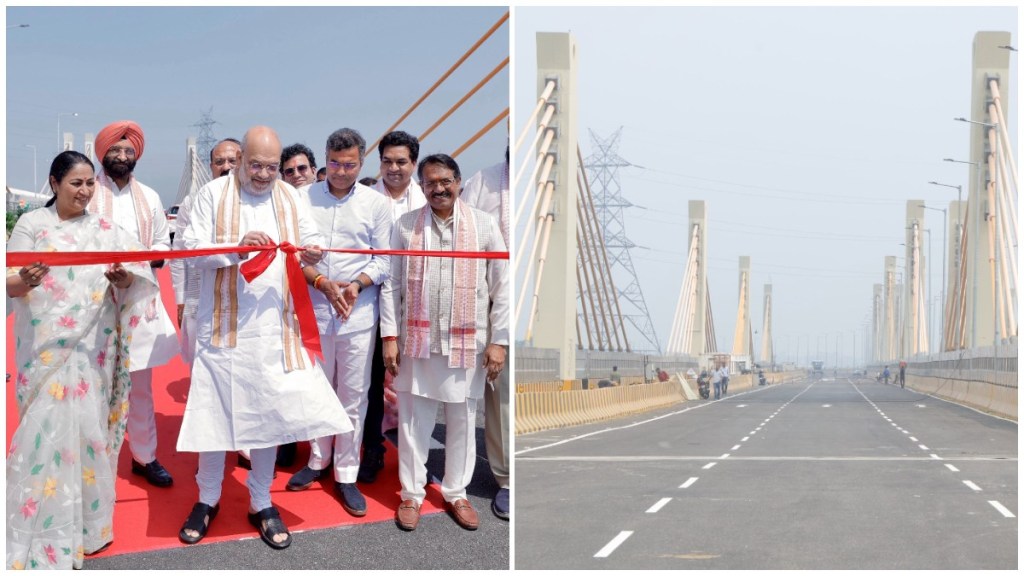

Delhi’s long-awaited Barapullah Phase 3 elevated corridor is now open, strengthening the road link between East and South Delhi. Union Home Minister Amit Shah inaugurated the elevated corridor today.
The new corridor provides a signal-free link from Mayur Vihar Phase 1 towards AIIMS, making travel between East and South Delhi smoother while reducing delays caused by traffic congestion.
The corridor is expected to cut travel time between East Delhi, Noida and AIIMS from around 35-40 minutes to about 15 minutes, depending on traffic conditions.
A major infrastructure push for Delhi. Hon’ble Union Home & Cooperation Minister Shri @AmitShah Ji inaugurated Barapulla Elevated Road Phase-III and the Mukarba Chowk Underpass, and laid the foundation stones for the Modi Mill–Savitri Cinema Flyover and Loni Underpass.
With an… pic.twitter.com/EiACpqA2Ii
— CMO Delhi (@CMODelhi) September 29, 2026
Barapulla Elevated Road: Route, connectivity and project cost
The three-lane, 9 km elevated corridor connects Mayur Vihar Phase 1 with Sarai Kale Khan.
The project was approved in 2014, and construction began in 2015. It was originally scheduled to be completed in 2017 but faced several delays and cost escalations.
The revised project cost has risen to around Rs 1,635 crore, according to The Indian Express Report.
Signal-free route to reduce travel delays
The elevated stretch will allow vehicles to pass through the route without stopping at multiple traffic signals.
With fewer stops along the way, the corridor is expected to bring down overall travel time and reduce waiting during busy hours.
For people travelling regularly between East Delhi, Noida and South Delhi, this could mean a quicker journey, particularly during peak traffic when delays at signals can add to the overall travel time.
New corridor to ease traffic congestion
The corridor is also expected to take some traffic pressure off NH-24, the Delhi-Noida Direct (DND) Flyway and Ring Road. These are busy routes used to travel between East Delhi, Noida and other parts of the capital.
With another route available towards South Delhi, the project could help distribute traffic across the road network and reduce congestion on some of these stretches.
Easier access to Sarai Kale Khan transport hub
The new corridor will strengthen connectivity to Sarai Kale Khan, one of Delhi’s key transport hubs. The area links Indian Railways, Delhi Metro, ISBT, NCRTC and the Delhi-Mumbai Expressway, giving people easier access to different modes of transport.
The improved link will also make it easier to travel between East Delhi, Noida and major residential, employment and healthcare hubs in South and central Delhi.
Mukarba Chowk Underpass also launched
Along with the Barapullah Phase 3 elevated corridor, Amit Shah also inaugurated the Mukarba Chowk Underpass in North Delhi. The project is located on the Outer Ring Road and is aimed at making movement through the busy Mukarba Chowk area smoother for commuters.
The project includes three underpasses near Gate No. 3 of Haiderpur Badli Mor Metro station , providing commuters with an easier route through the busy junction.
Foundation stone laid for two projects
Apart from the Barapullah Phase 3 corridor and Mukarba Chowk underpass, foundation stone was also laid for the Modi Mill-Savitri Cinema flyover and Loni Underpass.
The Modi Mill-Kalkaji project will extend the existing Modi Mill flyover towards the Kalkaji Temple flyover, with additional half-flyovers planned at key intersections.
The works are aimed at creating a 7.2-km signal-free corridor extending up to IIT Gate, with the flyover having three lanes in each direction.
The Savitri Cinema project includes a 435-metre half-flyover alongside the existing structure. The three-lane facility is expected to ease traffic movement towards Nehru Place, Okhla and nearby areas.