


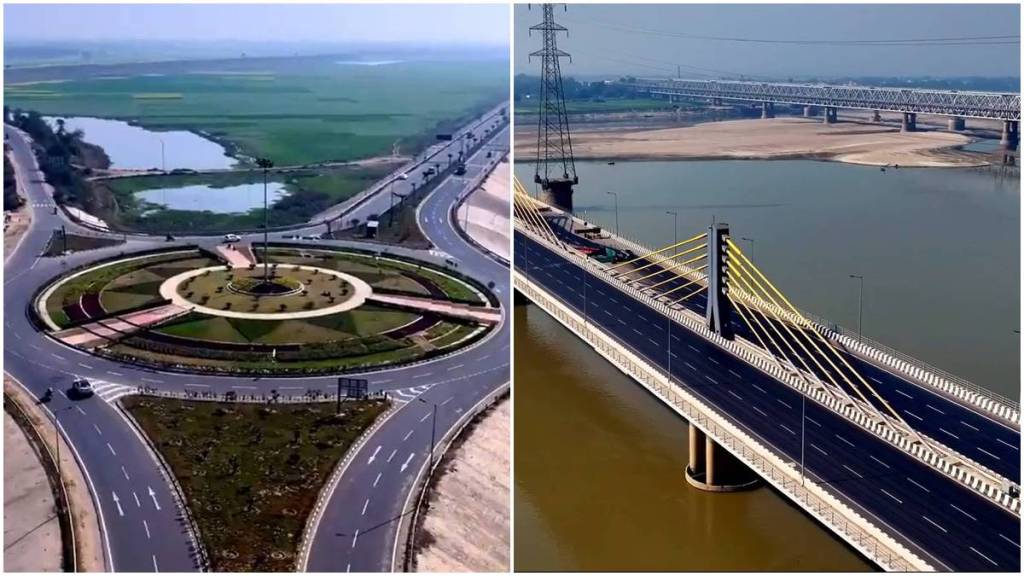

Bihar is planning to utilise silt removed from rivers and other water bodies in 16 ongoing national highway projects, under an initiative aimed at enhancing road infrastructure while managing flood-related challenges. The move is projected to reduce dependence on fresh soil for highway construction, boost the water-carrying capacity of rivers and conserve agricultural land.
The National Highways Authority of India (NHAI), in a post on X on November 3, stated that the Ministry of Road Transport and Highways (MoRTH) and the Bihar government have signed a Memorandum of Understanding (MoU) for scientific desilting and utilisation of suitable excavated material in highway projects.
The deal, as per the ‘Nadi Sanjivini’ initiative, was signed in New Delhi in the presence of Union Minister Nitin Gadkari and Bihar Chief Minister Samrat Choudhary, as per the official PIB release.
Bihar River Silt Initiative: Key details
16 ongoing highway projects: 243 lakh cubic metres of suitable silt has been detected for utilisation.
27 future projects: Another 835 lakh cubic metres proposed, subject to technical suitability and sanctions.
Agricultural conservation: Using excavated silt could lower dependence on soil from farmland.
Flood management: Scientific desilting intends to enhance river drainage and water-carrying capacity.
How will river silt be used in highway construction?
Under the initiative, accumulated sediment will be withdrawn from identified rivers and water bodies through scientific desilting. The excavated material will then go for technical testing before being considered for highway construction.
Only suitable material meeting applicable MoRTH specifications and India Road Congress (IRC codes will be utilised, as per the ministry.
In its official post on X, NHAI termed the initiative as “Reviving Rivers, Building Sustainable Highways!” The authority stated the programme intends to “improve water-carrying capacity, strengthen flood management, conserve agricultural land and promote sustainable highway construction.”
#NadiSanjivani: Reviving Rivers, Building Sustainable Highways! 🌊🛣️
In a significant step towards integrating water-body restoration with infrastructure development, @MORTHIndia and the Government of Bihar have signed an MoU for scientific desilting of rivers and water bodies and utilisation of suitable excavated silt in National Highway projects.
Under this initiative:
– 243 lakh cubic metres of silt will be utilised across 16 ongoing NH projects.
– 835 lakh cubic metres is proposed for utilisation across 27 future projects, subject to technical suitability and approvals.The initiative aims to improve water-carrying capacity, strengthen flood management, conserve agricultural land and promote sustainable highway construction.
📄 Read the press release for details: https://t.co/cpoukulWF2
▶️ Watch the video on YouTube: https://t.co/grOTpTEuUH
@PMOIndia @MORTHIndia @officecmbihar @IPRDBihar @PIBMoRTH #NHAI #BuildingANation
— NHAI (@NHAI_Official) November 3, 2026
What does the initiative mean for Bihar’s residents and farmers?
Bihar faces recurring flooding, especially from rivers arising in Nepal that bring substantial quantities of water and sediment into the state. The government aims for scientific desilting to improve water flow and drainage. It will potentially lead to reduced flood-related risks and damage to agricultural fields. By using excavated material in highway construction, it could also reduce the need for fresh soil from productive farmland.
The state’s Bihar Water Sources Restoration and Silt Management Policy, 2026, additionally offers a framework for handling sand and silt deposited on agricultural land following floods.
How many highway projects are underway in Bihar?
As per the PIB, NHAI has picked 243 cubic metres of suitable silt for utilisation across 16 ongoing projects. Another 835 lakh cubic metres is preferred for 27 future projects, subject to technical suitability and requisite sanctions.
As per the latest updates, 39 projects spanning 1,561 km, with an estimated investment of Rs 58,340 crore, are under construction in Bihar. Another 11 projects, covering 1,982 km and involving Rs 1,85,200 crore, are also proposed.
What safeguards will be followed?
The ministry mentioned that desilting will be conducted only at approved locations following technical analysis and within the prescribed extraction limits. Measures that will be followed are to ensure that river ecosystems, riverbanks, bridges and embankments, and other structures are not adversely impacted.
Bihar’s Road Construction Department will play the role of the nodal agency, backed by a state-level coordination committee. Digital records, joint measurements and regular surveillance of the track removal, utilisation of silt, and transportation.
Will the initiative reduce highway construction costs?
The ministry also expects suitable excavated soil to reduce dependence on fresh construction material, leading to lowering of costs and supporting timely highway completion.
Gadkari also underlined the initiative’s potential to conserve agricultural land and indicated that the model could be extended to other states. However, the government has not specified project-wise cost savings or the exact locations of the 16 highway projects.